艺术媒介:油画 - 杰作背后的故事 --- The Mediums of Art: Oil Painting - Behind the Masterpiece

2-Minute Summary:
- The oldest surviving oil paintings are Buddhist murals from around 650 AD in Bamiyan, Afghanistan, not in Renaissance Europe, which challenges the traditional belief that European artists invented oil painting.
- Jan van Eyck, falsely known as oil painting’s inventor, revolutionized the medium in 15th-century Northern Europe by refining glazing techniques, realism, color depth, and the medium’s ability to imitate textures and light.
- Oil paint became dominant partly because of its slow drying time and flexibility, which allowed artists to blend colors gradually, revise compositions, build layers of paint, and create smoother transitions between light and shadow than faster-drying water-binding media like tempera.
- The evolution of oil painting as a whole was shaped by artists’ innovations, as well as the rapid material and technological developments of the medium.
- Oil painting remained culturally important for centuries because it was adaptable; it could depict realism, depth, emotion, historical memory, and allow for highly personalized artistic styles.
Johannes Vermeer, The Art of Painting (c. 1666-1668)
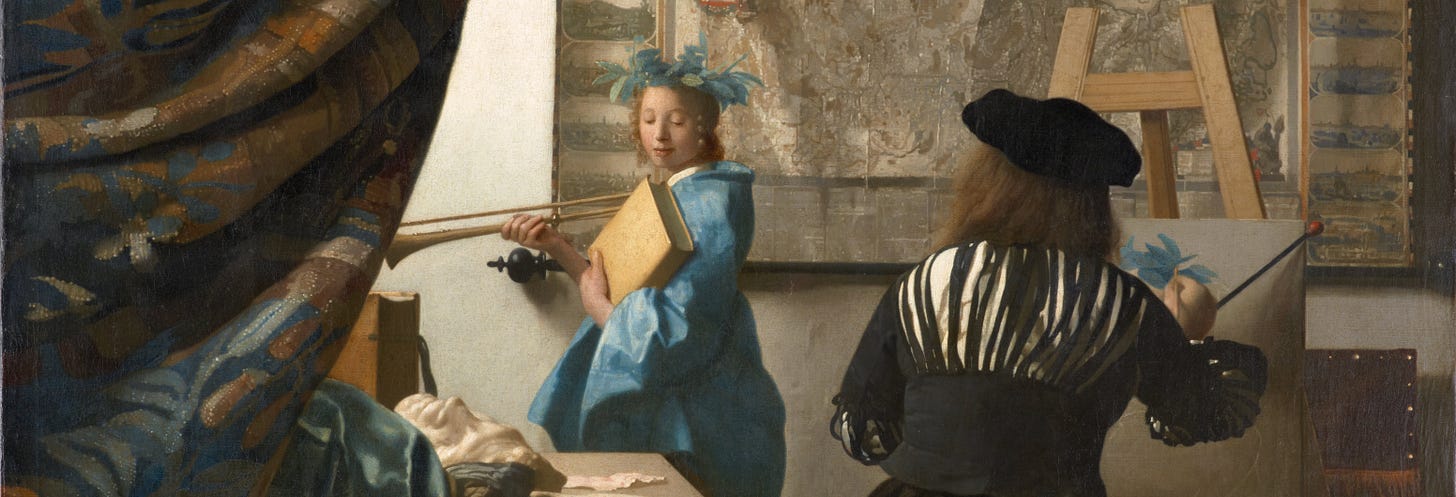
Now that we’ve spent time with the medium of drawing (part 1 of this series), let’s turn our attention to the next part:
This medium has survived monarchies, revolutions, industrialization, photography, modernism, the internet, and now whatever it is we are currently doing to our attention spans. Even now, people still consistently gather in museums to stare at suspended rectangles of dried oil for minutes at a time.
Oil paint can imitate polished marble, soft skin, damp air, candlelight, silk, fog, gold, blood, velvet, clouds, or the exhausted expression on someone’s face after sitting for a portrait too long. The same medium could produce the almost supernatural illusionism of Renaissance glazing or the thick, energetic impasto of a van Gogh, where the paint sticking so far out of the canvas resembles sculpture as well as painting.
It’s important to note that there are only a few artistic mediums that have managed to outlast the many decades, shifts in taste, and technological innovations, while remaining fundamentally relevant to all of them. There is something psychologically convincing about oil paint when it is handled well.
A painted face made of crushed minerals and an oil binding agent can still produce grief, discomfort, awe, intimacy, even centuries after both artist and subject have disappeared. Standing in front of a Rembrandt portrait can feel less like looking at an object and more like accidentally making eye contact with somebody across time.
Long before photography, oil painting was one of humanity’s most powerful tools for recording appearances. Clothing, architecture, political authority, religious beliefs, scientific curiosity, wealth, warfare, colonial expansion, domestic life, you name it….The preserved visual evidence of entire civilizations and centuries, captured in oil paint.
In many cases, the way we imagine the past has been shaped less by written history than by painted surfaces.
What did royalty actually look like? How were merchants, saints, scholars, or aristocrats expected to present themselves? What did candlelight look like before electricity? How did velvet reflect light differently from silver?
Oil painting answered these questions, and it did so with an extraordinarily persuasive voice and longevity. If properly maintained, oil paintings could survive for centuries, and you know what’s beautiful? Some artworks still carry the fingerprints of the artists who made them, buried beneath layers of varnish.
Yes, there are many oil paintings that have darkened, cracked, yellowed, or warped over time, but thanks to the wonderfully meticulous works of restorers, they too continue to function as the visual fossils of human thought and culture.
The medium also transformed artistic education. For centuries, learning to paint in oils became almost synonymous with becoming an artist itself. Students in European academies spent years studying drawing, anatomy, composition, perspective, color relationships, and glazing techniques before being considered competent enough to fully handle the medium.
You could not entirely bluff your way through it. And so its technical mastery became tied to broader ideas about intelligence, discipline, and artistic importance.
In this piece, we’ll look at its:
- Origins
- Material and tools
- Evolution
- Modernization
Reminder: You can support Behind the Masterpiece and get access to members-only content for a few dollars per month, such as:
- Access to paid subscriber articles
- Unlock the full curriculum: From the ‘Language of a Masterpiece’ to the ‘History of Colors’
- Ask me anything about your favorite works or upcoming museum trips
- Ability to comment and join community chats
For a very long time, the history of oil painting was believed to have begun in Europe; sometime during the Renaissance period, somewhere in Northern Europe, and the 15th-century Netherlandish artist Jan van Eyck is often mentioned.
There is just one problem with this. Even as an educated guess, it’s more likely to be wrong, having skipped past the years of civilization that came before it.
Buddhas of Bamiyan
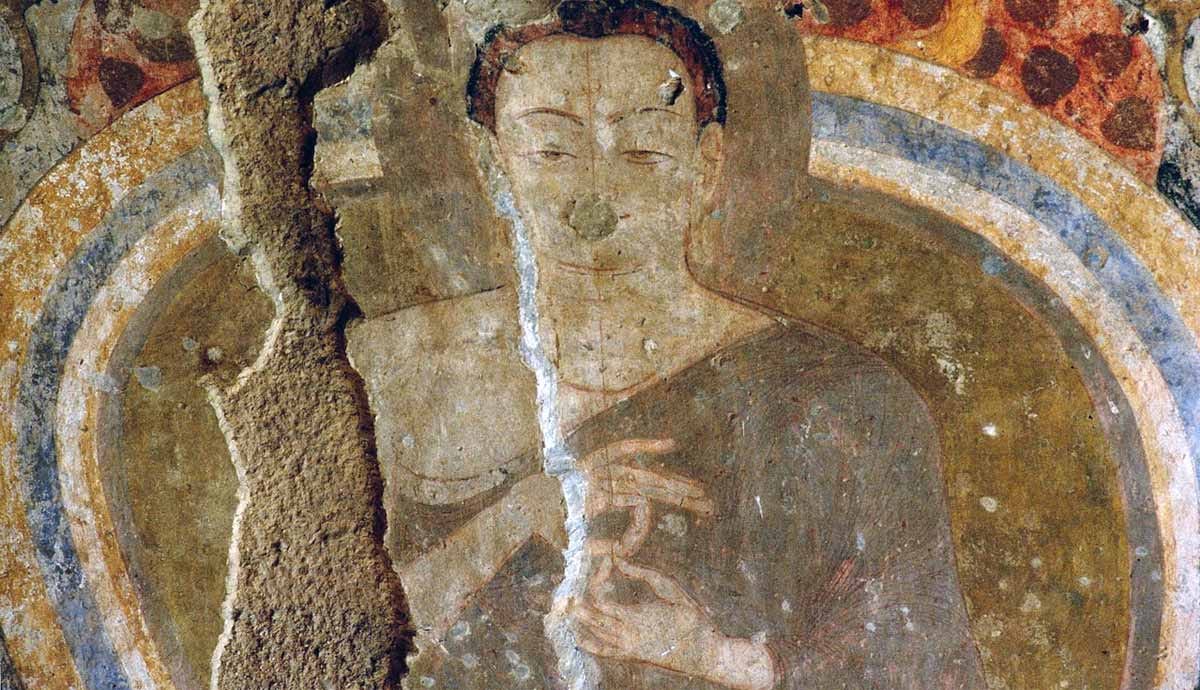
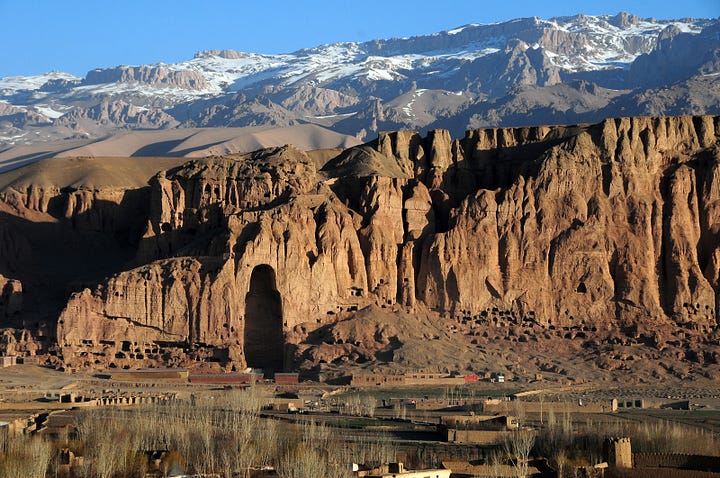
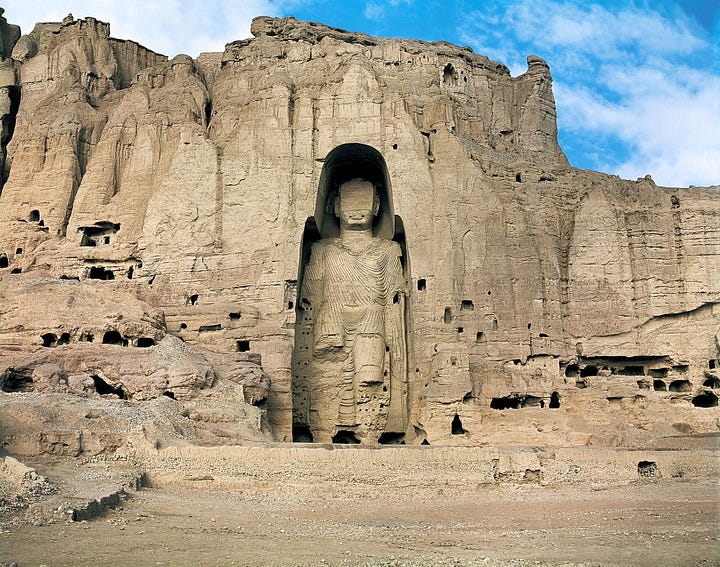
The oldest surviving oil paintings in the world are not European at all. They are Buddhist murals created around 650 AD in Bamiyan, Afghanistan, along the Silk Road, painted inside rooms carved behind the giant Bamiyan Buddha statues (now destroyed).
The Buddhas of Bamiyan (Bamiyan Valley in Northwest Afghanistan)
The Bamiyan murals used sophisticated mixtures of pigments and oil binders. Some even included varnish layers. In other words, this was not a primitive accident or an isolated experiment. Their techniques were already highly developed, which raises an obvious question: if artists in Asia were using refined oil-binding processes by the 7th century, how long had the medium already been developing before that?
The Silk Road, after all, was not just a trade route for spices and textiles. It also moved technologies, religions, pigments, and artistic ideas. Materials traveled. Techniques traveled. Images traveled. Oil painting likely did too.
Buddhas of Bamiyan
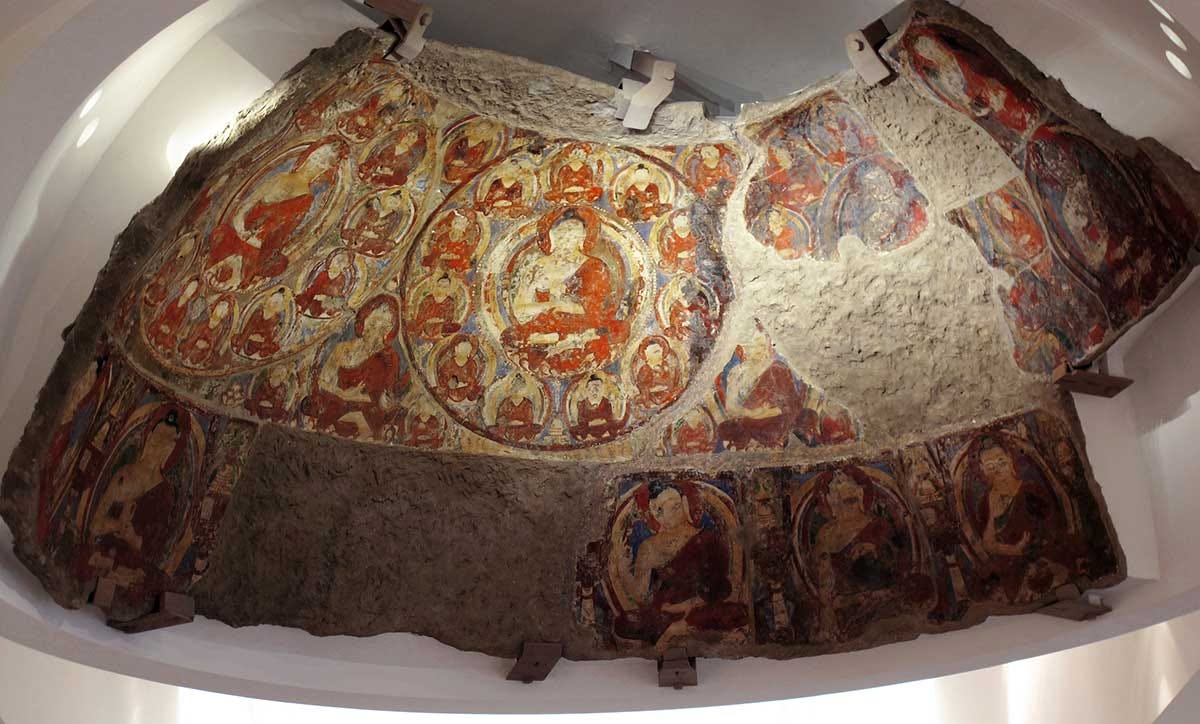
Now, Jan van Eyck was part of the story early on, but he was not the medium’s inventor. What he did do was revolutionize and perfect the medium rather than invent it outright.
Before they got into the hands of van Eyck, oil-based paints were mostly being used for practical purposes in Europe. In around 1125, the German philosopher and monk Theophilus Presbyter wrote a treatise—De diversis artibus (“On Various Arts”)— in which he mentioned oil paintings as useful, durable coatings for sculptures, carvings, shields, and wooden fittings.
Tempera—made from mixing pigments with water-soluble binders—was the dominant artistic painting medium in Europe at the time, but it demanded precision and commitment as it was fast-drying. Once a brushstroke was laid down, there was little room to rethink it.
Oil painting gradually replaced tempera in late medieval Europe over the next three centuries due to its flexibility, slow drying time, transparency effects, and structural durability. The shift happened slowly, through technical refinements, workshop experimentation, and artists pushing the medium further than it had gone before.
Which brings us back to Jan van Eyck.
Jan van Eyck, Presumed Self Portrait (1433)
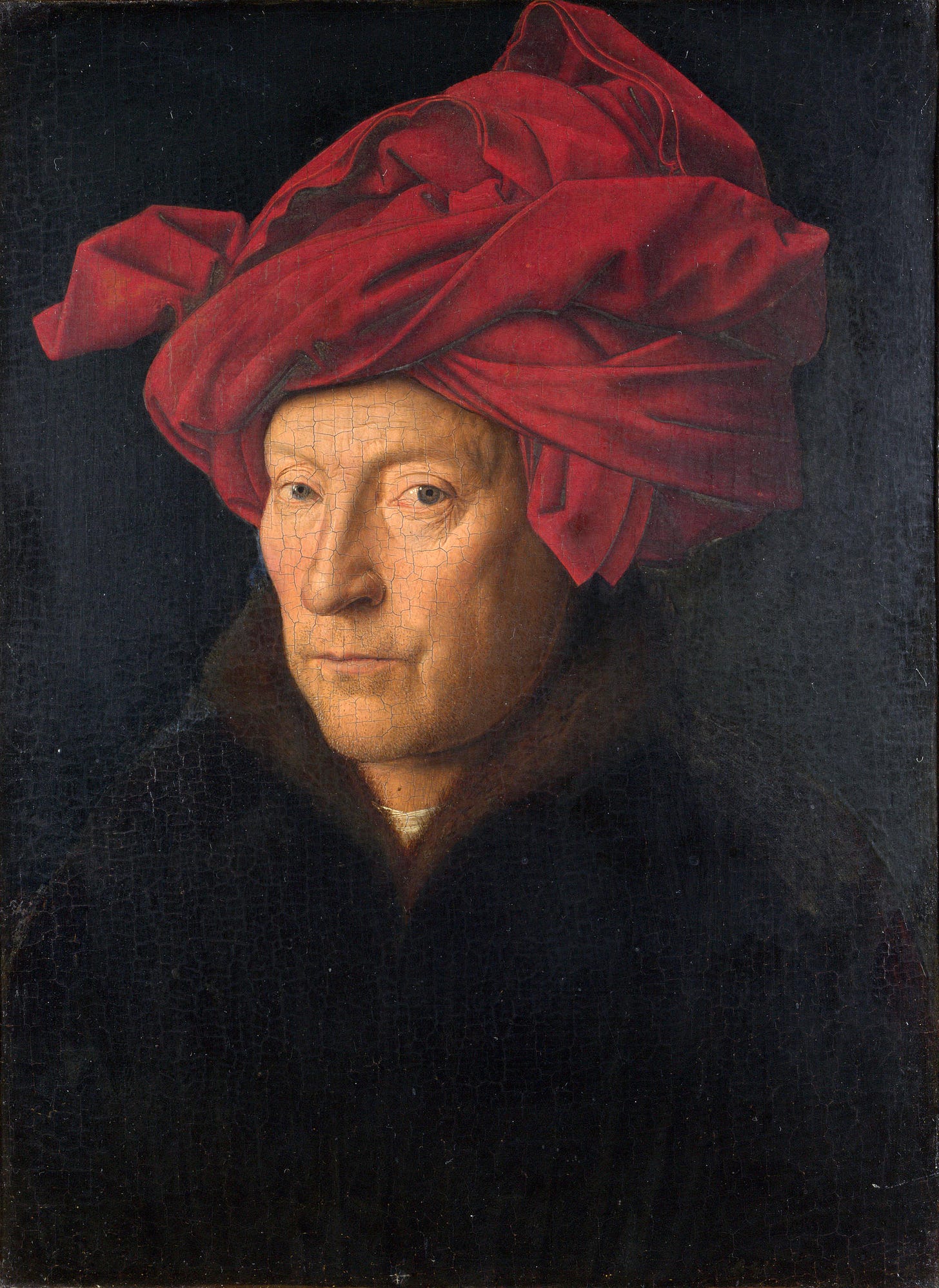
Working alongside his brothers, van Eyck spent years experimenting with oil-based techniques in panel painting, refining the medium into something astonishingly flexible and controlled.
Earlier medieval paintings like the one we can see below, often emphasized symbolic clarity over optical realism. Figures could feel flat, outlined, and detached from physical space.
Anonymous, The Wilton Diptych (c. 1400)
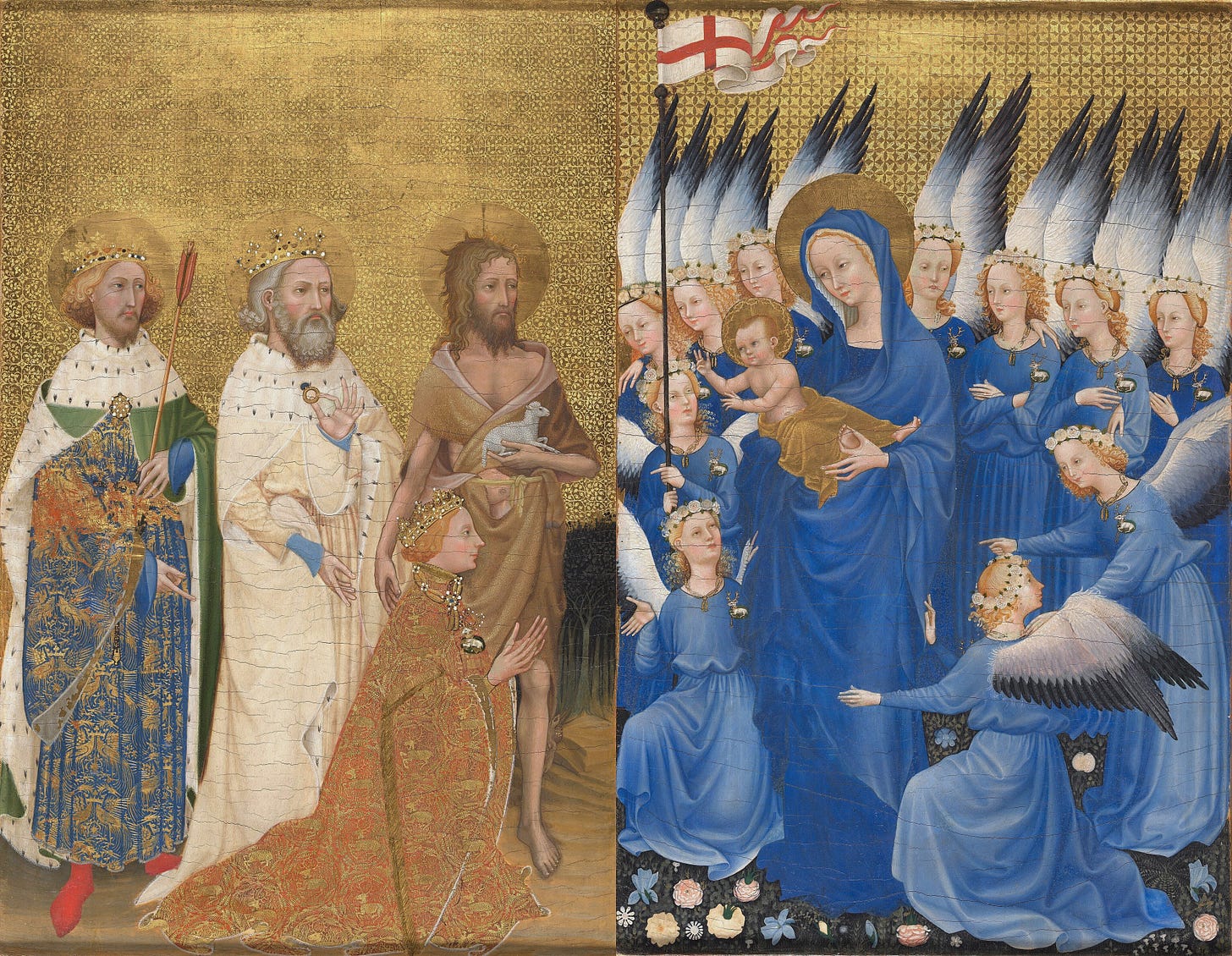
But Northern European oil painting suddenly seemed capable of describing the visible world with unnerving precision.
Textures gleamed. Metals reflected light. Skin appeared translucent. Fur looked touchable. Glass looked fragile enough to shatter.
And then there were the colors.
Oil paint becomes translucent when pigments are suspended in oil. This allowed artists to build images through glazing— a technique of applying thin transparent layers of paint over dried underlayers, so that light would travel through these layers and bounce back outward. This would create a depth and saturation impossible in tempera.