《相对稀缺的逻辑:Rockonomics》 --- Rockonomics: The Logic of Relative Scarcity
In two recent posts on cinema, I argued that we cannot really separate art from business. Not because art is reducible to business, and certainly not because commerce exhausts its meaning, but because the economic structure of a cultural industry shapes what gets made, what survives, who can sustain a career, and what kinds of risks become possible. The same is true of music. If anything, it may be even clearer there.
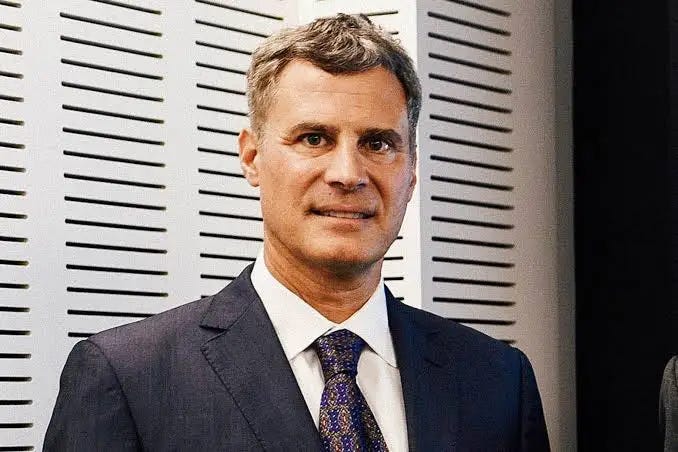
That is one reason Alan Krueger’s Rockonomics is such a wonderful book. It is a book about popular music, but it is also a book about markets, technology, inequality, pricing, bargaining power, and scale. It takes an industry many people associate with rebellion, spontaneity, and authenticity, and shows that beneath the mythology lies an economic world of extraordinary clarity. Rock, or more broadly popular music, turns out to be one of the best windows into the logic of contemporary capitalism.
There is also something fitting in lingering on this book now. Krueger was one of those rare economists who could move across worlds without flattening them. He could write about labor markets, education, policy, and macroeconomic questions, and then turn to music without condescension and without losing rigor. Rockonomics is a perfect example.
Krueger’s central insight is simple, but it opens a great deal. The music business changed not because people stopped loving recorded music, but because technology changed what exactly could be sold. In the older model, recorded music was scarce. Producing, pressing, shipping, and selling albums required a costly physical infrastructure. That scarcity generated revenue, and concerts often served, at least in part, to promote records. In the newer model, recorded music became abundant. Piracy, file sharing, and later streaming dramatically reduced the economic value of owning the recorded product. Music did not disappear. It became easier than ever to access. But precisely because it became abundant, it became less valuable as a direct source of income for many artists.
Scarcity, however, did not disappear. It migrated.
It moved from the song as an object to the concert as an experience. A file can be copied endlessly. A live performance cannot. Presence, immediacy, and the event itself became the scarce part of the product. The center of gravity shifted accordingly. In the old world, albums helped sell concerts. In the new one, songs increasingly help sell tickets.
Krueger does not leave this at the level of elegant theory. He shows it in the data. Concert ticket prices rose much faster than general consumer prices, and for top touring artists income from live performance came to exceed income from record sales by a very large margin. These are not minor adjustments. They reveal a structural reallocation of value inside the industry. Once the recorded product became easier to copy and harder to monetize, the live event became the place where scarcity still existed and where revenue could still be captured.
Seen from this angle, the rise in ticket prices looks less like a local annoyance and more like the visible surface of a deeper transformation. If artists earn less from recordings, they have stronger incentives to extract more income from touring. Add to this the rise of secondary markets, which revealed that many tickets had long been sold below what at least some consumers were willing to pay, and the logic becomes clearer still. More segmentation, more aggressive pricing, more conflict over who captures the surplus: artist, promoter, platform, venue, or scalper. The economics of music becomes, among other things, a story about where value moves when technology destabilizes an older equilibrium.
But the significance of the book goes beyond the shift from records to concerts. What makes music so analytically powerful is that it offers a particularly clean case of what Sherwin Rosen famously described as the economics of superstars. In markets shaped by scale and replication, small differences in perceived quality, visibility, or reputation can generate very large differences in reward. Once technology allows the best-known performers to reach vast audiences at very low marginal cost, earnings cease to move proportionally with talent. They become sharply skewed. A handful of winners pull away.
Music makes this easy to see. The same song can now be heard by millions, even billions, without requiring proportionate increases in cost. This is a classic economy of scale. The same performance, the same voice, the same image can circulate globally. And because attention remains scarce even when supply becomes abundant, consumers do not spread themselves evenly across artists. They concentrate. The result is a distribution of earnings that is highly unequal, with enormous rewards at the top and instability for a great many capable musicians below.
This is not unique to music, of course. It is one of the defining patterns of our time. But music got there early, and in especially visible form. The broader tendency is familiar by now. Technology lowers reproduction costs, expands access, strengthens scale, concentrates attention, and puts pressure on the middle. In cinema, one sees this in the decline of the mid-budget film, squeezed between giant franchises and low-cost content. In music, one sees it in the growing distance between global touring acts and the large world of artists beneath them. Different industries, different products, but at a broad level the direction is strikingly similar.
And yet Krueger is too subtle an observer to reduce all of this to money alone. That is one reason the book remains humane. The market matters, but it is not the whole story. Here Tyler Cowen is useful. His broader argument is that commercial culture need not crowd out artistic value. Artists operate within markets, but the market relationship does not mean that art is reducible to money alone.
That is why the voices of musicians matter so much in Krueger’s account. Paul Simon can say that popular music is “completely tied up with capitalism,” and he is right. But Springsteen can also say that, if he is doing his job right, he helps people “hold on to their own humanity,” and he is right too. The point is not to choose between those statements. It is to see that both belong to the same world. Art is embedded in markets, but it is not exhausted by them. A song is both a commodity and an act of expression. A concert is both a revenue stream and a human event. A musical career is both an economic struggle and a search for voice, form, and meaning.
This mixed character is part of what gives the subject its emotional force. We would like to keep art uncontaminated by commerce, because we want beauty to feel exempt from the harder logic of the world. But the history of modern music suggests that this is too simple. Art does not cease to be art because it is shaped by contracts, pricing, platforms, or technology. If anything, those forces make visible how contingent and fragile artistic life really is. The beauty remains real. So does the system surrounding it.
In the end, then, the economics of rock is not just about rock. It is about what happens when technology destroys one form of scarcity and creates another; when access expands but rewards concentrate; when the product becomes ubiquitous but the experience becomes premium; when abundance widens participation while scale and attention make income more skewed. Music is such a good subject for economics because it reached this future early.
That future now extends far beyond music. We have seen the same general logic in digital platforms and social media, where scale and visibility generate highly unequal rewards. And we may well see it again in the age of AI. Artificial intelligence lowers the cost of producing text, image, sound, and code, just as digital technologies lowered the cost of reproducing music. It expands supply enormously. It makes entry easier. But that does not guarantee broad-based rewards. On the contrary, when production becomes cheaper, attention often becomes even more scarce, and those who already possess reputation, distribution, or the capacity to scale may pull further ahead. More creation, more participation, more output — but also, potentially, more concentration.
That is one reason Rockonomics feels larger than its title. It is a book about a particular industry, but also about a general pattern. And it carries, quietly, another lesson as well. Alan Krueger had the rare ability to write about markets without becoming doctrinaire, and to write about culture without becoming vague. He could take a world filled with glamour, sentiment, fandom, and nostalgia, and show its underlying economic structure without draining it of life. That is a difficult thing to do. It is also a form of respect: respect for the subject, respect for the reader, and respect for the idea that economics can illuminate rather than diminish.
If my recent posts on film argued that art and business are more deeply entangled than we often like to admit, this is the musical counterpart.
References:
Krueger, Alan B. Rockonomics: A Backstage Tour of What the Music Industry Can Teach Us about Economics and Life. New York: Currency, 2019.
Cowen, Tyler. In Praise of Commercial Culture. Cambridge, MA: Harvard University Press, 1998.
Rosen, Sherwin. “The Economics of Superstars.” American Economic Review 71, no. 5 (1981): 845–858
- **If this essay resonated with you, you can subscribe to my Substack for regular reflections on economics, politics, geopolitics, AI, and literature.
- ** Disclaimer: I used ChatGPT-5.4. as an editorial and language-refinement tool. The ideas and arguments are entirely my own, and I take full responsibility for them.