如何发掘个人品味 - mymind 专栏 - 心灵宫殿 --- How to find your own taste - by mymind - The Mind Palace

I read an alarming statistic the other day. Apparently, 48% of Gen Z purchases products now that they don’t like or use. And nearly half of Gen Z finds it harder to make decisions today.1 Which is to say, Gen Z doesn’t know what they want. And it’s not hard to figure out why: this generation is living online. They’ve grown up on algorithms spoon-feeding them products, aesthetic trends and political narratives.
Most of us are right there alongside them, regardless of our generation. Even if you’re not scrolling Tiktok or Instagram for 10 hours a day, you’re liking using ChatGPT and skimming AI-generated summaries for your Google searches. We’re outsourcing our analytical thinking and decisions big and small, leaving us less confident in decisions we make ourselves. We’re slowly but surely losing touch with who we are and what we like.
I’ve always been fascinated by identity. Who I am, what’s going on in other people’s heads, what we’re drawn to, the human (or at least Western) obsession with “finding” ourselves, whether that’s even possible. And specifically, taste. Both personally and creatively: The things we create, the objects we choose, the way we style ourselves, the people we surround ourselves with, the homes make for ourselves.
So I’ve put together a sort of guide for you and myself to help us find our way back to who we are and what we like.
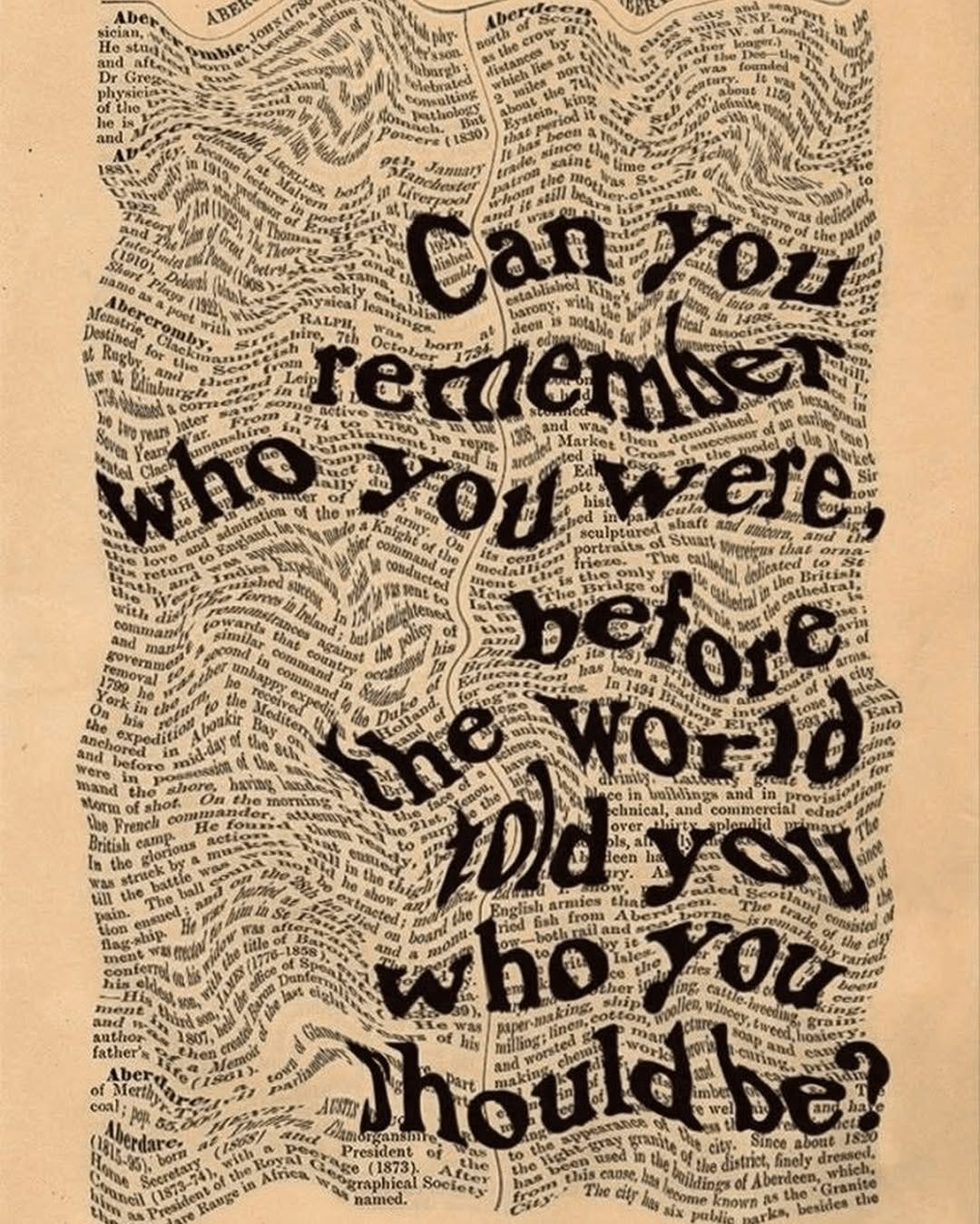
Quote by Charles Bukowski. Artist unknown - lmk if it’s you!
1) Realize taste is not a performance
We tend to mix this up now because of apps like Instagram and Pinterest, which encourage us to curate our profiles for an audience. And while the grid you curate might reflect your taste in some sense, it’s not how you build it.
When you’re curating or performing for an audience, you are not your natural self. You’re consciously or subconsciously editing yourself, optimizing for the best results. The weird thing that doesn’t fit the grid is dismissed. The somewhat controversial choice that might lose you followers gets deleted. The image likely to get the most engagement gets prioritized. How do you connect with your instincts and point of view when you’re suppressing or optimizing it for other people? Curating your profile may be helpful for building your “brand” or sharing your taste, but it’s not the way to find it.
Your taste is between you and you. It’s not about how you’re received, what aesthetic trend you fall into or how many heads you’re turning on the street. Taste is an expression of your authentic self. Which brings me to my next point.
2) Find a private place to explore your taste
My friend texted me today saying how much she loves having the house to herself when her husband is away. She misses him, but she feels a sense of ease and relaxation moving around her home alone, like she can do whatever she wants and have her space just how she likes it.
We all need that space sometimes, both physically and mentally. You cannot find your taste when other people are watching or offering their opinions. It’s like dancing alone in your living room vs. with someone else.
Find one private spot to collect your inspiration, references, thoughts, favorite products, random objects you find interesting, wishlists, highlights, photos, screenshots – whatever resonates with you in some way. Don’t show it to other people. Don’t think about them at all when you’re deciding what to put in there. Just save what makes you stop scrolling for a second, or whatever inspires you or feels somehow like you in the moment.
Eventually, you may see specific things showing up often, or some interesting overlaps or juxtapositions between what you’ve saved. Pay attention to that. These are clues to your taste.
A rare glimpse into my very non-curated, messy & beautiful mind (I use mymind.com as my private space - you can use anything you like)
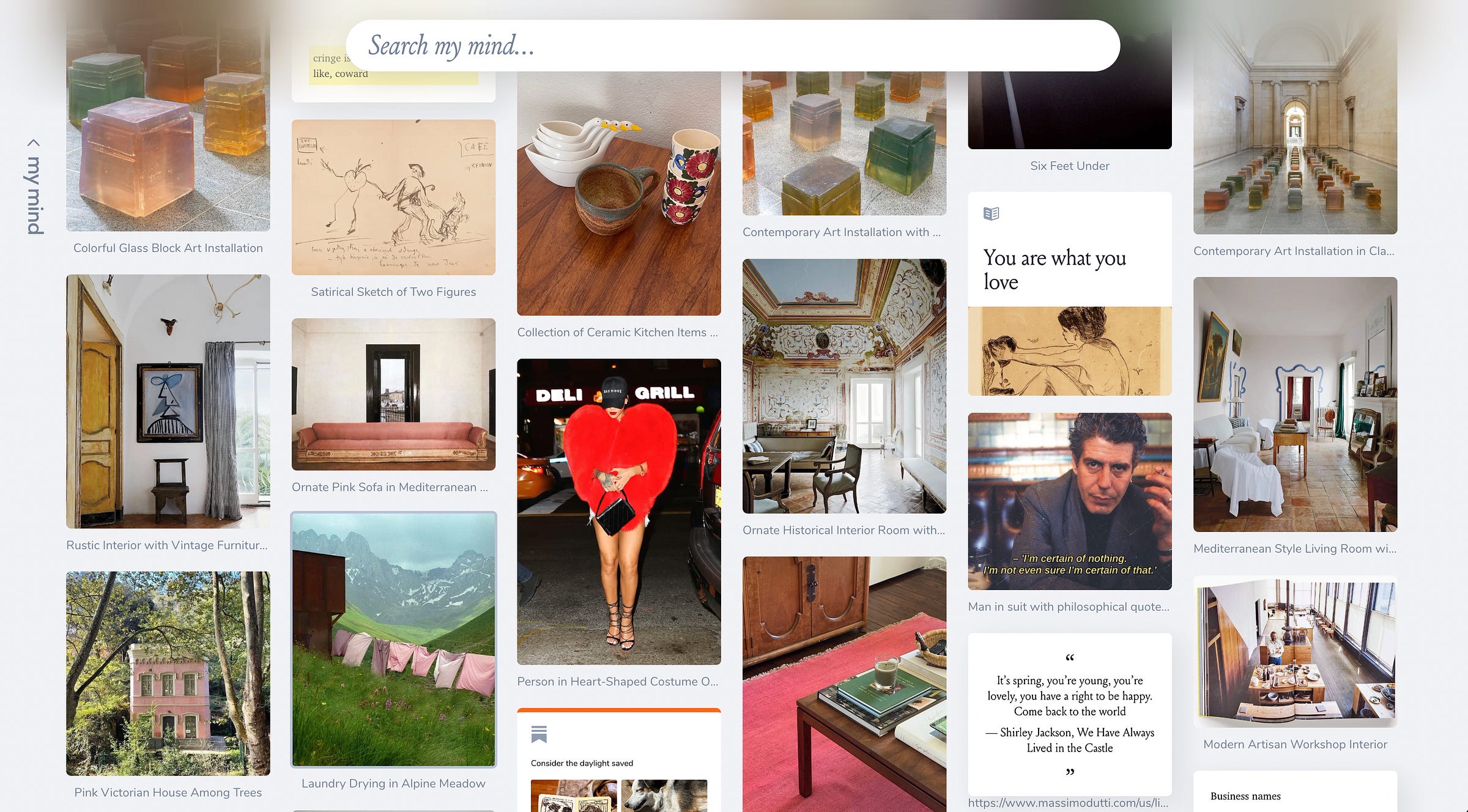
I use mymind for this, because it’s made for exactly this purpose: a single, private place to put all your ideas and inspiration. But you can use whatever you like. A folder on your desktop, a collage you hide under your bed. The only thing that matters is that it’s private.
✦ I share more about this practice in this essay → The most creative people you know have a secret repertoire
3) It only has to make sense to you
You won’t find what you identify with if you’re analyzing yourself every step of the way. Removing the audience helps, but don’t let yourself get in the way either.
As you collect inspiration in your private treasure trove, let it be messy and chaotic. Don’t judge it. Just save it. Nobody’s going to see it but you. It doesn’t have to mean or signify anything about you yet, or ever. What’s important is that you feel absolutely free to be at ease with yourself and the things you’re drawn to.
Your taste doesn’t have to fit a pattern or be anything you recognize either. Even better if it doesn’t. Look for your own connections between things you’re drawn to, or experiment with putting them together. Maybe you’ve saved a steel table in your collection and you see it next to a frilly sock. These things don’t go together, but something about them side by side speaks to you. Take note of that.
The guy who first put pineapple on pizza wasn’t doing it because it made sense. He just liked it.
✦ More on embracing your weirdness here → It’s time you reclaim your right to idiosyncrasy
4) Expand your sources. Widen your net.
Platforms like Instagram or Pinterest are great resources for finding your taste, but they shouldn’t be the only place you browse. The goal here is to break outside of the algorithm. The algorithm is only reinforcing what’s already popular with other people, taking you in a circular loop of passing trends. Your taste isn’t “cottage core” or “y2k,” which are only reductive terms that categorize a trend so businesses and influencers can commodify them.
Your taste should be something other people can’t quite put their finger on, because it’s distinctly you. It is, and comes from: the books you read, people you admire, art that speaks to you, music you listen to, places you travel to, history and culture you’re exposed to, your upbringing, your family and so much more. If you’re researching online, try to randomize things a bit more. Follow different people, dig deeper for other platforms and websites. And then get offline and immerse yourself in the real world. Go to a museum, take a walk, sit at a cafe and people watch.
✦ Here’s a good place to start → Less doomscrolling, more Bloomscrolling: A master list of cool websites, archives & hidden treasures
5) Look more closely at what you’ve already chosen in your life
Real taste is not some culturally relevant slot you fit into. It’s more about the extremely niche things that have embedded themselves in your psyche or connected with you in a very specific way. Maybe these choices make you feel safe or more confident for some reason (more on that in this essay). While taste isn’t just about aesthetics, I’ll use my taste in fashion as an example. My fashion sense is informed by very specific influences and people in my life, including:
My aunts - One wore oversized drape-y clothing, chunky clogs, velvet two piece sets, clips in her hair, luxurious fur lined coats. The other wore LL Bean, knit sweaters, tortoiseshell glasses. I adored both of them growing up, and I can see their influence in my clothing preferences to this day. Some wardrobe choices I make are inextricably linked with my affection for them / fascination with them.
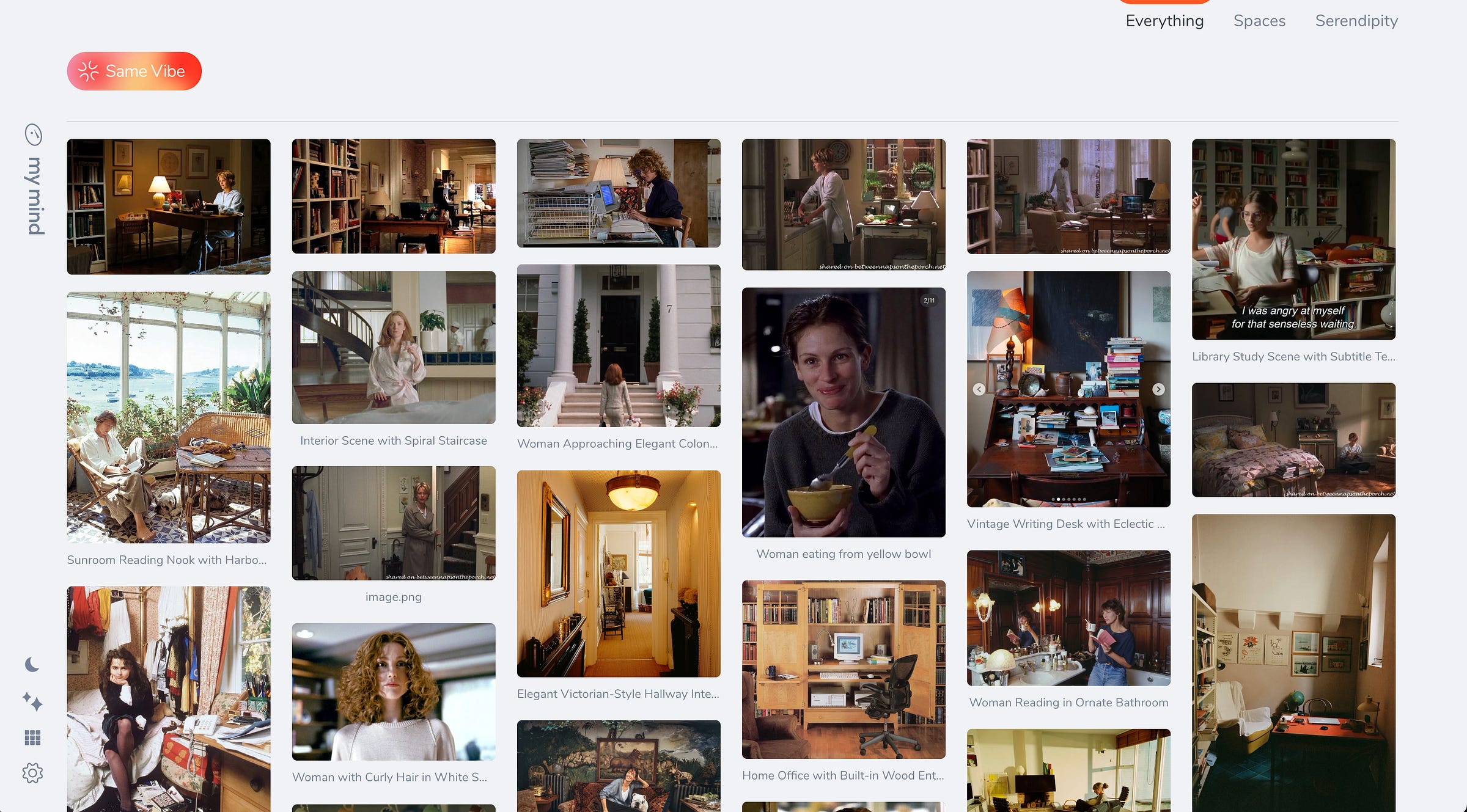
The 90s - I grew up in the 90s and will forever love many aspects of that era. I can point to several different cultural touchstones or experiences that still sit somewhere in me: movies like The Parent Trap and The Little Princess. TV shoes like Hey Arnold. The American furniture and interior design style of that time. All of it’s swirled up in there into something that might not read 90s exactly when I put it together, but definitely points back to it.
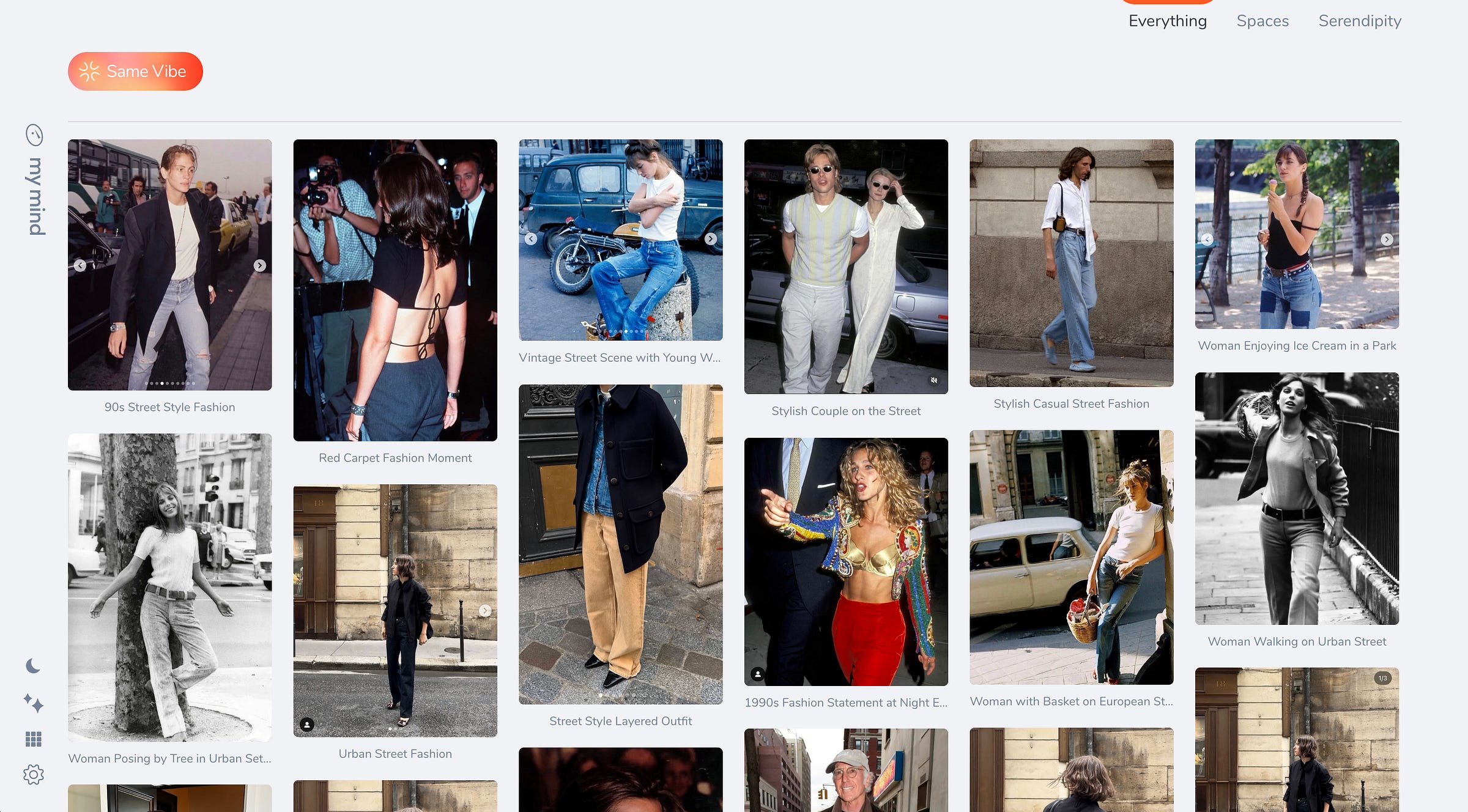
Using the Same Vibe feature in mymind to find related images from my own collection. All of this is stuff I intentionally saved before - not recommended by an algorithm.
Boys I’ve had crushes on - I can see some of the men I’ve loved in my style: in my soft spot for hoodies, structured pieces, thick sherpa. I don’t know if this is good or bad, but it’s true.
My parents - My mom dressed us in stripes. She wore lots of soft, oversized flannels. My dad always wore these heavy rugby shirts and ratty old crewneck sweatshirts. They both dressed for comfort and wore the same pieces for decades. Choosing some pieces or textures or patterns like this (especially stripes, I will forever be obsessed) makes me feel closer to them. It’s a way of recognizing and honoring where I came from.
Most of these decisions and preferences are subconscious, but if I look at old photos and analyze my wardrobe closely, I can trace the influences.
What are you already choosing? What do you keep coming back to? Write that down. Or take a photo of it. Or find the reference online. Save it in that private space you’ve hopefully already established. This is building taste with meaning, not based on fads or algorithms. No one can tell you what that is, no one can copy it.
✦ I have more thoughts on this, of course → Every choice is a confession
The process of finding and developing your taste is ideally organic. If this approach does nothing for you, that’s fine! Find your own way.
And, importantly: Be unapologetic about what you love. If you sincerely connect with pumpkin spice lattes and “Live Love Laugh” signs and your taste is considered “basic” by the current culture, love it anyway. What we’re going for here is unfiltered, genuine flow between you and the world.
Morning Consult, Core Narratives and Decision-Making (commissioned by Pinterest), US, January 2025