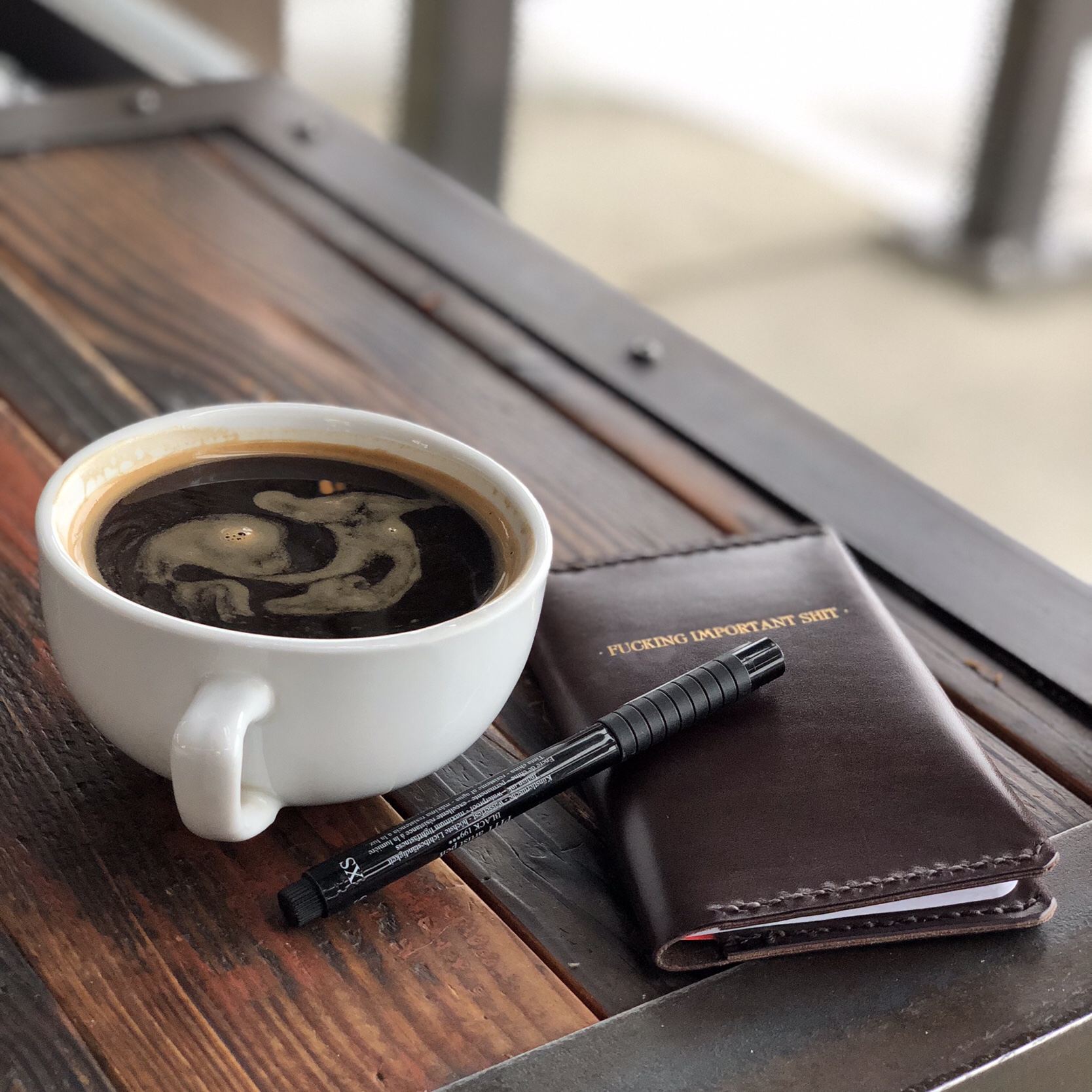
狭小空间——颂扬模拟写作的独特乐趣 --- The Cramped – Celebrating The Unique Pleasures of Analog Writing
What we believe in.
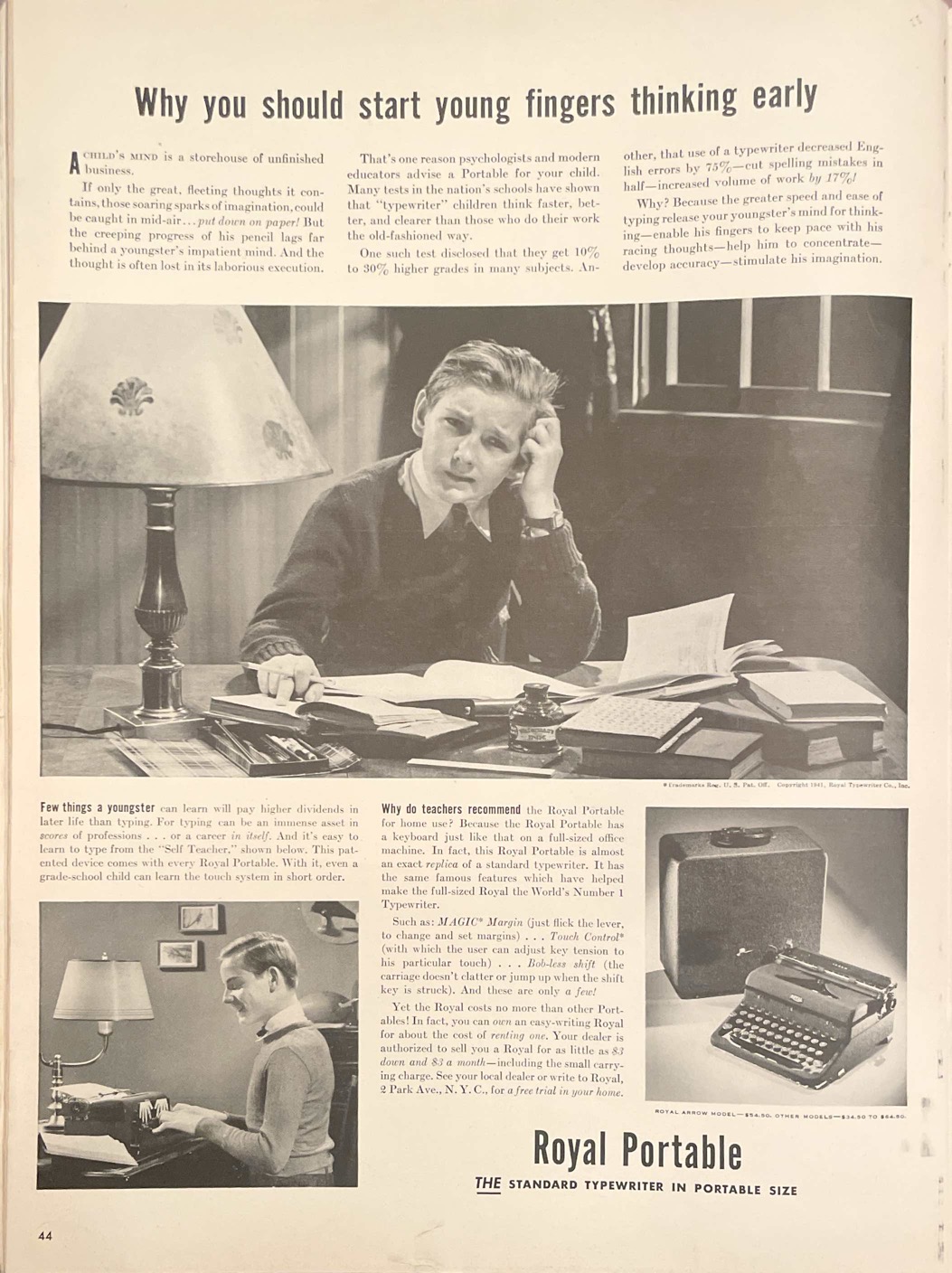
An advertisement for Royal Typewriters from Life Magazine, January 6, 1941.
Overall, there’s an appealing simplicity to pencils. There’s no cables or batteries or sync issues—you just pick it up and write.
For the sake of clarity, I’ll be addressing the majority of the typewriter sales in the secondary market which are broadly the most common typewriters made for the commercial market after about 1925. Most of these were manufactured in the realm of hundreds of thousands to several millions each and are thus decidedly not rare.
In celebration of International Typewriter Day (which is today), Chris has put together this very useful guide and consideration for anyone interested in purchasing, repairing, and maintaining one.
From postage stamps to jetliner specifications to items he packed for the journey, José Naranja’s sketchbooks (previously) capture minute details of numerous international trips. “I’m lost in the intricate details, as always,” he tells Colossal. Everything from currency to noodle varieties to film references make their way into small books brimming with travel ephemera and observations.
These. Are. Breathtaking.
“In case of emergency, break open a book.” Indeed.
This is also a nice bit of history on Penguin’s Little Black Classics—and paperback books in general.
I own seventeen fountain pens. That’s a lot less than many people, I know, but to most people, especially those who don’t care about pens or stationary, it’s a ridiculous amount. A couple month’s ago, I wondered what it would feel like to use just a few pens, so I challenged myself to clean and store most of my collection and keep only four pens inked for a while.
Here’s what I’ve been using, and why.
This is by far my most expensive pen, so you can bet it’s going to be consistently inked and used. It also happens to be my most comfortable pen for long writing sessions, with, by far, the smoothest nib on any pen I own. So this is the pen I use to write prose fiction—novels, short stories, poetry, anything but screenplays (which, though I take initial notes for them by hand, I write digitally because formatting is so much easier). Because writing is my full-time job, this pen gets used almost daily, for hours at a time. It’s nearly always inked with Diamine Oxblood (if I have a signature ink, Oxblood is it).
This was the first Very Expensive Pen I ever bought, and it’s also probably my most useful. The retractible nib makes it the best fountain pen I have for taking quick notes, so it stays with my bullet journal and gets used pretty much daily. If I was forced to own only one pen, it would be this one because of its combination of beauty, comfort, and utility. It’s currently inked with Kaweco Orange, which I like for its boldness and so put in a pen from time to time, but it’s not a great ink for notes, so once the current fill runs out, I’ll replace it with something darker and more professional.
I acquired this pen only a few months ago at the California Pen Show, but it’s been inked ever since. It has a flex nib, making it a joy to journal and write letters with. Since I journal almost daily, it gets used almost daily. It’s urrently inked with Diamine Walnut, which closely matches the pen’s brown hard rubber body and adds to the vintage feel of using the pen.
I knew when I started this experiment that I would need to keep inked a robust, durable pocket pen. I own two pocket pens, this Kaweco Liliput and a Kaweco Brass Sport. To be honest, I like the Brass Sport much more than the Liliput. It’s far more comfortable to use unposted, making it ideal for quick notes, and when I do need to post it, the cap pops onto the back in an instant, unlike the Liliput, which requires threading to post. That said, when Kaweco released their new mini converter, it solved one of my gripes with the Liliput: having to syringe fill a cartridge in order to achieve any reasonable ink capacity. So I decided to give the Liliput, which had been uninked for nearly a year, some love. I don’t use my pocket pens that often—maybe a couple times a week—so I’m going to keep using the Liliput until the converter is empty, which will probably be a while. While I don’t love this pen, I do like it. And this experiment has stopped me from selling it, which I had been seriously considering.
I lied. I have five pens inked. I really meant to ink only four, I swear. But, you see, I forgot to empty and clean my Montblanc 146, in Glacier Blue. It was tucked away in a notebook cover, and I only realized this a few days after I’d inked up my four pens. I went to empty and clean it, but then I thought, But I really love this pen! I’ve had it consistently inked since I got it over a year ago. And I use it all the time. So, even though it isn’t filling any unique use case like the other pens are, the 146 is inked pen number five. I use it whenever I feel like it, which is often. Ive never had any other ink in this pen than Montblanc Glacier Blue, because they match.
I’m sure that at some point I’ll ink up my other pens again, and I’m not going to sell off the rest of my collection in the name of minimalism or anything (in fact, I’ll certainly buy more pens, given time). But for now, I’m enjoying using just these four five pens with intention and purpose.
One of things I most enjoy about doing archival research on writers is the discovery of their handwriting.
Some wonderful notes on the handwriting of many famous writers and what it tells us.
In 1980, Mr. Furrier was working for a tree trimming company when his childhood friend and neighbor, Teddy Vandewalle, told him that his father, Ed, was looking to train someone to fix typewriters at his shop in the Boston area. “He knew I was a tinkerer and just thought it would be a natural fit,” Mr. Furrier recalled.By the end of his first day, Mr. Furrier knew he had found his calling. He spent his first week disassembling and then reassembling a portable Smith Corona and was in typewriter heaven.
What a lovely little profile—with some great photos and videos.
A journal is the path of pebbles you leave behind you, so you have the security of knowing you can always return.
— Samara O’Shea
I took the occasion of Shawn’s deciding to update his portion of the What We Use page to update mine (which had not been done since 2018!). I’ve found that I’ve simplified quite a bit since then.
Myk Daigle helps me find my first vintage pen.
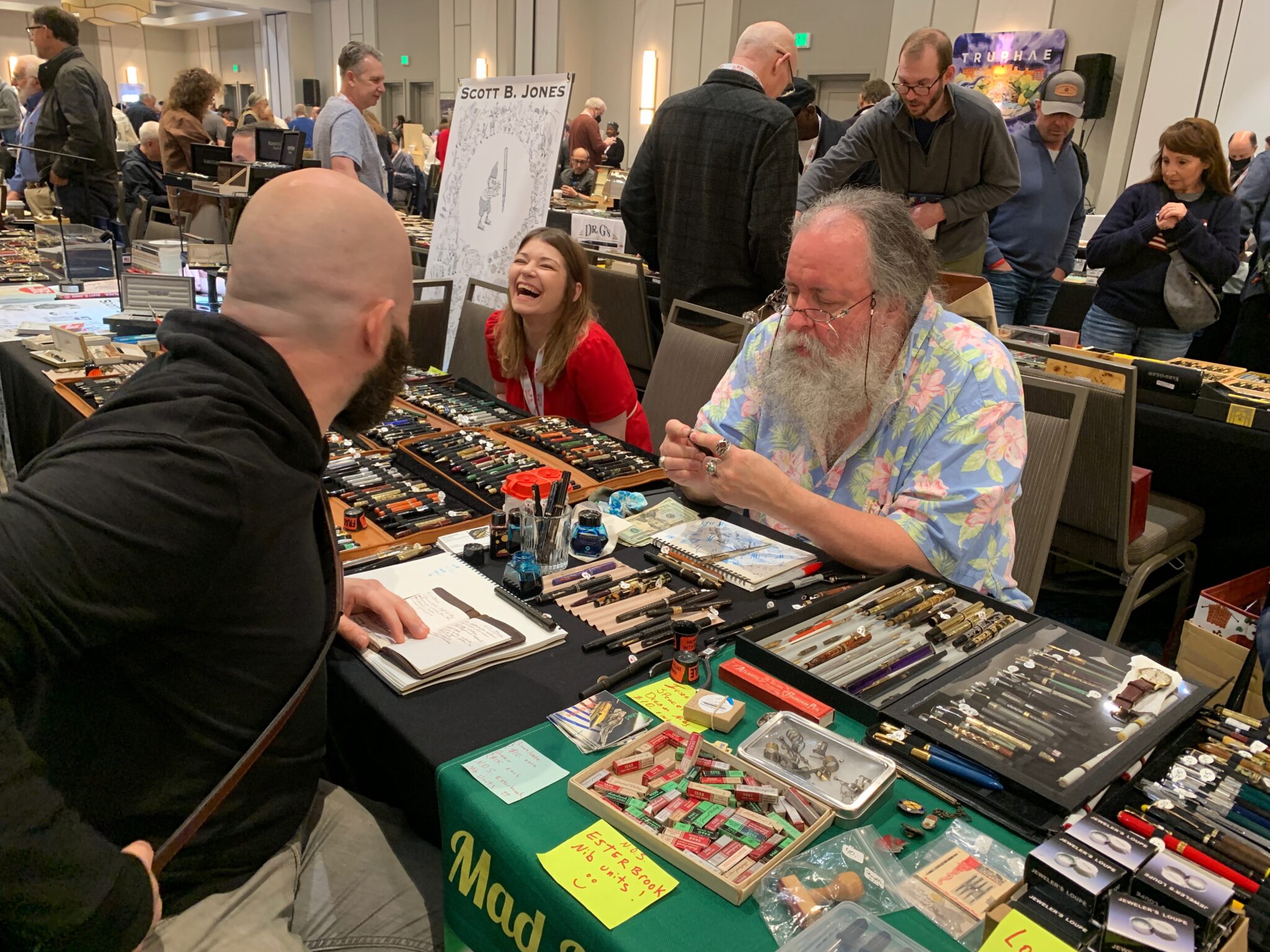
At the end of the first day of last year’s California Pen Show, because I had about $600 left in my budget for the weekend, I impulse-bought a Sailor Cylint. Listen: it’s a fine pen. Really. It’s shiny, sleek, classy, very black. It feels good in the hand. It has a nice ionized 21k gold nib. It writes well.
And I’ve regretted buying it ever since.
While it’s a perfectly good pen, it turns out it’s not for me. Two years into this hobby, I’m finally accepting that I’m not a Sailor guy. I’ve bought three very different Sailors now, and I never use any of them (in fact, I’m looking to sell them all).
At that same show, I bought a Montblanc 146 in Glacier Blue, and I love it. For months, I used it nearly every day. The only reason I’ve been using it less the last few months is because late last year I went to the Wes Anderson-designed Montblanc pop-up on Rodeo Drive and bought an 100th Anniversary Origins Edition 149, which I use all the time, and which was the only pen I bought between February of last year and February of this year. Turns out, I’m a Montblanc guy, not a Sailor guy. Trust me: my wallet wishes it were the other way.
It’s not because I personally find it boring that I’ve for the last year regretted purchasing the Sailor Cylint, though. I’ve regretted it because I bought it on the first day of the three-day show, and on the last day of the show, I fell in love with another pen. I don’t remember now exactly what it was, but it was red and vintage and restored by the wonderful Myk Daigle, who had added to it a handmade sterling silver snake clip made by Andy Beliveau (who has no web presence). Man, I wanted that pen. I kept returning to Myk’s booth to stare at it, hold it, write with it. But it was $300, and I had nothing left in the budget—because I had impulse-bought a pen I would go on to not love.
Fast-forward to this year’s California Pen Show just this past weekend. I had a much smaller budget than I did last year: about $300. After first spotting, trying out, and then mourning one of my grail pens (the Montblanc Homage to Victor Hugo, which having tried in person I now know I do really like and will acquire someday), I made a beeline for Myk Daigle’s booth. I’m not sure whether Myk remembered me, but he remembered the pen I didn’t buy last year. Sure enough, that pen was gone. No surprise there. But wait! He did have one—and only one—Andy Beliveau clip with him. Not a snake, but a beautiful mermaid.
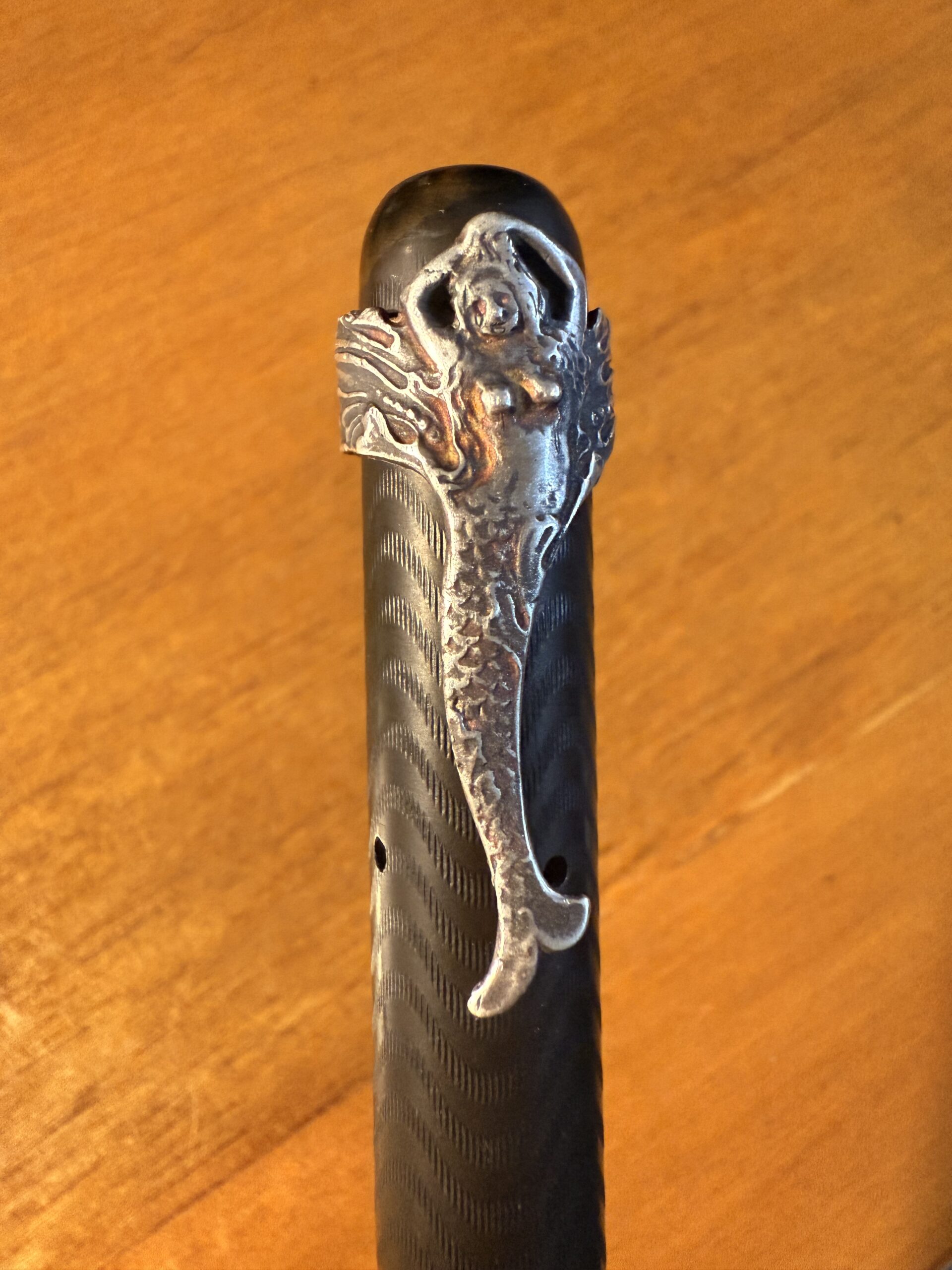
Instantly, this mermaid clip called to me even more strongly than the snake clip had. Snakes and pens go hand in hand, and they’re pretty easy to find. But mermaids?! Listen: I know something can’t be more unique on account of “unique” being an absolute adjective, but in a way, this mermaid clip is even more unique than the snake clip, because the snake clip, being handmade, was unique, while the mermaid clip is both unique and a rare thing to see on a pen. End of grammar digression.
Needless to say, I was going to buy that clip. All it needed was a pen to live on.
So Myk helped me find my first truly vintage pen (I have a couple of pens that were made in the 1980s), a Conklin Crescent Filler. After doing some research, I’ve been able to narrow down the manufacturing period to sometime between 1913 and 1920. This pen is over 100 years old! And since it was just recently restored by Myk, it of course writes beautifully, with a lovely flexible gold nib that, as a lefty overwriter, I can unfortunately take only limited advantage of.
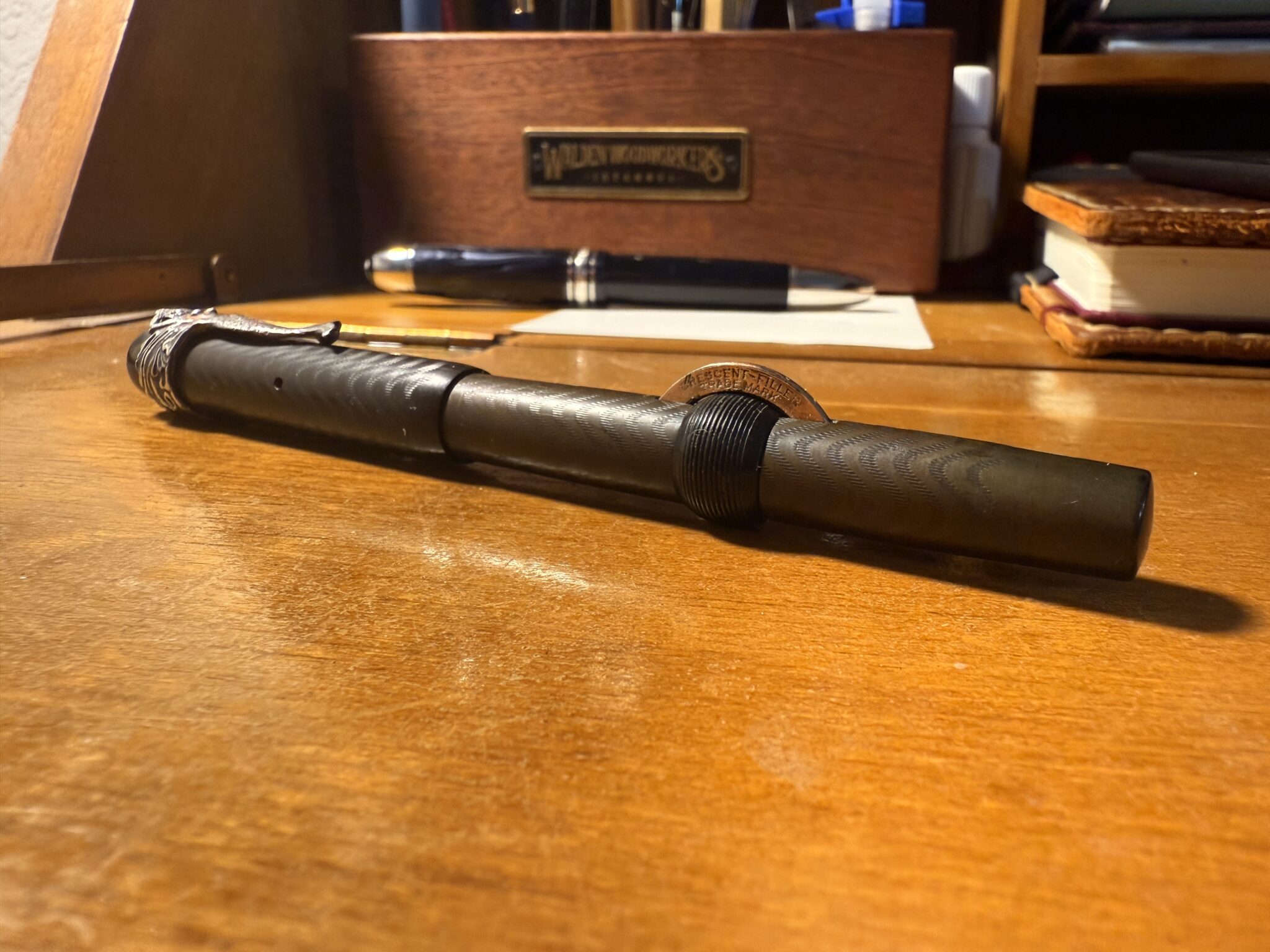
The clip cost me $60, the pen was $220, and I was able to get a bottle of Waterman Tender Purple and a pack of Galen pocket notebooks with my remaining cash (okay, I went like $10 over budget, all told).
I wasn’t sure I was going to be a vintage pen guy. I like big, girthy pens, and vintage pens are rarely if ever those. I also like modern pens that have a sleek, classy look, like my Pilot Vanishing Point and my 100th Anniversary 149. But it turns out I don’t like all sleek, classy, modern pens—sorry, Sailor—and I should not impulse-buy them. It also turns out that I do like vintage pens—or at least, I like this one. A lot. So far, I can hardly put it down.
And I have a feeling my vintage pen journey is just beginning.
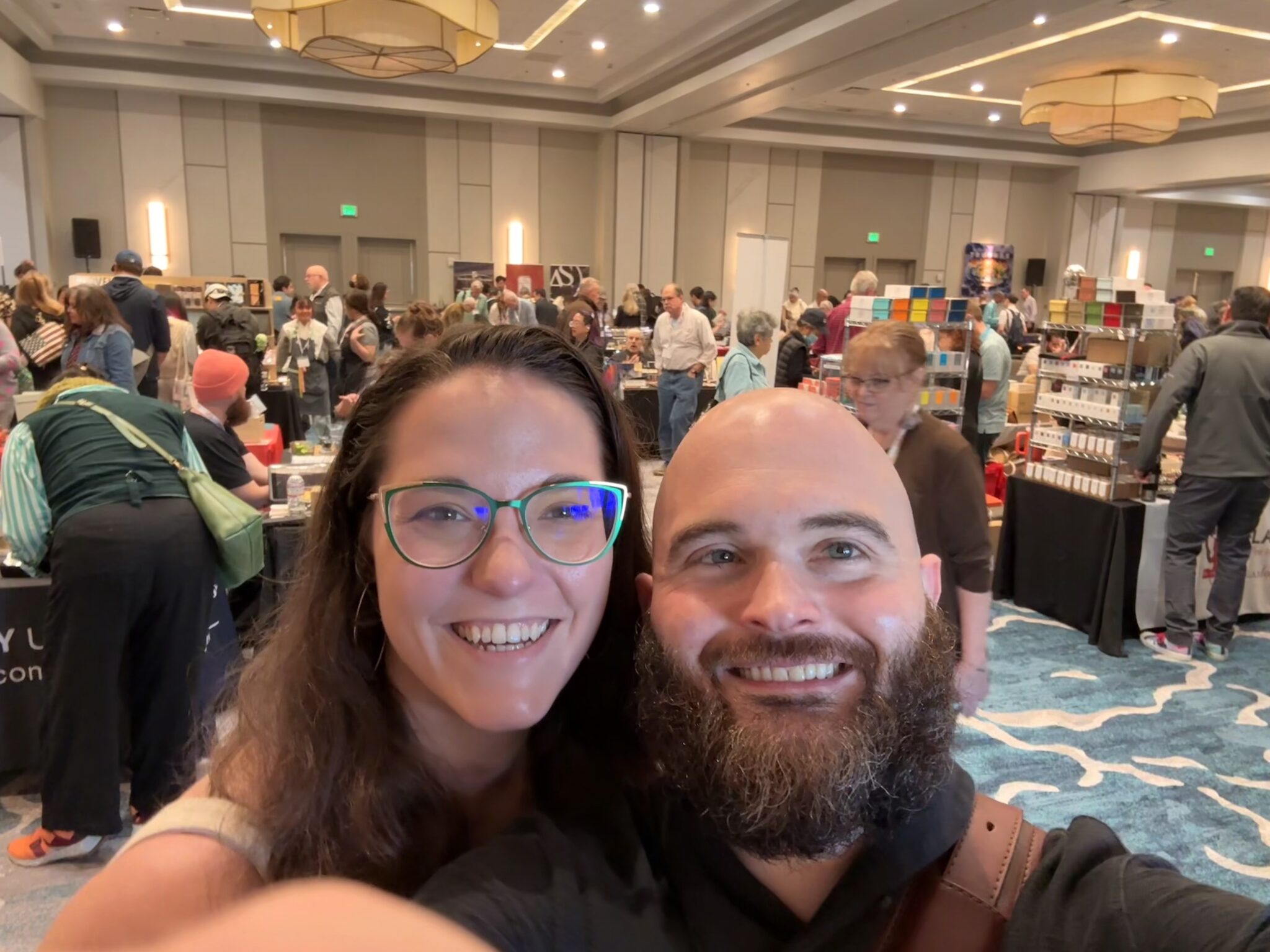
California Pen Show selfie with my partner.
At the end of every year, I publish a photo on Instagram cataloging the Field Notes notebooks I used over the previous 12 months. Here is the most recent picture.Every year, I get questions about this. I wrote a bit about the topic in 2014, but I thought I’d do it again here. So, uhhhh, here’s an FAQ.
Super fascinating.Lots of interesting workflow details. I love getting a look into what and how other people do things.
Delightfully simple and simply delightful, Paper Apps™ are a fun, smart alternative to screen time. Check out our solo games like DUNGEON, GALAXY and GOLF, as well as gamified tools like TO•DO and NUTRI•TRACK. For the full experience, we recommend grabbing a couple of Pencil Dice as well!
These look delightful.
(via Boing Boing)
Well, this is interesting. Day One, the (fantastic, by the way) digital journalling app has rolled out a collection of paper journals.
One of the features I love and have long used is Day One’s built-in feature that allows one to order a physical book of your journals.
I enjoyed this video walkthrough of how my friend Mike Rohde uses sketchnotes in his everyday life.
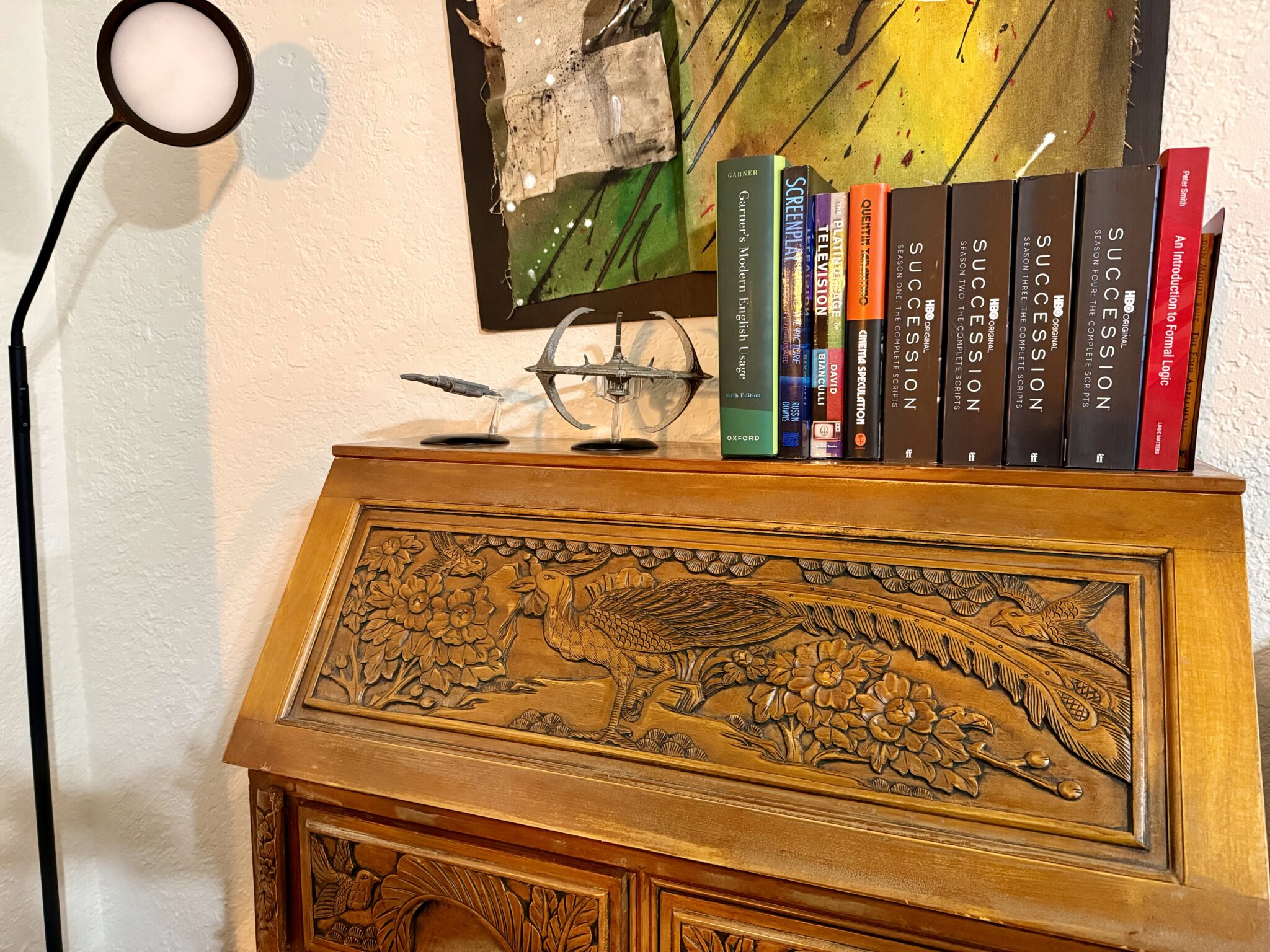
For the last few years, I’ve worked at a simple white Amazon Basics sit-stand desk. When I bought it, I was still deeply into the whole “minimalist” aesthetic, but as I renewed my love for fountain pens and paper, and as I started establishing firmer boundaries between time spent offline and online, I began to desire a desk that better embodied this way of doing things. So for the last year or so, I’ve been keeping an eye out for an antique writing desk.
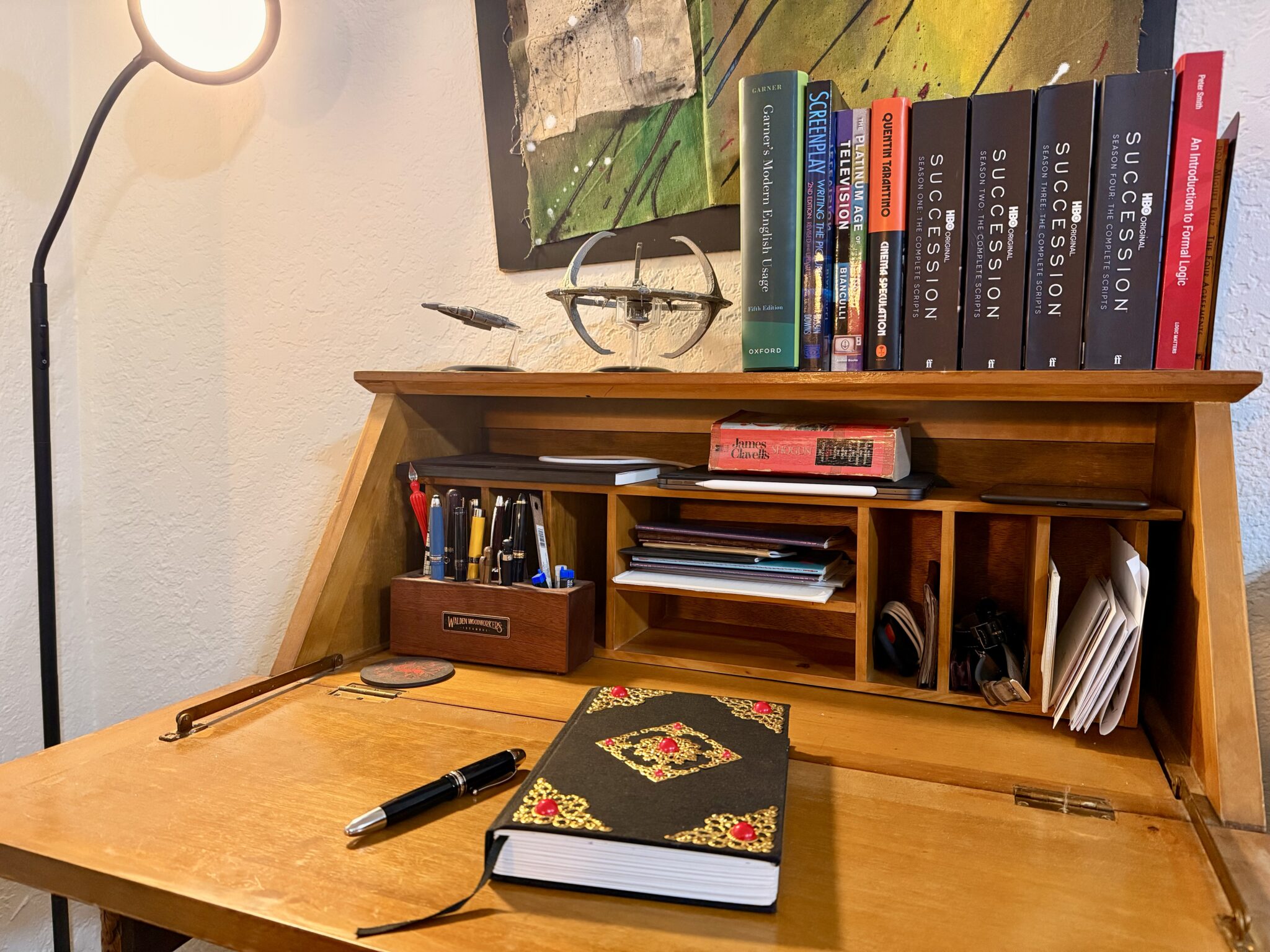
A couple weeks ago, I finally found one for a great price at a yard sale in Burbank. My partner and I were driving past, and I just happened to spot it out of the corner of my eye. It’s beautiful, and it fits my workspace in our new apartment perfectly. I’ve come to think of it as having three modes: closed, analogue, and digital.
When it’s closed, it looks like this:
Analogue mode is where I prefer to spend most of my time—journaling, reading, hand handwriting fiction. That looks like this:
Alas, I can’t spend all my time in analogue mode. I still need to log on to the Internet, check my email, and do research. I’ve also been writing screenplays and scripts lately (in a surprising career shift), and the bulk of that work needs to be done in screenwriting software, like Scrivener, rather than by hand. Digital mode looks like this:
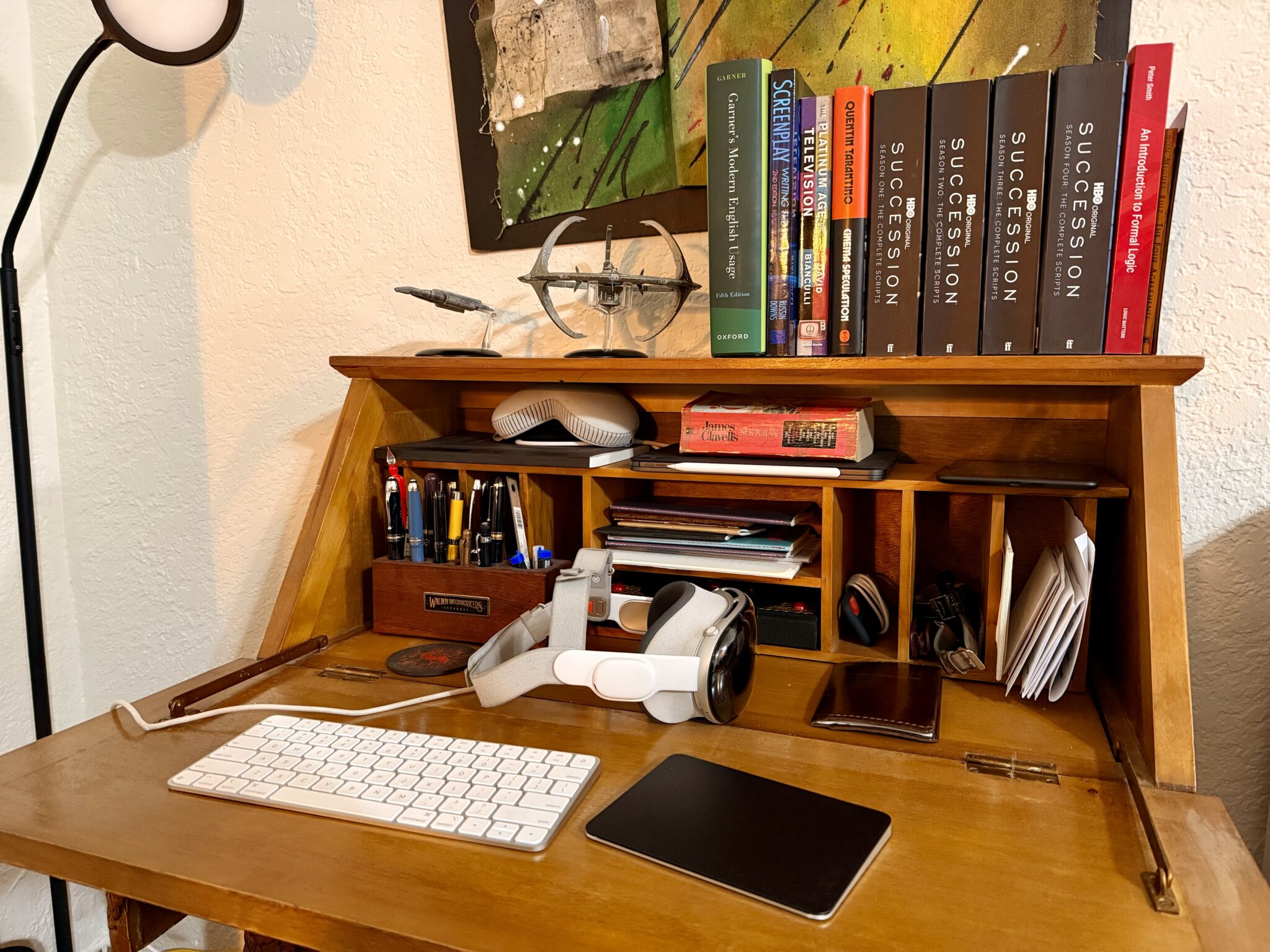
That’s right, I’m using an Apple Vision Pro as my main computer these days (I also use it to watch movies regularly; I’m currently working my way through every film in Quentein Tarantino’s book Cinema Speculation).
When I’m working, I see something like this:
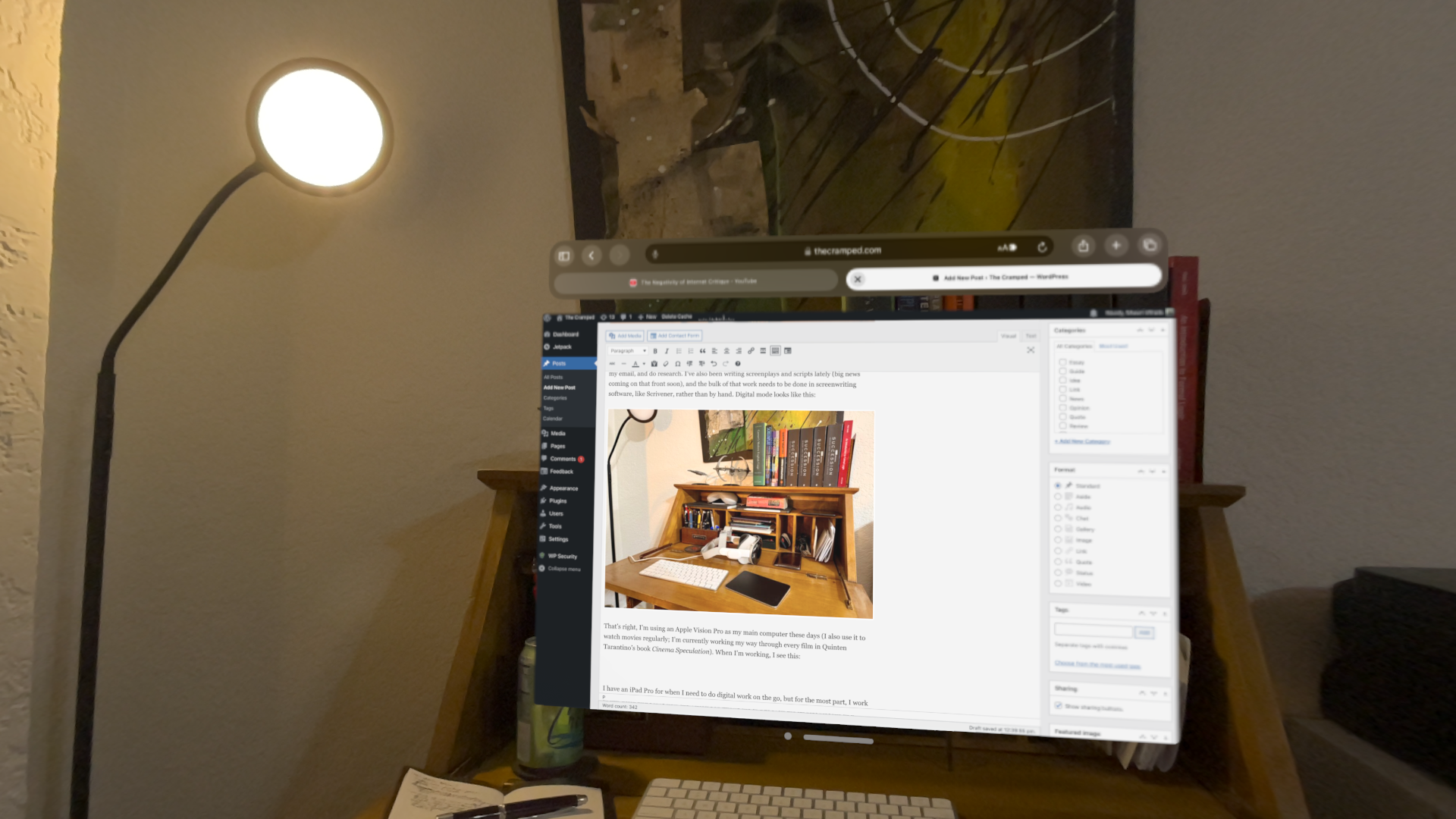
I have an iPad Pro for when I need to do digital work on the go, but for the most part, I work at this desk, and I love how the Vision Pro allows me to put even the largest screens in a drawer when I’m done with them so I can focus on analogue writing, and my beloved analogue tools, without distraction. It’s very Star Trek: Picard.
Since January 2020, Sophie O’Neill has been keeping an embroidery journal. Each day, she sews an “icon” to represent that day’s events and memories.
Wow, what a novel approach.
Ricardo, over at Extra Fine Writing, asks the question “Does anyone actually use a pen to write a novel?”
When I hear that some famous author drafts their novels with a fountain pen, or when I see that in film or TV as a visual trope, my immediate instinct is to absolutely believe that they are lying.…Do any of you actually do this?Like, do you sit down with an unlined, blank piece of paper and start writing the first line of a novel, longhand, perhaps at an ornate desk in front of a fireplace? Do you crumple it up and throw it out when you don’t like what you’ve written and start over with a fresh sheet, because you have an endless supply of both time and paper?
I do. Of the seven novels I’ve had published in the last twelve years, one of them, The Assured Expectations of Things Hope For, was first-drafted entirely by hand. Granted, it’s probably my shortest book, at only around 17,000 words. But about a month ago I finished a new novel, also entirely first-drafted longhand, with a fountain pen (mostly a Pilot Custom 823), and I intend to write long-form prose this way for the rest of my life (although the pen, at least for the foreseeable future, will be the exquisite Montblanc Meisterstück 149 100th Anniversary Edition I recently acquired).
Ricardo writes:
I did use pens—and used them heavily—to plan, organize, and manage the work. I used them for creating characters, connecting plot points, doing research, laying out timelines, making to-do lists for revisions and edits, sketching cover designs, and so on. I have pages and pages and pages of this stuff; some days this was all I did. Literally everything related to the book except actually writing it was done by hand, because that was heavy-duty, nonlinear thinking work that benefited from slowing down.Actually drafting the book, though? I like the idea of doing this by hand a lot, but I gave up after a couple days of trying. It was tiring enough to do on a computer, and the computer has the benefit of a “find” feature for when you decide a character’s name isnotdumbenoughand change it in the middle of revisions.
I think drafting the book—that is, crafting the sentence—is the part of writing that benefits most from slowing down. Sentences should not be rushed. They should be carefully, delicately considered—“word by word,” as Verlyn Klinkenborg put it in his excellent book Several Short Sentences About Writing. Plus, more importantly than ever in this era of AI-generated slop, writing by hand allows us writers to show our work.
Of course, if you write your first draft by hand, you’re probably going to need to type it up at some point. But this is great. This is not extra, unnecessary work. This is the work, because this is where you get to make your first edits. Don’t want to type a sentence up? Then don’t type it up! Leave it out. This is where you get to make your first deletions and rewrites: in the transcription process. If you write your first draft by hand, on paper, and then transcribe your second draft, you’re likely to create a much stronger second draft than if you started at the computer in the first place.
And if you can’t bring yourself to sit down and transcribe your handwritten writing, if that sounds too exhausting, then it probably wasn’t compelling work in the first place.
Nice write-up about the London Pen Show in the New York Times:
Agreed. Wholeheartedly. However, I do have to disagree with the following:
Mr. Minhas, 53, has been collecting pens for more than 25 years and owns so many he is known by some in the international pen community as “the one-man pen show.” He believes that some pens are meant to stay on display, preserved as heirlooms for the next generation. “Pens of this quality you don’t really write with,” he said. “This is art of the highest quality.”
I love Sarj Minhas’s collection (and I came this close to buying a couple Montblancs from him at the California Pen Show earlier this year—and plan on actually doing so next year, because, seriously, his collection is beautiful), but I have to respectfully disagree with him here. All pens are for writing. Even the most beautiful, artistic, expensive, hand-crafted ones are still tools for writing. Pens are for writing.
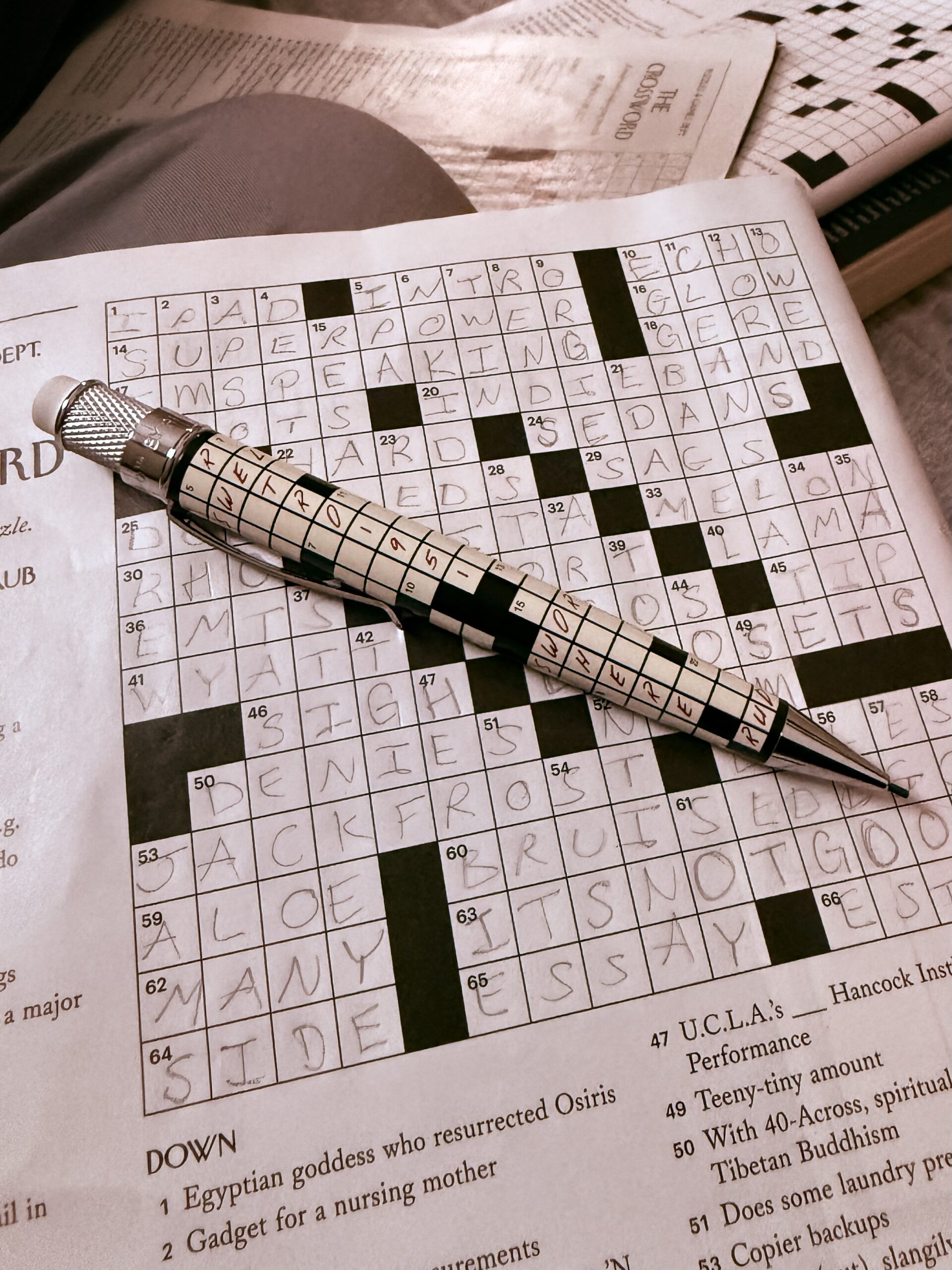
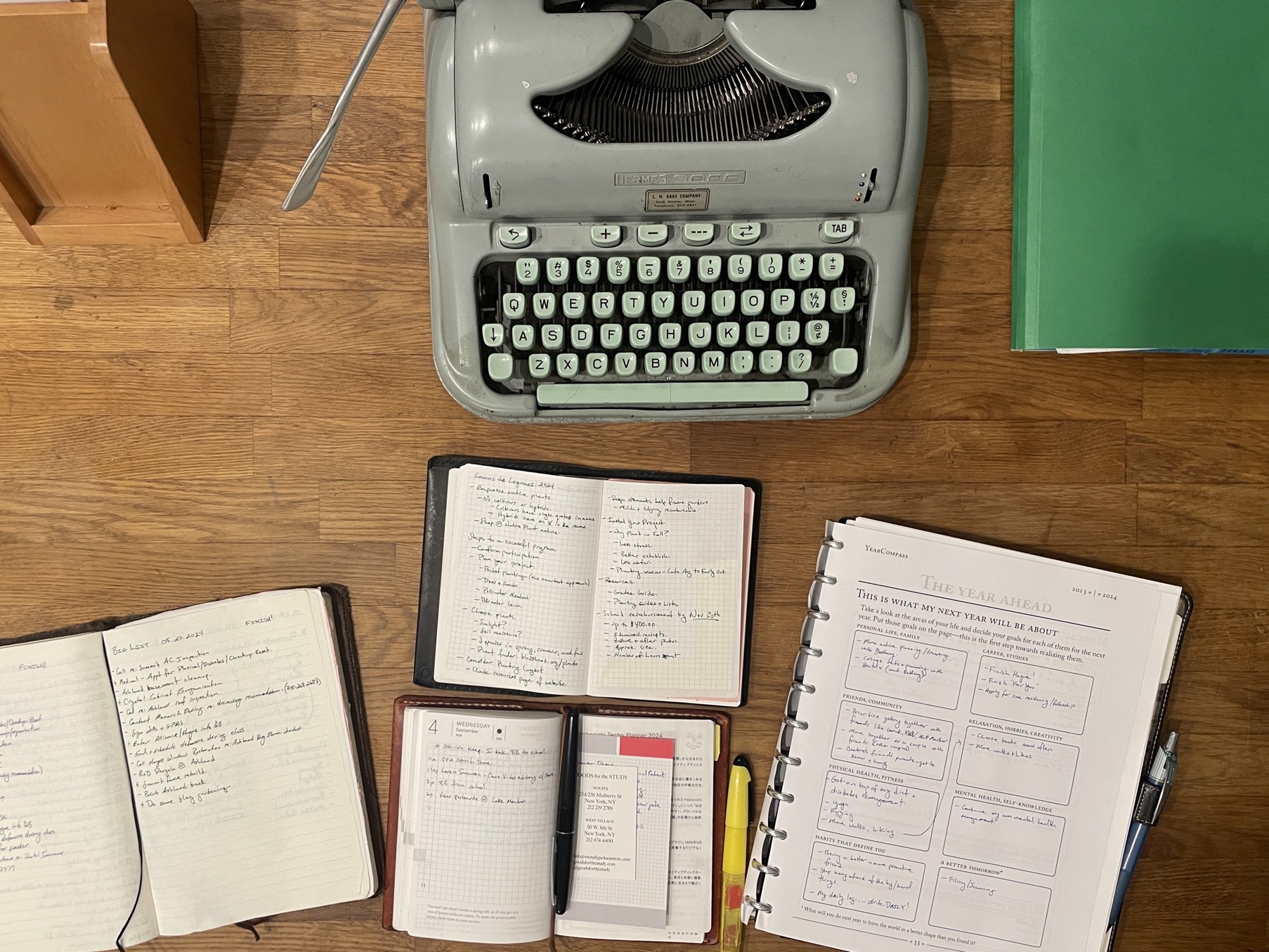
He touches on why I keep a diary, why I keep it on paper, and the magic of keeping a logbook. The mundane details can bring back sublime memories, and what you think is boring now may be interesting in the future: “What seems bland when you write it down… will seem epic in thirty years.”
What we believe in.
But our notebooks give us away, for however dutifully we record what we see around us, the common denominator of all we see is always, transparently, shamelessly, the implacable “I.” We are not talking here about the kind of notebook that is patently for public consumption, a structural conceit for binding together a series of graceful pensees; we are talking about something private, about bits of the mind’s string too short to use, an indiscriminate and erratic assemblage withmeaning only for its maker.
A wonderful essay about the what and why for the author, Joan Didion, of keeping a notebook. Which may be different than the what and why you may have. And it is a point she writes so eloquently about here.
I may have to copy this whole delicious thing into my commonplace book.
After a year of exclusively using fountain pens and paper for my handwriting needs and foregoing any sort of digital tablet, I got an iPad Pro again a few days ago, with the intent to use it mostly for reading comics, academic papers, and the New York Times. Today, I found myself using it to take notes during an impromptu meeting. While I am alarmed at how easily, and usefully, the digital tool slotted itself back into my workflow, I was pleasantly surprised to see that my handwriting, which I spent months diligently practicing last year because I wanted to learn cursive again, was much more fluid on the tablet than it used to be—and more easily recognized and parsed by the software because of this, too. (Also, wondrously, I wrote this very post by hand, with the Apple Pencil, right into WordPress’s text editor.)

Even if you’re writing comedy, a legal pad says. “I am taking this seriously.”
What we believe in.
Anderson agreed to their brief, which involved directing a short film focussed on the brand’s famous heritage and craft, but he also wanted to be the main character in front of the camera. Then, when he showed up on set in Berlin, the filmmaker presented a prototype pen of his own design that he asked the German company to manufacture. He’d even named it: the Schreiberling, which means ‘the scribbler’ in German.
A handwritten blog by Hansjörg Schlüter. Though I’ve seen others before I still find it a neat idea that there should be more of.
1: The Notebook & Pencil Paper and pencil. There it is: no power needed, discrete, ultimately flexible. Portable. Breezes through security. On a plane, on the beach, back-backing in the Western Isles. The tool which allows you to plan, record, create, schedule, sketch, brainstorm and write a love note. Never be without the pair.
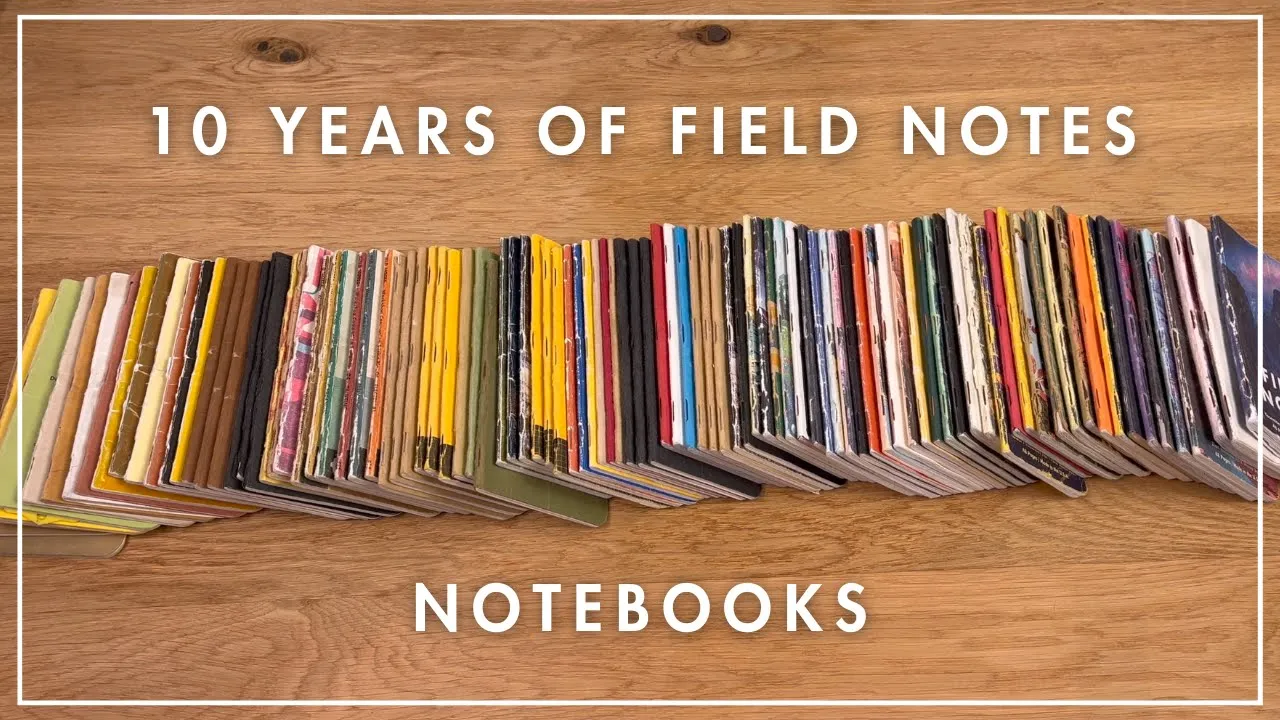
What using ten years of Field Notes look like.
I hold on to these journals because when I feel discombobulated and lost, reading through who I was at 14 or 19 or 25 years old helps connect me to myself. Paging through the diaries now, I’m startled to realize how far I’ve come and also how little I’ve changed. In Journal No. 1, I’m a 9-year-old living in Ohio. I’m 4 feet 5 inches tall, weigh 75 pounds and feel a kinship with Curious George. In Journal No. 11, I’m 20, working for my college professor on an archaeological dig in Syria and flirting with a German man twice my age. Journal No. 19 leaves off in June 2009, when, unbeknown to me, life is about to pivot: In a month I’ll become engaged, in six months I’ll be married, and in a year I’ll be pregnant with my first child.
Because even in this digital age, if you want to to last long enough to be discovered later, you’ll choose paper.
About nine months ago, after a tragic Kindle Scribe syncing accident in which I lost about 20 pages worth of journaling, I (mostly) swore off digital tablets and returned to paper and pens in a big way. I pulled out the two fountain pens I owned—a black Pilot Metropolitan and a Laban PF-900 Yellow that was gifted to me about 15 years ago—inked them, and started doing all my journaling, writing, and note-taking by hand.
A few weeks later, I bought a Lamy Al-Star (since gifted to a friend because it turns out I don’t like triangular grip sections) and a Bronze Kaweco Liliput.
Today, nine months later, I own 19 fountain pens. And I acquired four of them last weekend at the California Pen Show.
My partner and I moved to Los Angeles almost two years ago, so we were excited when we found out there was a pen show in our new city. We purchased VIP passes, so we arrived first thing Friday morning when the doors opened. My partner actually took the day off so that we could attend on Friday.
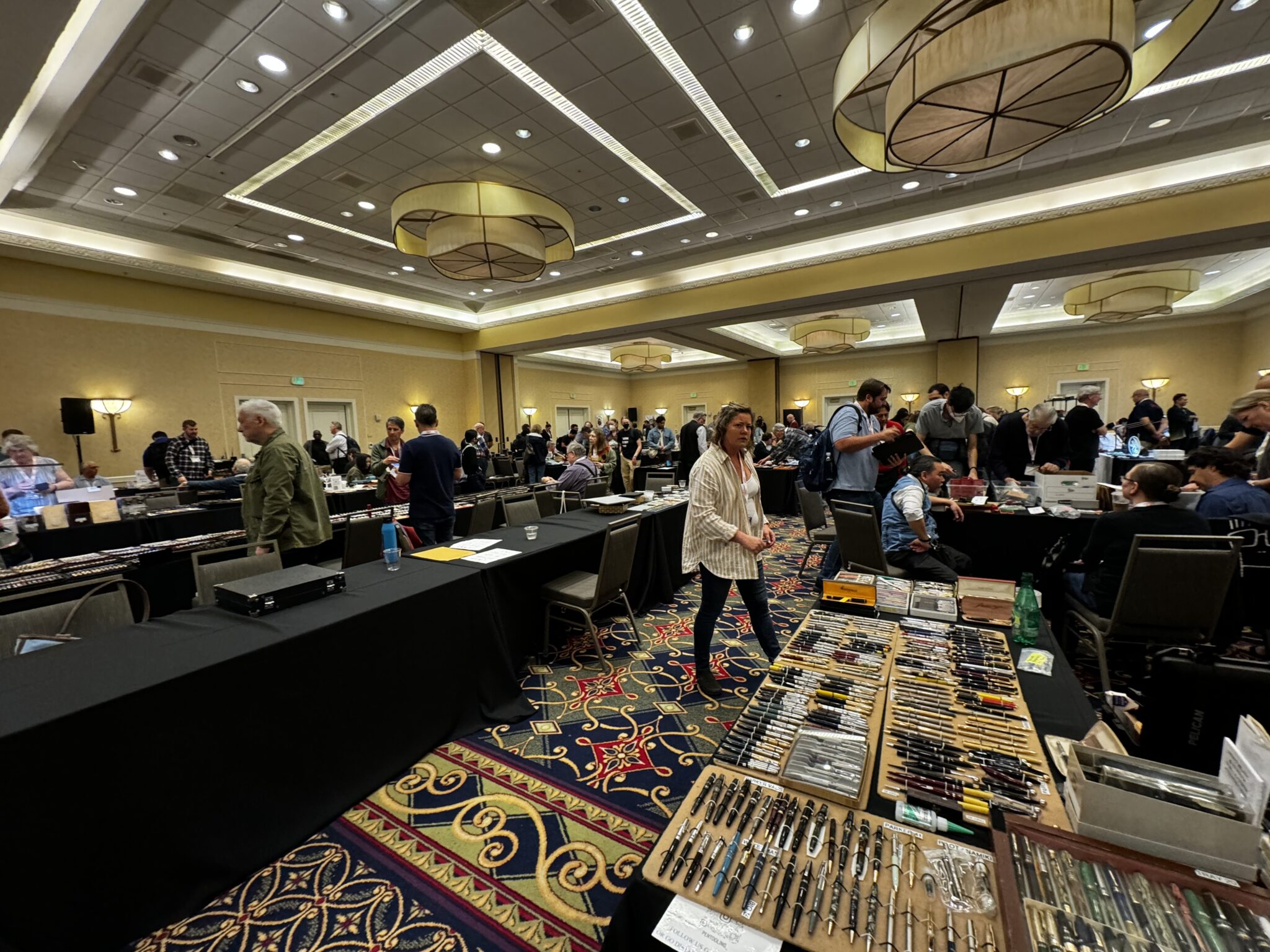
The main ballroom on Friday morning.
Going into the show, I knew I wanted to purchase at least one of two “grail pens”: a Montblanc Meisterstück 146 and a Montblanc Writer’s Edition Victor Hugo. The Victor Hugo was my priority, because if I could find one, the price would eat up my entire budget, precluding me from buying the Meisterstück or anything else during the weekend. I read Les Miserables last year, and saw the magnificent traveling version of the Broadway production at the Pantages, and I’ve wanted the Victor Hugo Montblanc ever since. I found at least three sellers who had it in their personal collection, but it must be a stellar pen, because nobody wanted to part with it. Now I’m even more excited to find one for sale in the future.
Failing to find a Victor Hugo freed up my budget for other pens, so on Friday I purchased a beautiful, gently used Montblanc Meisterstück Glacier LeGrand and a bottle of Montblanc Glacier ink to accompany it (the pairing is exquisite, and the pen writes smoothly with just the tiniest bit of pleasant feedback).
The Montblanc Meisterstück Glacier LeGrand (photo by my friend Danny Martinez).
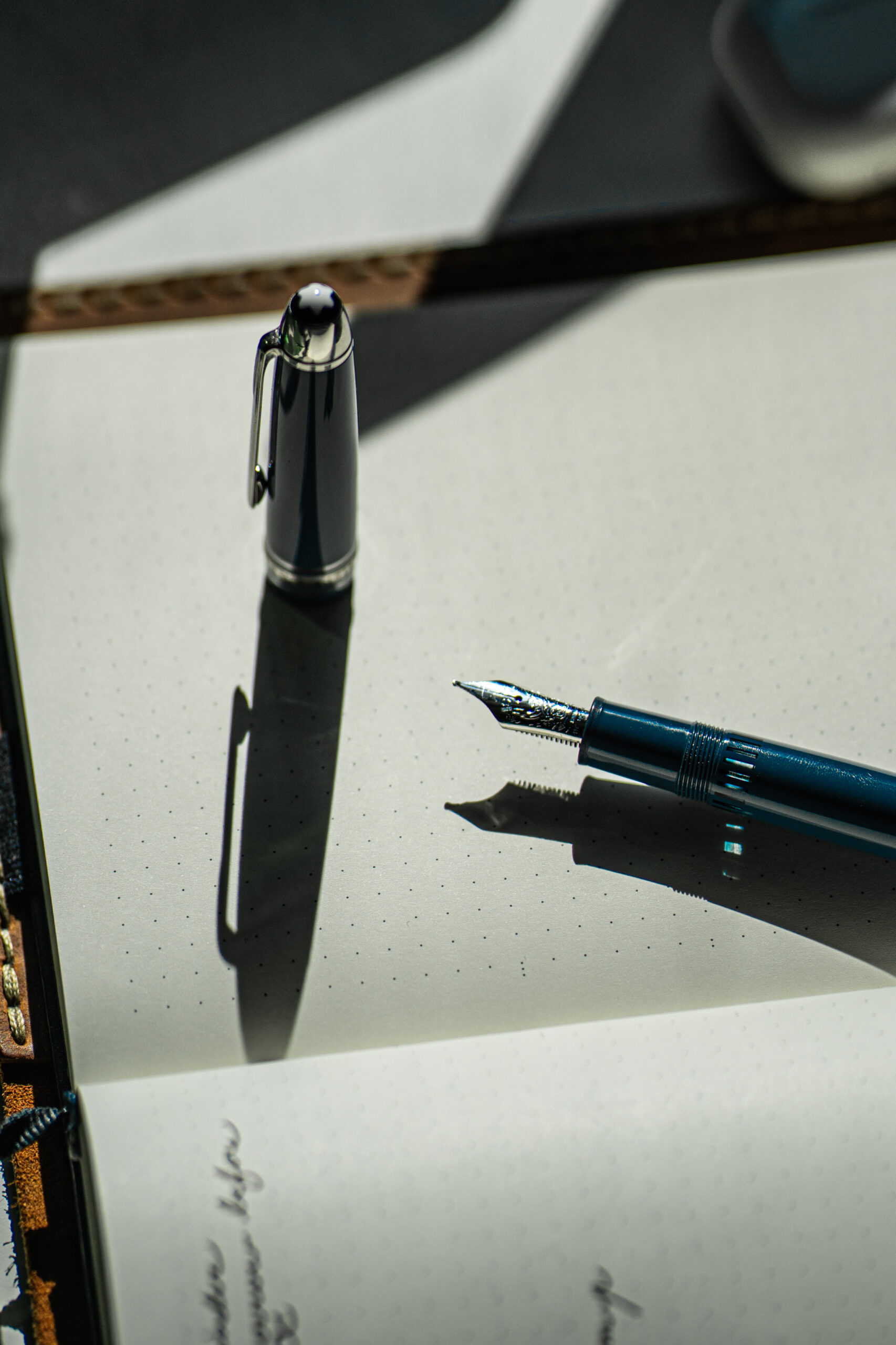
I spent the rest of Friday debating several other pens to spend my remaining budget on. I settled on a new Sailor Cylint, which to me has been the platonic ideal of a Sailor ever since it was announced last year, even though it’s not what most people want from a Sailor pen. I’m very pleased with it.
I took advantage of the show being hosted by Nahvalur and had them fix the piston knob on my Voyage Los Angeles. It took them only minutes to fix. I’m glad to have this pen working again, because I had Gina of Custom Nib Studio regrind it into one of her famous journaler nibs a few months ago, and I’ve been missing using it.
Friday afternoon, we attended a workshop by Joe Crace, The Gentleman Stationer, on Paper for Everyday Writing. We’ll be purchasing some of his recommended papers from his store soon.
Friday evening, at the close of the show, we attended a panel on vintage pens. This is where my partner, who hadn’t yet found anything within budget that piqued her interest, started to find her direction for the show.
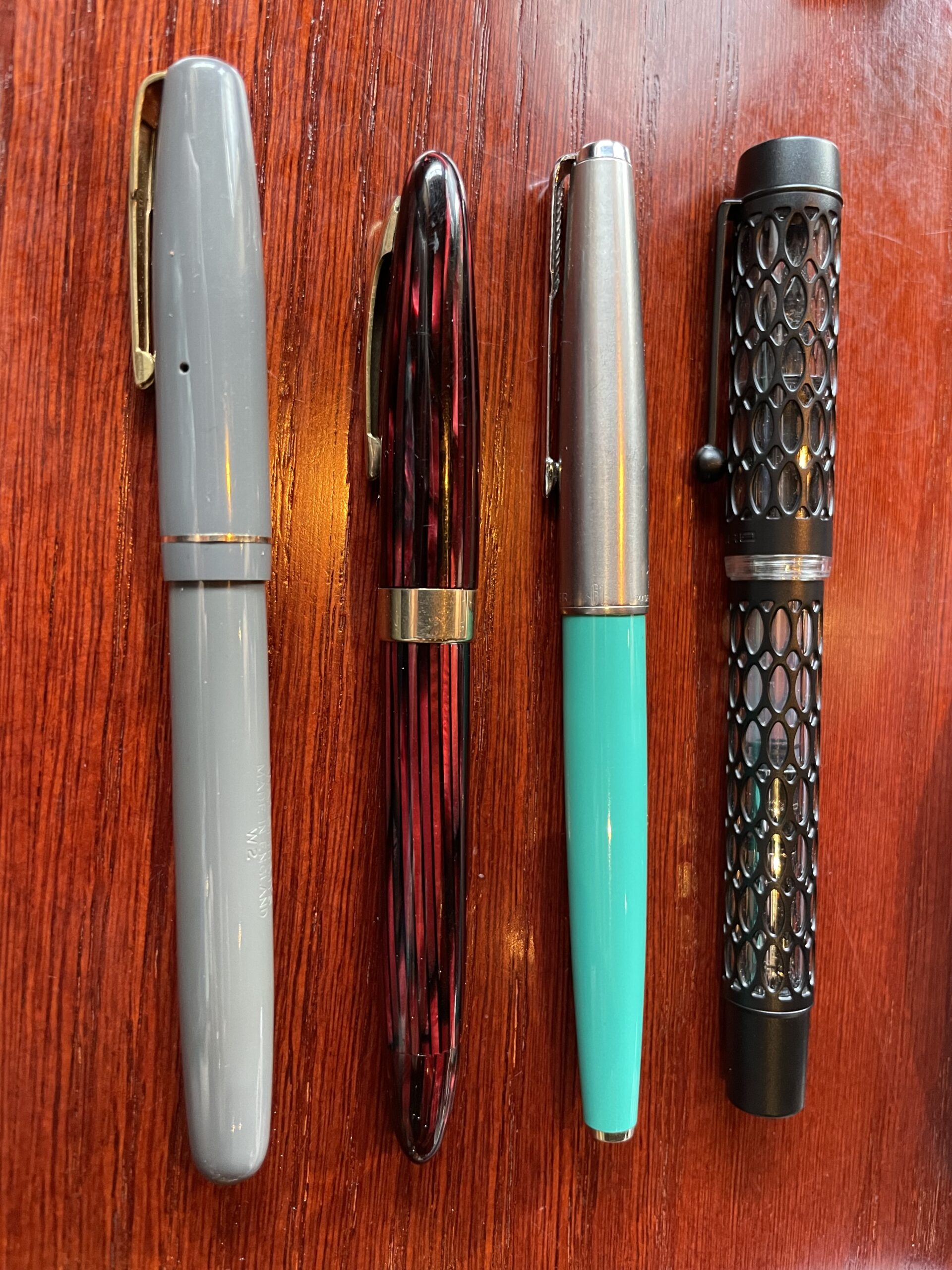
We spent Saturday at home, catching up on work, enjoying two new pens, and recovering from what had been an exhausting day for two introverts. But Sunday morning we were back at the show, on the hunt for a vintage pen for my partner. We spent an hour at the table of Myk Daigle, owner of MaD Mercantile. Myk, by the way, is wonderful. He taught us a lot about vintage pens (and earlier in the morning, he’d bought me a sparkling water at the hotel cafe after overhearing me grumbling about forgetting to buy one). He was also the only seller we noticed who had a chair on the customer side of the table. In the end, my partner purchased a restored Waterman W2 from Myk. But later that day, she found two more vintage pens, a Parker 61 and a Sheaffer that we’re still struggling to correctly identify, in a bargain bin in stunningly good condition.
My partner’s acquisitions, including a fun Jinhao I surprised her with because she hadn’t gotten anything with a metal overlay, which was what she’d initially hoped to find going into the weekend.
Also on Sunday, I found a never-inked Laban PF-900 Yellow that I immediately purchased. This acquisition was particularly sentimental for me, because my first fountain pen, as I mentioned above, was a gifted PF-900 Yellow, and it’s been largely unusable due to a leaking section ever since I dug it out of storage nine months ago. I thought I could use the new one as a proxy, or even put the new one’s section in the old pen’s nearly identical but well-loved body. Unfortunately, the new pen struggles with ink flow after being left unused for more than an hour or so, but that issue should be easier to fix than the leaky mess that is the old pen.
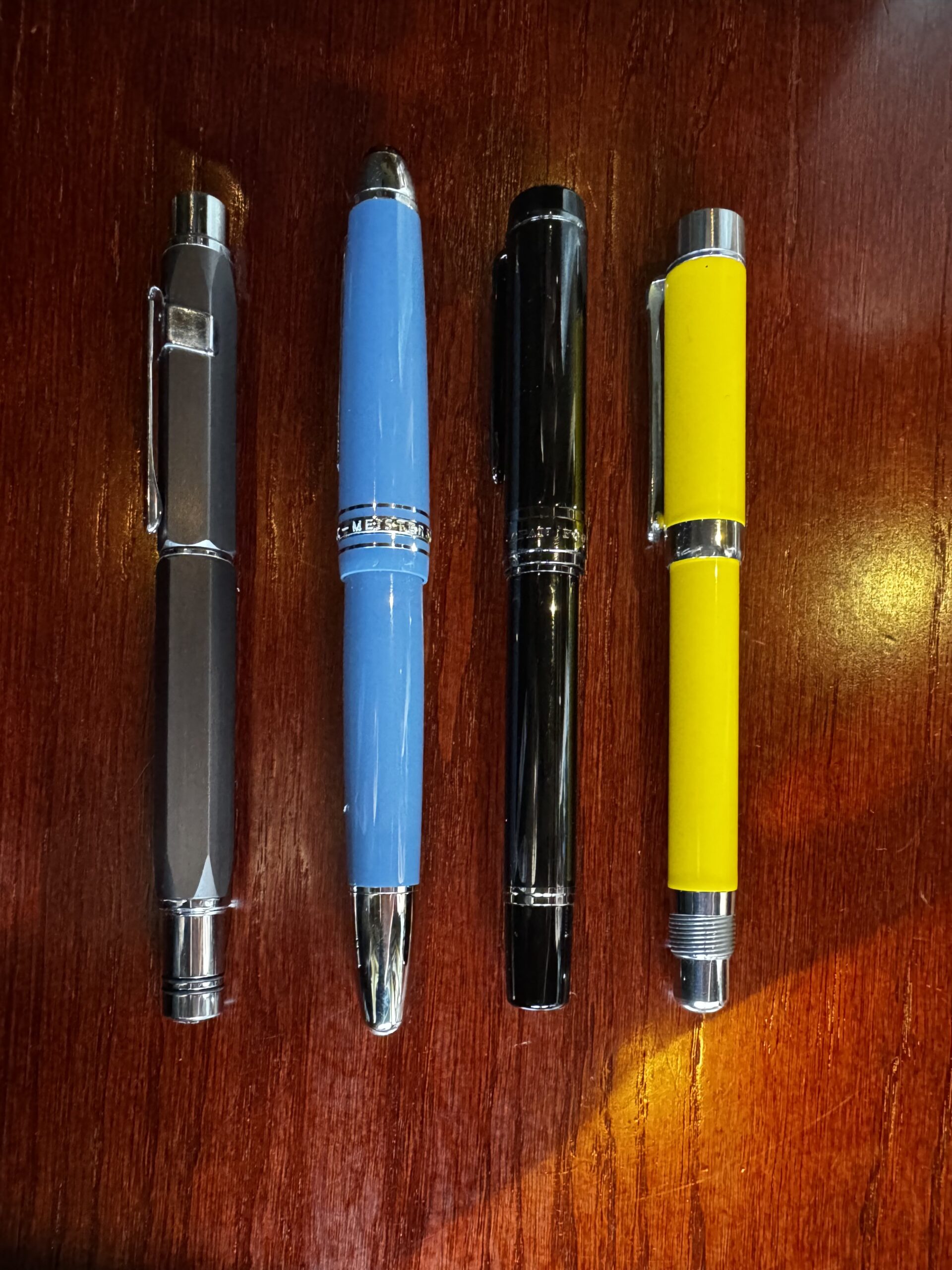
As we were getting ready to depart the show, I spotted, quite randomly amongst a plethora of other pens on a table, one that I’d been thinking about purchasing for a while: a humble TWSBI Precision. I hadn’t yet purchased it because I hadn’t been able to find one in person to test out (I must have a thing for pens that don’t fit what most people expect from their respective companies, because nobody seems to care about the gunmetal gray Precision in the sea of TWSBI’s other, far more colorful offerings), and at $80, it’s not necessarily an online impulse buy. The one on the table, though, was only $45. I was more than happy to pay that, but then the seller told me to make him an offer, so I got this unused pen for just $35! Amazingly, after using it quite a bit in my bullet journal this week, it might be my favorite purchase from the whole weekend—and it’s certainly my favorite TWSBI that I own.
All four of my California Pen Show acquisitions.
I rounded out the weekend by purchasing a bottle of Sailor Shikiori Suberakashi from Dromgoole’s. Only two days later did I realize I’d spent several minutes chatting about Kawecos with Ana Reinert from The Well-Appointed Desk, who was helping run the Dromgoole’s booth. Hi Ana! It was great to meet you!
(I’d also like to briefly shout out Jeremy and the fine folks at FLAX Pen to Paper, LA’s best stationery store, who had a table near the ballroom entrance. The only reason I didn’t purchase anything from them is because they’re my go-to the rest of the year.)
The California Pen Show was a fantastic way to spend a weekend. My partner and I met some wonderful people and acquired some wonderful pens. Part of me wishes I could attend a pen show every weekend, despite my introversion (not to mention what such a lifestyle would do to my bank account). We’re hoping to spend the entire weekend enjoying the San Francisco International Pen Show in August.
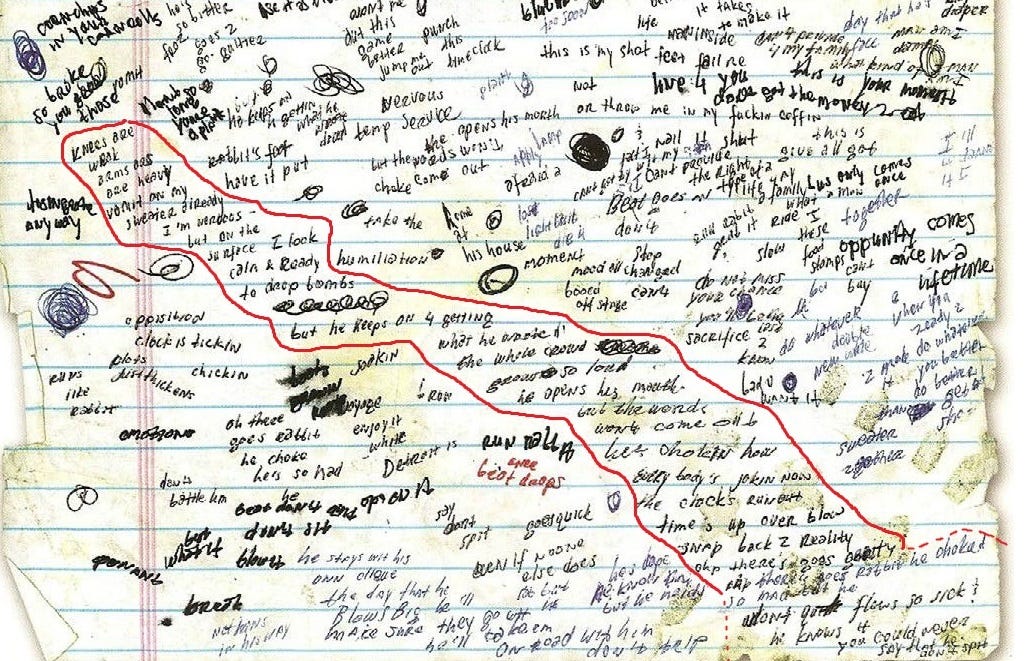
Anyone who thinks notes ought to be neat and tidy should look at Eminem’s lyric sheets.
Always fun to see an artist’s creative process. Even more fun when it is a crazy handwritten explosion of ideas out of which nuggets of pop/rap gold flow. Via Austin Kleon’s always excellent newsletter.
Starting this year, California grade school students are required to learn cursive handwriting, after the skill had fallen out of fashion in the computer age… Experts say learning cursive improves cognitive development, reading comprehension and fine motor skills, among other benefits. Some educators also find value in teaching children to read historic documents and family letters from generations past.
Yep. My daughter went to a Montessori preschool where cursive is taught exclusively and it still benefits her to this day.
Much has been written by smarter minds about the pocket notebook and its myriad uses. For this post, I’ll be focusing on my particular setup and sharing how I use it in the hopes you might also find it useful.
The hack with the magnetic clips blew my mind. It’s genius!
For this New Year post, I decided to look at how people have used daily planners in the past. What I found was a fascinating origin story of tracking time in notebooks.
Fascinating. Essentially, the beginning was basically using it as a Daily Log, something I’ve been doing for over 20 years now.
Pen snobs suck: the loud talking about fine lines and ink flow, the zipper cases, the theater-kid pledges of absolute devotion to a singular make and model. And yet here we are. For me, it’s Pilot Razor Point, write or die.
Dessa is a brilliant recording artist and poet. If you never engaged with her work, I highly recommend it.
For decades, computers, smartphones and tablets have provided an alternative. Their illuminated displays can be virtually written upon or erased with the press of a few buttons or taps of a screen.But the crisp flex of an off-white sheet held in the hand, or the way freshly-deposited ink from a favourite pen soaks into the fibrous surface – there is arguably nothing quite like paper.
Yep.
(via Aaron Alfano)
I get it — you hate writing by hand. But have you ever considered why that is? Is it because typing is easier, faster, and more convenient here in 2023? Maybe so. All of those notwithstanding, I honestly think there’s an older reason: it’s because of the rise of ballpoint pens. And I’m not alone.
The Bankers Box has remained the same shape and size for a lifetime and won’t change for at least the rest of your life. You can know exactly how much space you’ll need now, and how much space you might have available in the future when taking on more stuff from relatives.
This is an excellent post on all the ways the humble Bankers Box rules.
At a time when it’s hard to know what information to trust, I felt delight when I recently learned that World Book still prints an up-to-date book encyclopedia in 2023. Although the term “encyclopedia” is now almost synonymous with Wikipedia, it’s refreshing to see such a sizable reference printed on paper. So I bought one, and I’ll tell you why.
My Grandmother was a college professor and one thing she made sure of was always having up-to-date sets of all of the major encyclopedias in the house. Among them, World Book was always my favorite. As a child, I was a voracious reader. I would spend hours and hours paging through them and reading them whenever I was at her house. I’m fairly sure I’ve read the entire set cover-to-cover at least once. This article has me pondering doing so again.
There are some really great ideas and suggestions within but I absolutely love this:
The magic is in the fact that writing is a transit system, which transports little electrical sparks in your synapses into things that affect shared reality.This is truly magical, and amazing, and a continuing source of awe to me: that we are alive, that we can create things, that we can use our thoughts to help ourselves grow, and to better the lives of others. A tremendous gift and power!
This! So much this! This is why we do it. This is what we believe in.
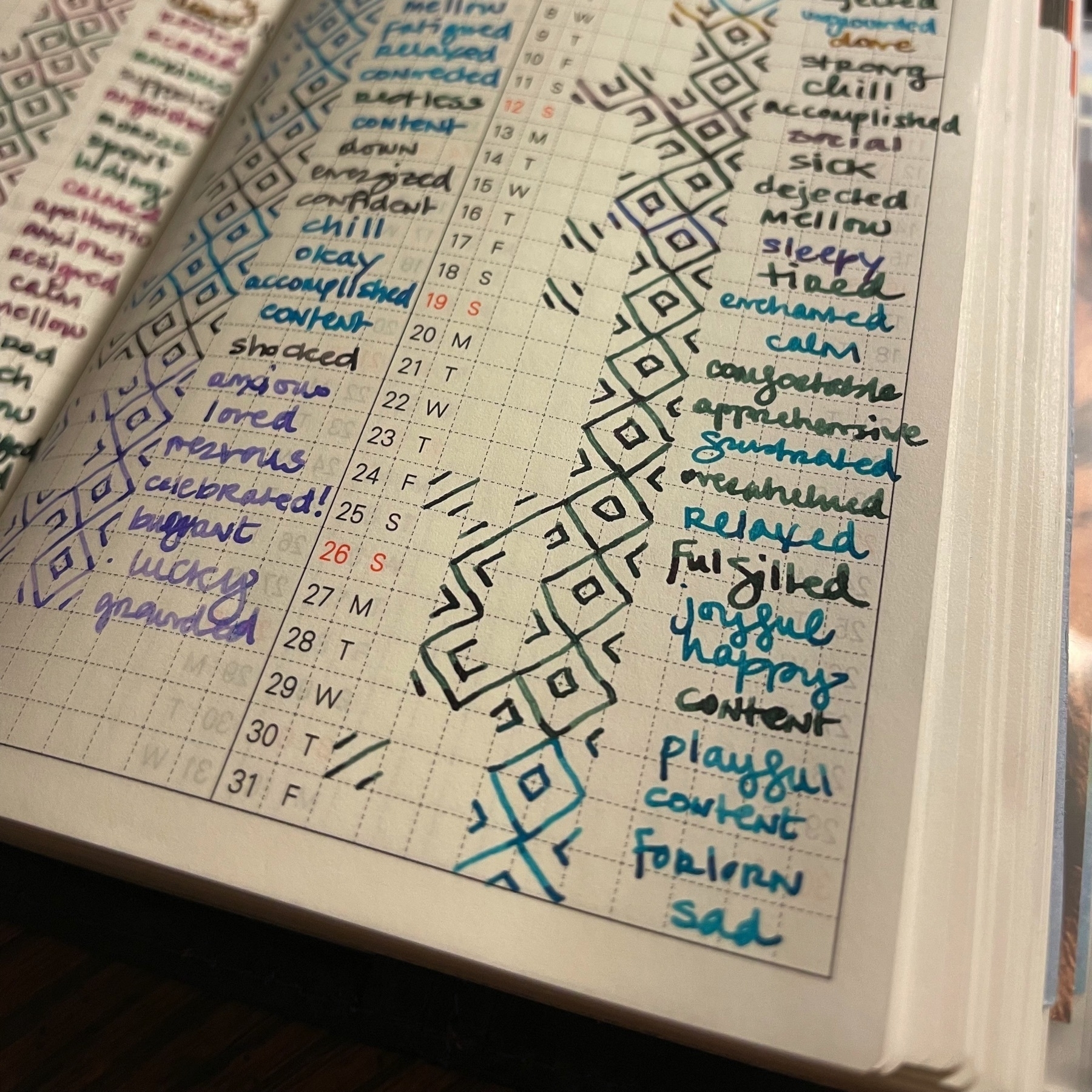
The “three lines” method described in the video impressed me with its simplicity and its forgiveness. The pattern looks prettiest when I’ve done all my habits for the day, but even if I haven’t, the result is still pleasing to the eye and encourages me to try again tomorrow.
This is a seriously beautiful way to do habit tracking. Could also work for other purposes with imagination.
Recently, reader Rahul Gaitonde alerted me to this with the following thoughts:
“Hi, Patrick. I thought this tweet might be interesting to The Cramped. It’s a photo of a page from the user’s grandfather’s diary where he recorded (in Tamil) the movies he’d seen in the 1960s. Including movies from the West the user didn’t think his granddad had had a chance to see. Lists from the past have always been fascinating to me. This one particularly so, maintained in a language other than English, from over fifty years ago, of movies both local and from half a world away.”
I agree. Very cool stuff.
This planner works really well for my to kind of have a high level overview of things both at a yearly, monthly, weekly and daily level. And makes it really easy to plan.
As a Hobonichi Techo (A6) user myself, I’m always fascinated to see how other folks are theirs.
Just before the new year I stumbled on a great Twitter thread compiling black owned planner and stationery companies. I browsed a number of them, and bought from a few. But I thought I’d share a few on the list today with you!
There was no way I was not going to link to this.
After fumbling around for a while to figure out how I could organize my thoughts in for this project, I realized that once again, the good old multicolored index cards were my best friends.
I always love getting a peek into how someone organizes their work.
Thanks to @manton for creating such wonderful bookshelves! The Analog Office is now sharing a bookshelf with some favorite resources about working, and thinking, and playing with paper … organizing information stored on paper … how paper and tech shape us … and of course, old school office tools.
A great list of books.
Today, December 9th, is a day I’ve designated as Journal Day. The idea came up many years ago in discussions with my friend Garrick van Buren. The idea was a day for celebrating journaling, preparing ours for the coming year, and committing once again to the daily practice.
I celebrate the day by opening up past year’s journals, logs, and notes and tease out any ideas that may have gotten lost in the shuffle and see what I might want to put into action the coming year. It is also a good way to tease out old memories and reminisce.
I’ve unwrapped my 2023 Hobonichi Techo and started to prep it for the coming year. Filling out my contact info on the page provided and starting to note special events and mark important dates.
But, that’s just my way to mark the day. You might decide to do something else. Need some help? Here are some ideas I’ve mentioned in the past…
- This might be the day to take out previous journals and reflect on where you were then versus where you are today.
- You might let someone you trust read one you have kept and get to know the “real” you.
- Perhaps gift a journal to another person in your life who practices or you feel could benefit from doing so.
- Or, maybe, be so bold as to spend a year keeping a journal for someone else in your life whom you love and spend your days with — write down their day as you saw it or the things you were thinking about them at that time. How wonderful a gift would it be to allow someone close to you to “see” themselves and their year through your eyes?
- Like the above, start a journal for your kids that are too young to keep their own. We forget so much of those early years. This is a way to remember those special times. This is the sort of thing that would make a meaning high-school graduation gift when they get older.
These are just a few of the ways you can celebrate. If you come up with others, I would love to hear about them. Shoot me a message on Twitter and I’ll try to add them here. Happy Journalling!

Yep. They do. Take it from Matthew McConaughey.
(via Mike Vardy)
I had only met him in passing; but his paper notebooks held a kind of self-portrait, touchable records of what was on his mind.
A lovely little story. This is the why. This is what we believe in.
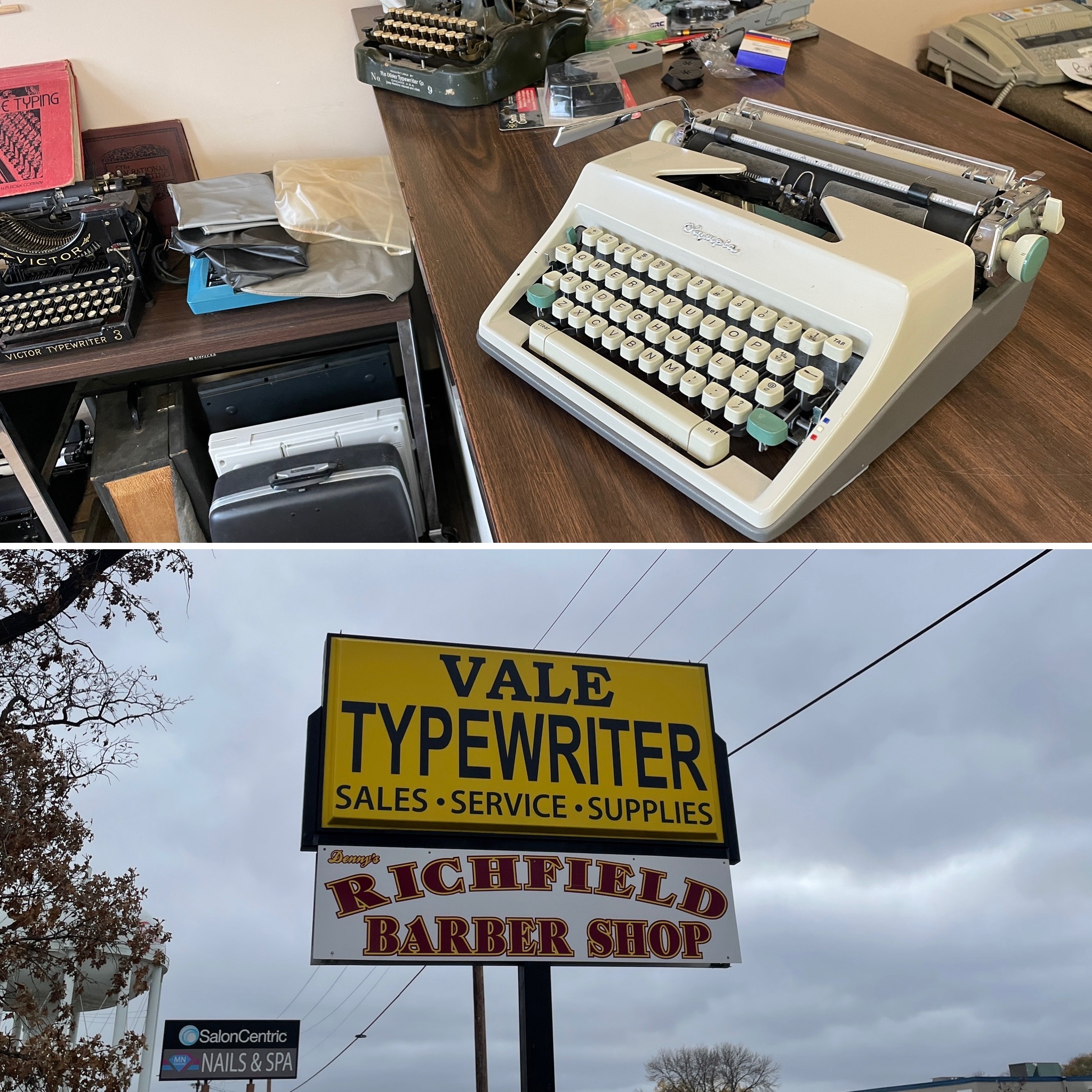
My wife got me a nifty new-to-me typewriter for my Birthday. As usual, brought it in to Vale today for a tune up. I feel so lucky to have such a shop within easy driving distance. Can’t wait to get it back.
I’m so twitchy about sharing this. It’s really not very good and isn’t something fancy like what Mike Vardy or the Bullet Journal people do. But listen: let’s both agree. YOU aren’t those people, or else you’d already be like a journal GOD. You’re like me: a schlub who really hasn’t done this journaling thing and we’ll both figure it out.
A good post that’s worth a read (On LinkedIn! Who’da thunk?). Like Chris, my best and most consistent journaling has been the Daily Log I’ve kept for years now.
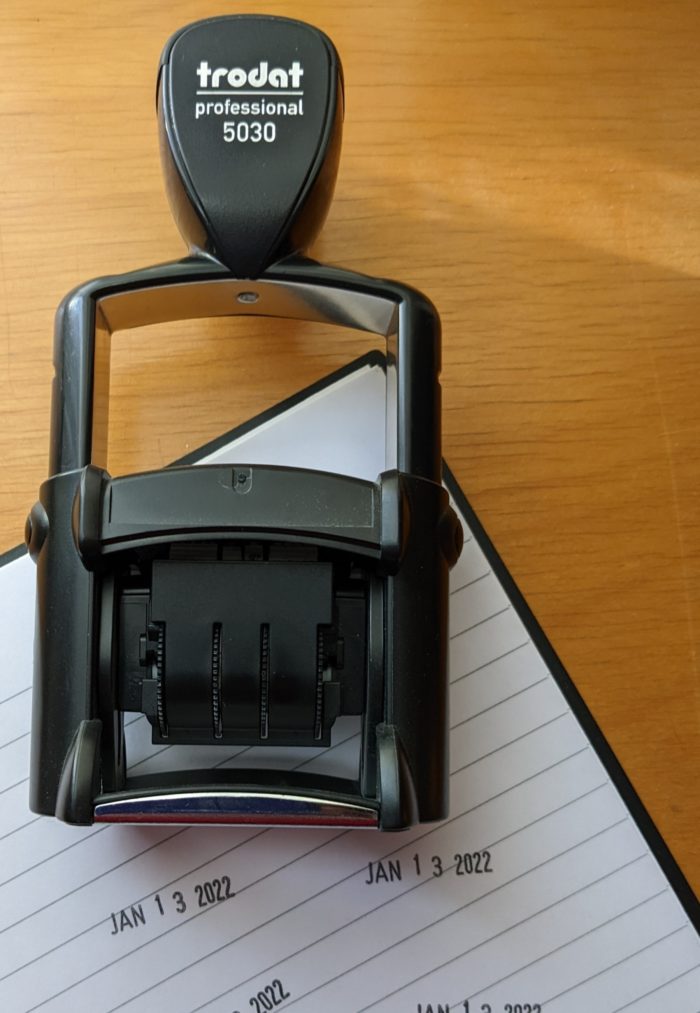
My master calendar and task tracking apps are digital, but I use a paper notebook for my daily plan and work log. What makes it MORE likely that I will a) record the date, and b) be able to read it later (my handwriting’s not the greatest) is using a date stamp.
Kerchunk!

Journaling is fun. It’s a great way to put the little Instax printer to use, also. My big journal has become a sort of scrapbook with supporting commentary.
Very cool format.
I’ve always enjoyed asking the maker of a thing the “why” behind their making. What problem were they trying to solve? What was lacking in what was out there that made them decide to do their own?
Such is the case with Dan Provost of Studio Neat. I’ve love their products and have a couple that I use all the time. They are well made, beautiful, and full of nice touches and attention to detail. So, it was delight to have him answer the above questions regarding their pen, the Mark One:
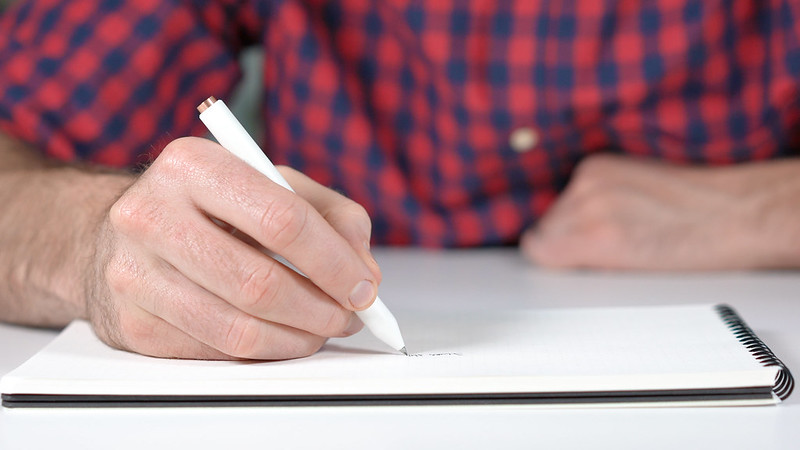
I was introduced to the Schmidt P8126 rollerball refill when a friend gifted me a Retro 51 pen. I loved the way the pen wrote–the ink flow was so smooth and nice. But I hated the pen! I shared the pen with Tom and he agreed on both counts. So we thought, could we make a pen for this refill that is uniquely Studio Neat? And thus began the design process.
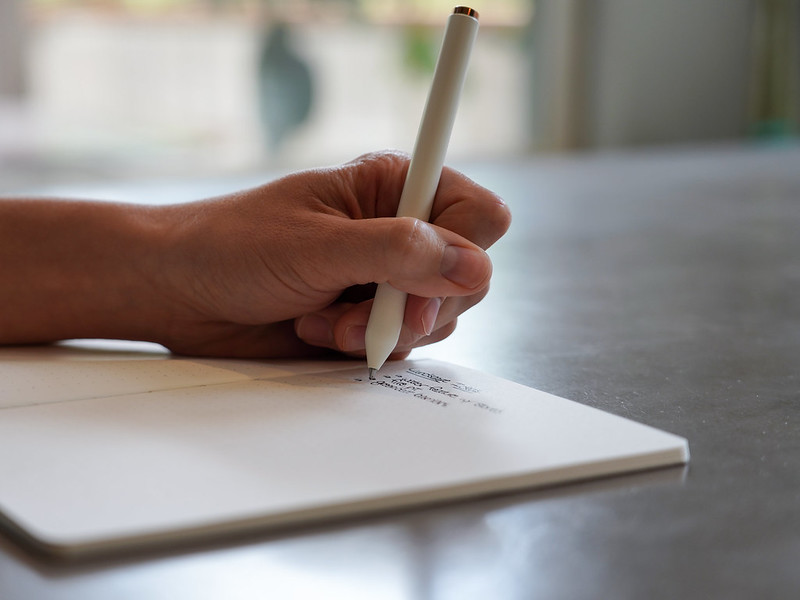
Probably my favorite thing about Mark One is it’s such a “pure” industrial design product. I don’t mean that in an arrogant or pretentious way, I mean it is an object that literally has a single button on it that you press to use. Our job was to make that button as satisfying as possible.
If you are in the market for a nice pen or unique notebook designed for a life where the analog and digital coexist, it’s worth checking out Studio Neat.
I take it with me because it helps me track the uncharted territory of the present moment. In this act of gathering—scrawls about things noticed on the way to a store, the playbill for my son’s brief acting career, glue-sticked to the page—I’m forced to slow down and tend to the parts that evoke a whole.
(Via reader Rahul Gaitonde, published several months ago but I’m just seeing it now.)
Last week I did a free webinar on how and why I journal. It came out great, and I got a lot of positive feedback on it. I usually add the webinar content to the appropriate field guide after I’ve finished it. In this case, however, I don’t have any field guides where adding a 45-minute journaling webinar makes sense, so I’m posting it to YouTube. Enjoy!
Worth making the time to watch. Especially if you are looking to start, or re-boot, your journalling process.
Grant you, the rubric is a bit tendentious — how do I know? — but none of us can entirely escape, even in an age of Smart Phones, the need, once in a while, to sign something, write a few words in a card, or (and we normally have to be in the right mood) send a hand-written letter.
Today is World Sketchnote Day and my friend Matthew Lang has a good write up about his own sketchnote journey.
The pencil is a tool; the laptop is a machine.
What we believe in.
I tried out many planners and notebooks at my job. My planner has rules, my journal has rules. However, I don’t have any rules when I open this up, so it just becomes a space to explore, freewheel, and expand on ideas. It’s an idea space that none of my other notebooks have.
PLOTTER is a Japanese notebook system soon to be released in the U.S. Nice profile of Brad and how he’s been using it while testing it out.
YouTuber Merphy Napier takes viewers into the world of book restoration in her series of videos about the world of publishing. Merphy follows a seasoned restoration expert as she breaks down the various steps necessary to preserve and rebind books that are centuries old.
Very cool. I have an early edition of my favorite Hemingway novel, For Whom The Bell Tolls, that will need some similar love sooner rather than later.
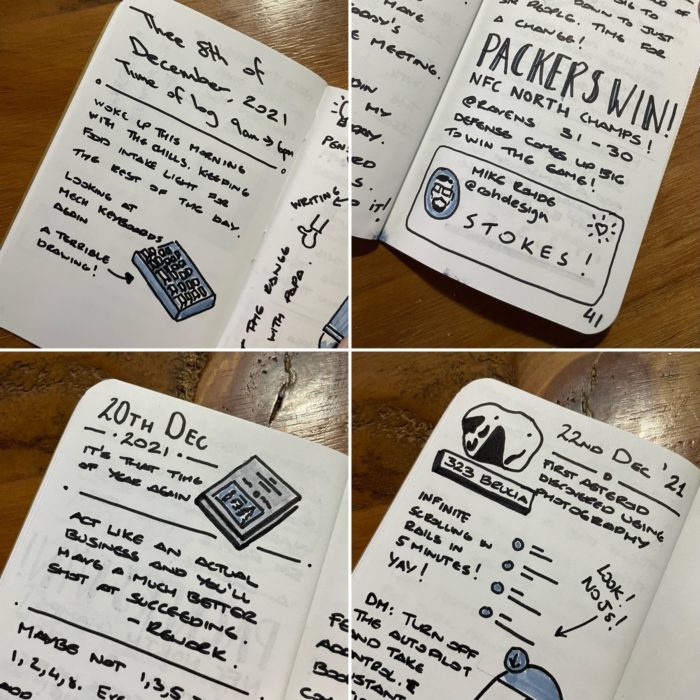
My friend Matthew Lang has been making mini-sketchnotes in his daily log and they are so great.
When you read back on your techo, it’s as if you on that day are there. What you saw, what you ate, what you talked about . . . We collected “my one page” of 2020, a year where we were unable to meet with people casually. The pages are a record of everyone’s life in a year that will go down in history. Let’s look at the “Today, I am.”’s, the theme of the Hobonichi Techo 2020, by date.
Many fascinating examples of how others used their Techo in what turned out to be a historical year.
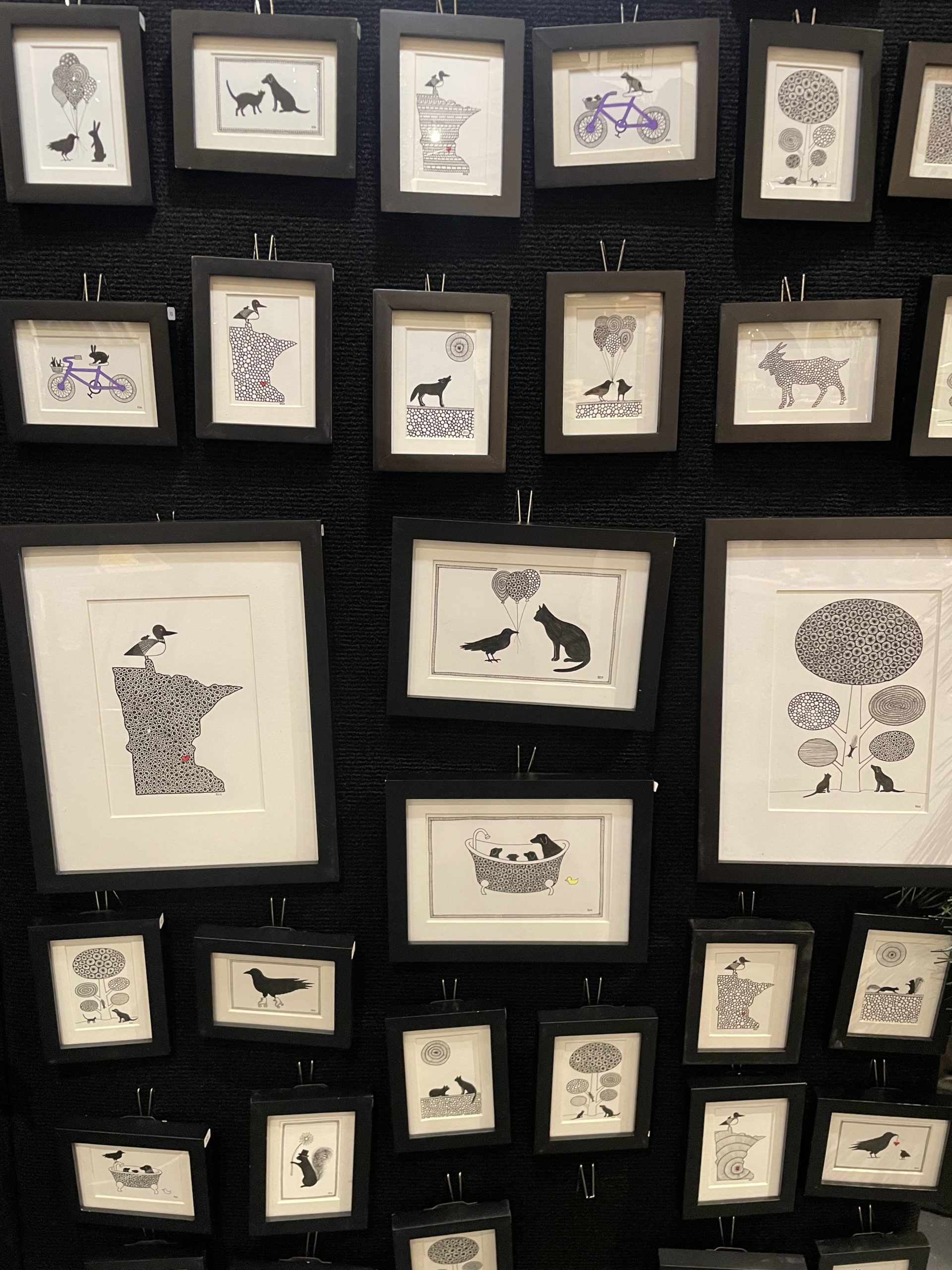
Our friend Rachael Hartzler does these lovely little illustrations using a Sakura Pigma Micron Pen. Most are not much larger than a business card but the level of detail is amazing.
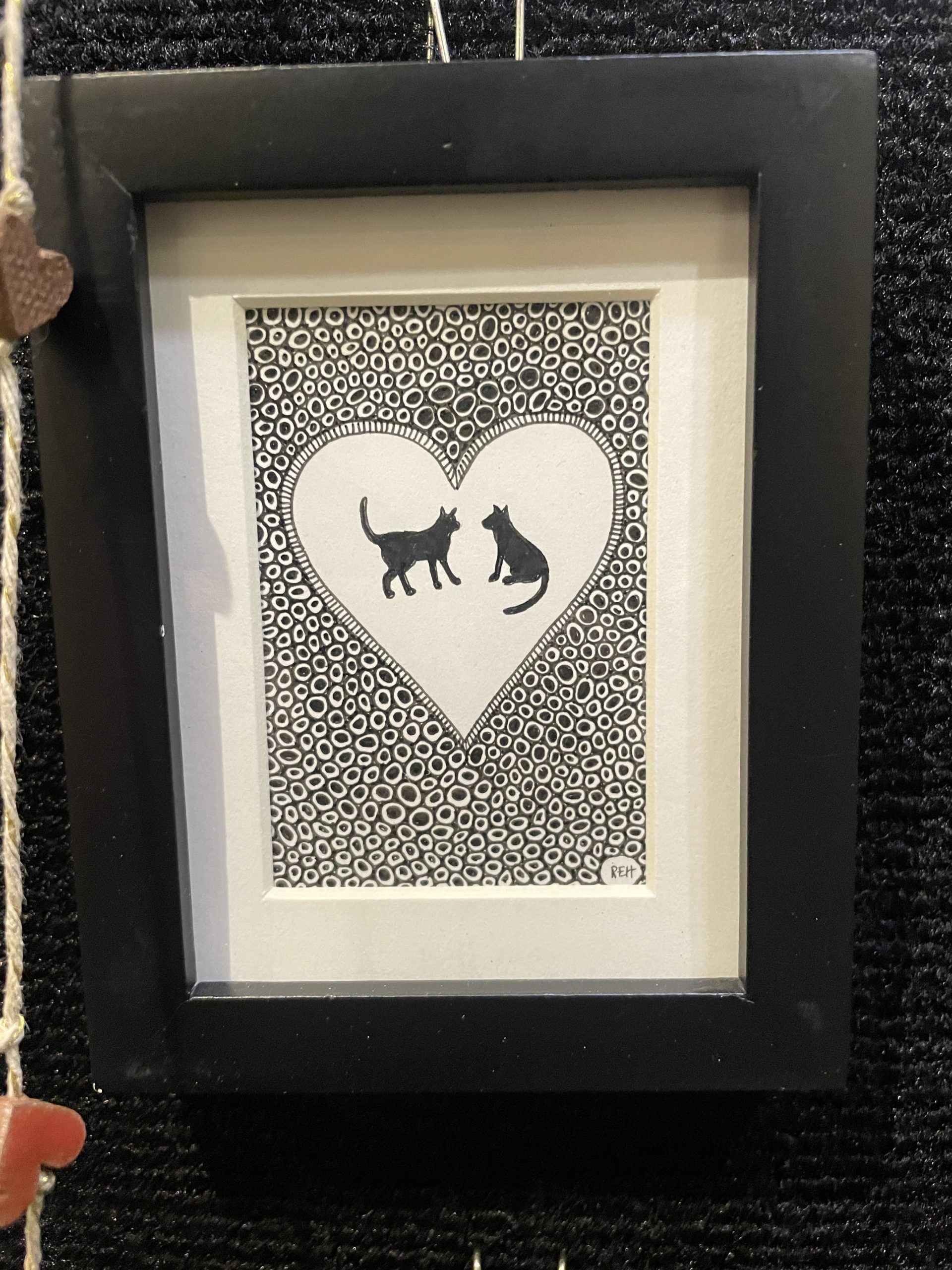
If you happen to be in/around Saint Paul, MN you get check out and purchase her work at The Grand Micro Gallery and Boutique — which she is the owner and curator of.
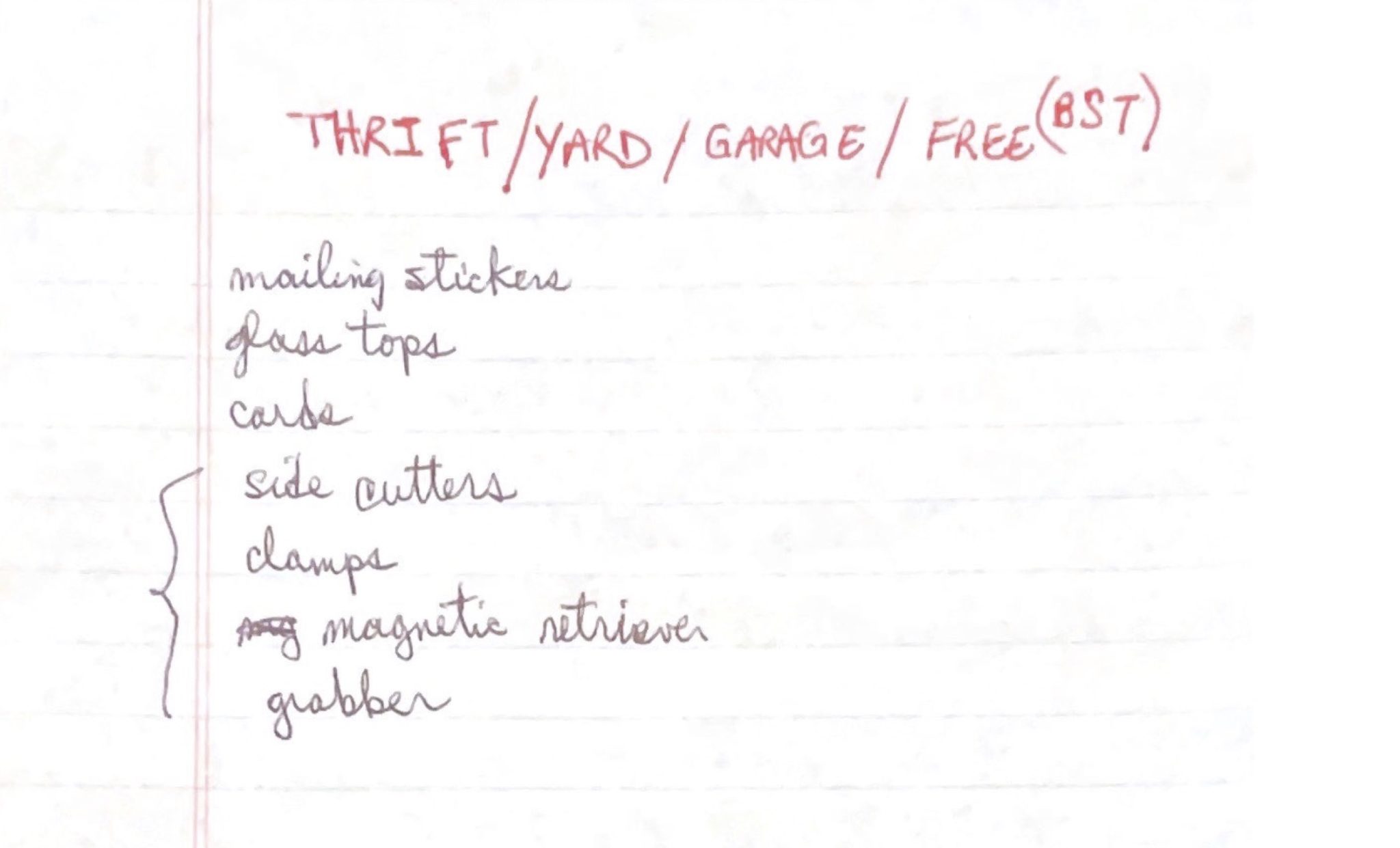
One of the motivations in my personal zeitgeist as I started this site was my long fascination with other people’s handwritten habits and styles.
I recently noticed that the copious lists my Dad relies on have the same structure. For instance:
- Always two colors — the list title being a separate color from the body. In this case, Red.
- The title in all uppercase.
- The list items often in all lowercase.
- Though you can’t see it in the above example, he told me that to-do lists always have each item begin with the action/verb. “Wash dishes”, “Call doctor”, etc. There is generally space between the action and noun so that he can easily scan the list and pick out same/similar actions.
No particular point other than I find such things endlessly interesting.
I’ve been thinking a lot about this site lately. As you’ve surely noticed, I haven’t posted to it in a while. The last post before today was on July 1st — almost 6 months ago.
There are a number of reasons for this. One is that, when I started this site, I had some collaborators and contributors who have since moved on to other things. All of our lives are busy and we all have other sites that are more primary for us. Here’s mine. So it’s difficult to keep up a separate, single interest, site.
The truth is, I have lots of interests and my focus on which of those I’m more interested in than others changes. There was a time when I was super focused on the idea of a site focused not so much on the stuff of analog writing but the act of it and I think this site did a very good job of that. I felt it was a voice that was missing in the conversation around pens and paper and pencils and typewriters and etc. “Sure, but what about what you DO with those things?” is the question this site sought to explore. I’m proud of it.
I’ve also been in this position before. A very popular site that I’m pretty proud of that I’ve ended when I felt I had all I’ve had to say on that subject.
So, I’ve been thinking to myself that I’ve said all I have to say on this one… But then the previous two links pop into my focus and here I am excited about finding more stuff like that and posting about it here and…
All this is to say that I’m sorry for the lack of posts around here and that may or may not change and I’m just not sure what will become of it but know that I know and that I’m thinking about it more than you know.
In April of 2020, I took a month-long tour of my pencil cups, posting brief profiles each day. The individual posts are still up, with the tag pencils, but I’ve decided to create a dedicated page for all the entries here.
An incredible collection, with some interesting reflections, on pencils from around the world. Robert is someone who really uses pencils so his thoughts are worth taking seriously. Nice to see them collected in a single place.
Can you build a website from a piece of paper?
Turns out, the answer is “Yes” and it is so fun to see.

Absolutely stunning sketchbook/journal pages. Click here for more.
Remember letters? You know, from way back in the days before phone calls and faxes and email and texting?
Mr. Wade would like to have a revival and he’s preaching a gospel we believe in.
I use Trello to keep track of things, note progress, and squish special projects onto one “board.”Handy enough.But my real guide for the day is a simple notecard.
Yep. Mr. Wade is onto something here.
I’ve been running my whole day-to-day life off of 3×5 card for about 20 years now.
On the front of the card I write down the tasks I’d like to get done (and really believe I can get done) that day.
On the back of the card, I capture any incoming tasks that pop up or things I need to write down — like a scratch pad (i.e, things that won’t get done today but I’d like to keep for some other time).
As I get stuff done, I mark it done. Things that don’t get done either get moved to the next day’s list or deferred for later. I notate all of that using my Dash/Plus method for each item at the end of the day.
I keep the card upright, in my face, and looking pretty using Ugmonk’s Analog card holder (just the holder, I use my own 3×5 cards).
Simple. Effective. Never runs out of battery. What we believe in.
Watch this short film about a little shop in California that makes books the way they did at the turn of the century.
Lovely find by Harry at The Study
As a non-native English speaker, I always found (and still do) that writing things down by hand, and then bringing them into the digital realm, allowed me to create better drafts.

Very interesting.
All sorts of interesting, serendipitous things happen when you use a paper dictionary, because when you look for a specific word, you have to brush past all sorts of other words before you find the one you’re looking for.
This is important.

The Cramped contributor Harry Marks offers this lovely little video ode to his Smith Corona Typewriter.
I’ve posted and written lots of stuff about the benefits of keeping a daily journal. But, Mr. Sivers introduces another idea that I love and plan to develop — A “Thoughts On” Journal…
There are certain subjects in your life you think about a lot. People, places, hobbies, health, plans, finances.For each subject that you might have ongoing thoughts about, start a separate “Thoughts On” journal. Whenever you have some thoughts on this subject, open up that file, write today’s date, then start writing.
Love this. There are also a few other ideas presented here worth exploring.
In an age of endless productivity apps, nothing comes close to the deceptively simple combo of The Ivy Lee Method + Analog to master your productivity.
I’d never heard of the Ivy Lee method before. Found this post interesting (and I just received an Analog card holder of my own from Ugmonk and I hope to write about it soon).
While I was on vacation last month, I realized that I had been using the same cheap paper and pen combo for years without complaint. I had found my grail, without knowing it and without breaking the bank.
What we believe in.
A new study from the University of Tokyo concludes that writing with a stylus or typing on a touchscreen keyboard just isn’t the same as handwriting. “Our take-home message is to use paper notebooks for information you need to learn or memorize,” noted coauthor Kuniyoshi Sakai, a neuroscientist at the University of Tokyo.
As kind of a counter balance to Shawn’s post below. It this doesn’t have to be an either or thing. Every tool has its proper use. Digital may be the right choice for some things. Paper for others.
My most-used productivity tools have historically been my iPad Pro (my primary device since the first one was introduced) and the various notebooks, notepads, and looseleaf sheets of paper strewn around my workspace.
Digital paper devices have long intrigued me, though. Unlike an iPad, they use e-ink to ostensibly mimic a paper writing environment. Their screens are textured in such a way that using a stylus feels similar to writing on paper—not exactly like it, I’m afraid, but close, and far more satisfying than sliding plastic across glass.
When these devices first started hitting the market around five years ago, I was skeptical. No piece of technology could ever truly replace paper.
But then, last year, the reMarkable 2 was introduced. Watching the videos, I couldn’t deny that the thing was sexy: aluminum, sleek, way thinner than its predecessor. Thinner even than my iPad, thinner than most of my oft-used notebooks, and definitely thinner than the composite stack of said notebooks. So after months of ogling, I gave in and bought one.
I’m afraid it’s pretty great.
I’ve been using it for a couple months now—to journal, write the first drafts of essays (including this one), take notes, and read and edit PDFs. I’ve barely touched a piece of paper since I bought it. The stylus feels good, scratchy yet smooth. There are several pen stroke options to choose from, like ballpoint (my favorite), marker, pencil and mechanical pencil, and a calligraphy pen, all faithfully recreating the lines of their analogue counterparts. And I can choose from dozens of templates: lined, dot-grid, various planners, even sheet music (which I have no use for, but lots of people do). The pen nibs wear out after a month or two, but so too do ink cartridges run dry. The leather cover is as beautifully crafted as a leather notebook. The battery lasts only a couple weeks, but paper, too . . . actually, scratch that, paper never dies.
Listen—I really like this device. As a full-time writer, I use it daily. I have plans to write the first draft of an entire novel on it. It fulfills my wildest dreams of writing like Jake Sisko in Deep Space Nine, the best Star Trek series (don’t @ me—I don’t have social media, so good luck even trying).
But I know that, some day, I might drop this thing and shatter the screen, or I might spill my coffee on it, or the software may brick, or the company may go under and stop supporting it, or, heck, the battery might explode. This tablet is still a tablet. It’s not paper. Someday, it’s going to stop working. When that happens, maybe I’ll get a new one—but if I don’t (and even if I do) I know that paper, real paper, will be there waiting for me.
Really fun and well done. (via Kottke)
“I simply gravitate to a notebook and a pen where there’s an unequalled level of freedom.”
Josh Ginter describes how he leverages the analog and blends the digital to get his stuff done. Really good writeup.
YOU’VE GOT TO DIG IT TO DIG IT, YOU DIG?
Barack Obama, no stranger to controversy, waded into an extraordinarily contentious area of American life on Wednesday when he revealed his pen preferences. The former president told the New York Times that when composing longform writing, including his recent book A Promised Land, he prefers to sketch out his first drafts by hand, rather than on a computer. What’s more, like all true stationery nerds, Obama is “very particular” about his writing tools, preferring the combination of yellow legal pad and black Uni-ball Vision Elite rollerball pen with a micro-point.
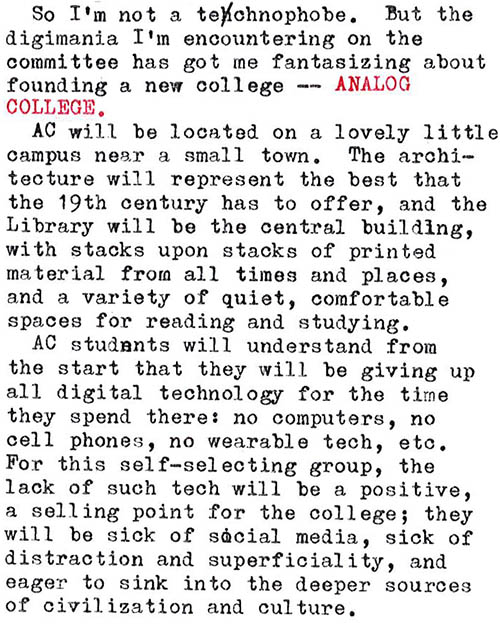
What we believe in. If I was of college going age, such an institution would be at the top of my list.
Also, I was not aware of this blog before the ever wonderful Alan Jacobs linked to it. Well worth spending some time and looking around.
Cal Newport (of Deep Work fame) introduces The Time-Block Planner which is organized around the ideas he set forth in that book.
It’s important that we’re using paper here… I don’t want you on your computer when you don’t need to be.
Consider me intrigued.
It started off normal. I had a planner party in November last year, where a handful of friends brought their stationery over and we all decorated and prepped our planners for a productive year. Welp. That was the last time I had a gathering of friends, and all the plans we planned went awry.
This, I believe, resonates with us all.
As far as I can tell, they were never sent through the post (if you know of any examples, please comment). They were just hand-delivered notes containing informal invitations, short apologies, brief questions, little flirtations, and so on. In the 20th century, their function was taken over by the phone call, and in the 21st century, by text messaging.
I had no idea of the long history behind notes like these. Via Alan Jacobs most recent always excellent newsletter.
When paper fails, memory; when memory fails, paper
— Alan Jacobs, Paper and Memory • Buttondown
The Work/Life Task System (WLTS) allows you to keep your professional and personal tasks separate in the same notebook, while accounting for how most tasks come into our lives in the first place: email.
New analog task system from Harry Marks (who used to be a contributor here). Worth checking out and seeing if some of these ideas might work for you.
Imagine being so well-known for your craft that letters addressed to “Mr. Typewriter, New York” would get delivered by the Post Office to your door. Imagine you mount a letter wrong while crafting a typewriter, and it causes a country (Burma) to change that letter to accommodate your mistake. Or that, through decades, your expert testimony about the accuracy of a brand of typewriter and the characters it types means the difference between guilt, incarceration, freedom or the swapping of fortunes. Such was the life of Pearl and Martin Tytell, of Tytell Typewriter
Facinating story.
Here’s how I set up my notebooks. I like cheap notebooks with that thin, shattery glass paper texture — nothing fancy. I don’t do any complicated bullet journalling stuff, although I’m totally happy if it works for you! I just haven’t gotten into it. This is the method I’ve found that’s the best intersection of simplicity and reference points.
One particularly interesting idea I like is item #5:
5. Finally, when I start a new notebook, I go back through the last one and pick out the most important ideas and mindset changes I want to carry through to the next one. (This is the best part.) I write all of these highlights at the beginning of the new notebook.
Artistic visionaries Mark Mothersbaugh & Beatie Wolfe share a love of tangible artforms, in and amongst their futuristic explorations. In light of the threat to our 225yr old postal service, at a time that could jeopardize the democracy of the country, Mothersbaugh and Wolfe join forces for this collective postcard art demonstration.
Very cool. Those who know me know I’m a big fan of the music and visual art of Mark Mothersbaugh. He’s been doing a postcard sized piece of art every day for decades so this is right in his wheelhouse in so many ways.Very excited to participate in this.
My note-taking device is pen and paper. It supports high precision handwriting and has zero input latency. It takes on a skeuomorphic design. The writing surface is also realistic, almost paper-like. It comes with encryption, based on my handwriting. While it does not support cloud storage, the data is guaranteed to be inaccessible to hackers without physical access. It is a blessing in disguise.
What we believe in.
(h/t John)
A nice little productivity system that can be explained in a paragraph and fits on a single 3×5 card. What we believe in.
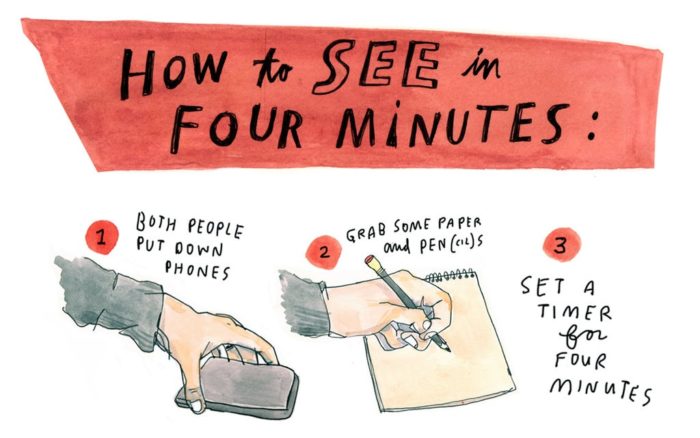
(h/t my buddy Dave Caolo)
“This morning I got up early to go to my corner store, T and T, to buy the paper. The young guys who work there had a Run-D.M.C. tape on. The owner, an old Italian guy, says, “What da fuck is dat? Turn that jungle music off. We’re not in Africa. It’s giving me a stomach ache.” Sooner or later it comes out. Okay, so you don’t like rap music. But why does it have to be about jungle music and Africa? I should have Sal say the same words to Radio Raheem in the movie.”
“After many years of wrestling with how best to connect my paper notebooks to my digital data, I’ve come up with a simple system that works for me, and that I believe could work for you if you’re so inclined.”
Some interesting ideas going on here.
It’s not a journal, bullet or otherwise. It’s not your collection of morning pages. It’s not a stream of consciousness rambling of your thoughts. A commonplace book is deliberate. It’s curated.
longtime friend and contributor to this site, Harry Marks, has a brief but good primer on starting and keeping a commonplace book in his latest newsletter.
There’s something about using a nice notebook and a fancy fountain pen that inspires joy in a way even the most beautifully designed application can’t. At its core, a screen is simply a slab of glass – cold, sterile, and impersonal. During this pandemic, I’ve found myself drawn to the siren song of analog more than ever before.
You’re doing it both for your sake and for the sake of others, a small but reassuring addition to our armor for staying healthy.
Handwriting is unique. It’s personal. It’s individual to you. It communicates more than just the words and ink. It communicates your humanity in ways that type never could.
A reply I wrote to someone who asked why I even further might advocate journaling by hand versus typing and printing.
Don’t think of your journaling being solely for you. Think of it being for those you leave behind. Which would they rather have? Which will they be more likely to cherish and keep?
In these historic times, many people have turned to journalling as a way of keeping account for the next generation. So when the grandkids ask what it was like to live through the 2020 Pandemic, you’ll be able grab your pipe, sit them on your lap, and regale them with yarns spun from your own written words.
I see so many that I know discussing how important their digital journalling app of choice has become for this purpose and… my heart sinks. I feel so sad for them. The reason….
None of these apps will be around.
Likely not in 10 years. Certainly not in 20 or 30 or 50.
Take it from a 52 year old who has lost more writing in his 30 years of computing than he has been able to save. The reason? They are on ZIP Disks in my basement using Clarisworks or it was into a BBS system that died silently or they are on a Colorado 250MB Tape Backup of my first computer (A home-brew 486/50 PC) or…
Therefore, let me repeat: THAT APP WILL NOT EXIST NOR WILL ANYTHING YOU TYPE INTO IT.
The history of computing has copious evidence to back me up on that bold statement. The evidence shows that Day One (who I will note bills themselves as a “journal for life”) will likely be long gone in 20 years (Go ahead and bookmark this post and come see me then if I’m wrong). Maybe when the company dies they’ll give you an exit plan to save your work or maybe they won’t. Even if you still have the files twenty years from now you won’t have a working app to open them with. Like those ZIP Disks in my basement, your best hope will be to have some old computers with the right app to be able to open them up and print them out.
Yes. Print. On paper. Why? Because, unlike your app, paper has a proven track record for lasting thousands of years if the conditions are right.
I still have the first piece of writing I ever published as a second grader in my elementary school newsletter because my Mom saved her mimeographed copy of it and gave it to me a few years ago. And, you know what? Unlike any of the digital formats I mentioned, I’ll be able to show it to my grandkids and they’ll be able to show it to theirs.
So please, I implore you, if you insist on journalling using any digital tool, please also regularly print what you are writing. Stick it somewhere cool and dry. Even print a couple of copies and put one somewhere offsite for extra security. If you really want to preserve this important history, and you really care about it, you’ll print it.
Or, you could save yourself a lot of trouble and just simply get a good notebook and write by hand. Use good paper. Use good ink. It’ll last for generations. The Library of Congress has a good guide on paper preservation worth checking out. But, even with none of those things, most paper should last hundreds of years if undisturbed.
My friend Robert van Vliet takes us on a deep dive into the modern Blackwing releases. He’s a true pencil nerd and has… Opinions about each one he’s tried.
Today is World Sketchnote Day. Sketchnotes were pioneered by my dear friend Mike Rhode as a way to add visual storytelling to everyday note taking in order to increase idea retention and add interest. We are encouraged to celebrate by sketchnoting something today and sharing it with folks using the hashtag #SNDay2020.
“There is something unexpectedly liberating about putting pen to paper in this manner, something I’ve not felt in a long time. It was previously a struggle to choose such an option over typing on the phone but I realise that was because I had the wrong tools. I was simply trying to force the issue rather than let it happen naturally.”
Tools that you love are tools that you’ll use.
“Don’t cheat on the quality of your (paper) notebook. It records your greatest work.”
What sets kakeibo apart, however, is that it doesn’t involve any budgeting software, apps or Excel sheets. Similar to bullet journaling, it emphasizes the importance of physically writing things down — as a meditative way to process and observe your spending habits.
A personal budgeting method that is kept by hand? What we believe in.
The linked article explains the “why’s” behind the system but not so much the “how’s”. This one does a fairly good job of that.
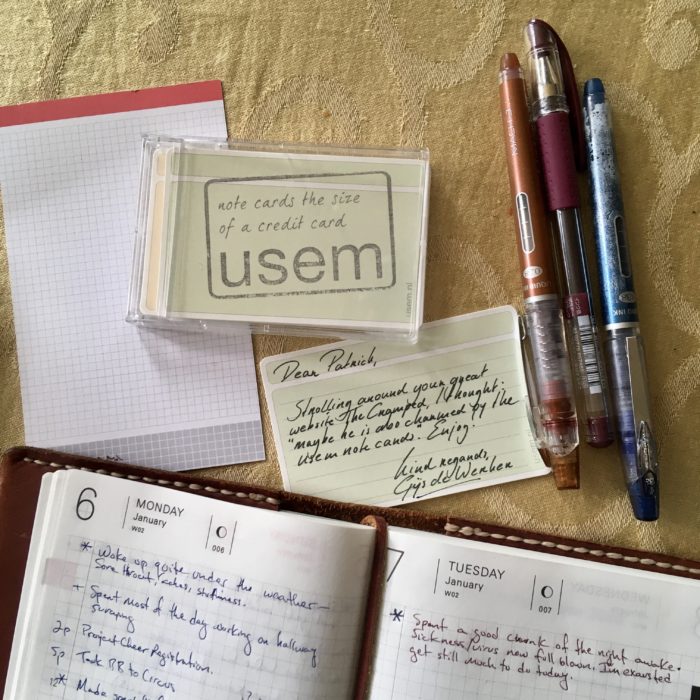
I was recently sent a package with a selection of Usem Note Cards. They are made of thick, high-quality, paper and 4-5 of them stacked are about the thickness of a credit card. Very easy to slip into a wallet so I always have something to jot down a quick note without having to carry a notebook. Really great if you have to jot down something to hand off to someone.

“Author and artist José Naranja ensures he won’t forget any detail of his year-round travels across the globe through a meticulous and unique documentation process. Formerly an aeronautic engineer, Naranja now archives his thoughts while visiting foreign countries by hand-crafting journals replete with items like collected stamps, an illustration of the periodic table, and a study of fountain pens. Each mixed-media page centers on a theme, such as the culture surrounding eating a bowl of ramen or the flamingos found in a zoo.”
Wow! These are just beautiful. Click through the link for more photos.

One thousand pencils handmade from scrap pallet wood.
What we believe in.

For 700 years, the Richard de Bas paper mill has produced some of the world’s finest paper. The French constitution is printed on paper from this mill. And artists like Salvador Dalí, Pablo Picasso and Marc Chagall were customers. Emmanuel runs the business today. His great grandfather bought the mill in Ambert, France, during World War II, and it has stayed in the family ever since. It’s one of the last in France where paper is made by hand.

This is what thought looks like. Ideas, and ideas about ideas. Suppositions and suspicions about relationships among abstract notions — shape, number, geometry, space — emerging through a fog of chalk dust, preferably of the silky Hagoromo chalk, originally from Japan, now made in South Korea. In these diagrams, mysteries are being born and solved.
But here’s a secret that up until now very few people have known: most Levenger brand rollerball pens will accept Pilot G2 refills. Why is this good to know? Because Pilot G2 pens are some of the most appreciated and most widely available pens on the planet.
I can attest to this. I’ve had a Levenger True Writer rollerball for at least 10 years and have used a Pilot G2 refill in it since the beginning.
That’s because I wrote probably 75 percent of Hungry in longhand, on planes and trains, in public libraries and cocktail bars. To finish the manuscript (no mean feat with four children in the house, two of them infants and two of them teenagers) I carried around equipment similar to the gear I have with me now on the train: a cheap Wexford wide-ruled notebook from somewhere chic like Staples or Walgreens, and a pen bestowed upon me by some nice person at the New Orleans tourism board.
(via James Schirmer)
Although I was afraid my hand would get tired, and my handwriting would be illegible, it turns out that I love writing fiction by hand. Not only is it fun, but it comes with all these weird bonuses you don’t get when working on a computer. Like Gaiman suggested, hand writing forces me to slow down and think before filling up a page, and therefore I’m less inclined to drop waste-words on the screen and waste even more time fiddling with them. Additionally, seeing the story in my mind’s eye is far easier when I’m using a pen. I don’t know why, but I’ll run with it! And I love the way writing in a journal makes my first draft feel entirely private, much more so than when I work on a screen. There are no distractions inside a paper journal, and no notifications jumping out to fuck with you.

Planner Stencils
A genius stencil set with which you can turn any notebook or piece of paper into a planner. There are many combinations you can make, so your diary will become tailored to you. The set has 3 stencils, in a card wallet. Each one measures 190x130mm
Speaking of paper planners, this is a neat idea for making your own.
Shelby Abrahamsen, a 26-year-old lifestyle blogger with multiple social media accounts, lives much of her life online. Yet her favorite way to organize her schedule is old-school: She uses two paper planners.
What we believe in.
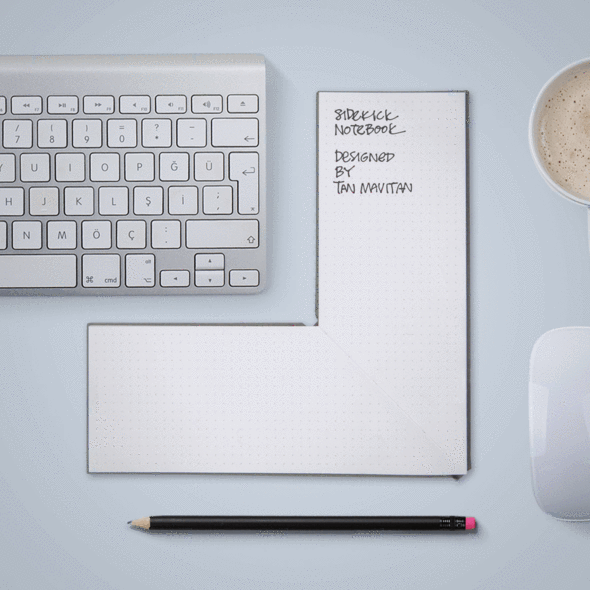
A company that sells some interesting takes on notebook designs including one that is triangle shaped so it opens into a square or, my favorite, one that is designed to fit around corners like the corner of a computer keyboard or a book. Somewhat reminds me of the utility of Studio Neat’s Panobook.
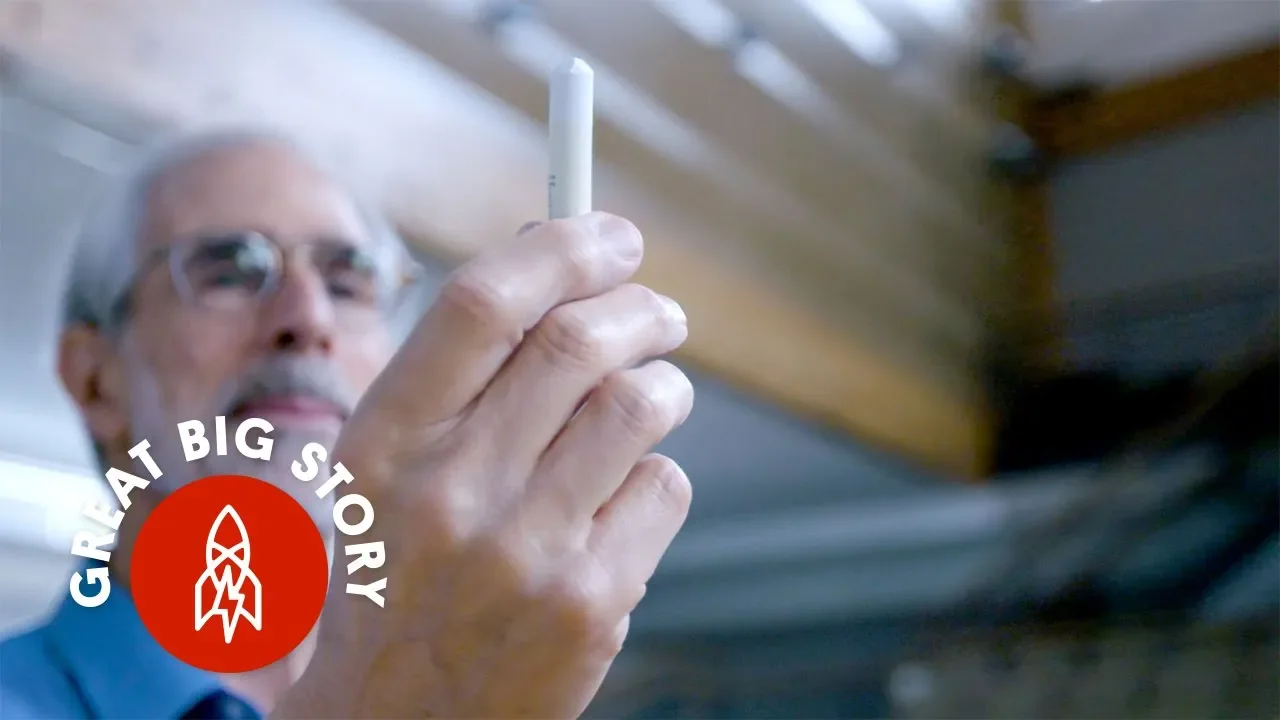
Once upon a time, not long ago, the math world fell in love … with a chalk. But not just any chalk! This was Hagoromo: a Japanese brand so smooth, so perfect that some wondered if it was made from the tears of angels. Pencils down, please, as we tell the tale of a writing implement so irreplaceable, professors stockpiled it.
So many people sent this to me. For good reason, it’s fascinating and wonderful.
“Ideally, in your notebook, you get to invent your own language and systems, creating a self-contained bit of hardware and software just for you. But, especially for those of us who are rule-followers at heart, that can be a big leap, so perhaps it’s unsurprising that so many people are looking to experts for a little guidance on how to get started. All those rules about which bullets to use and when to migrate tasks and how to set up a new page are reassuring in their rigidity, but also encouraging in that you can easily adapt them to your preferences and needs. These systems promise to bring order and structure to your life but also give you the room to write your own code and change the rules as you go.”
Pen and paper will solve almost anything.
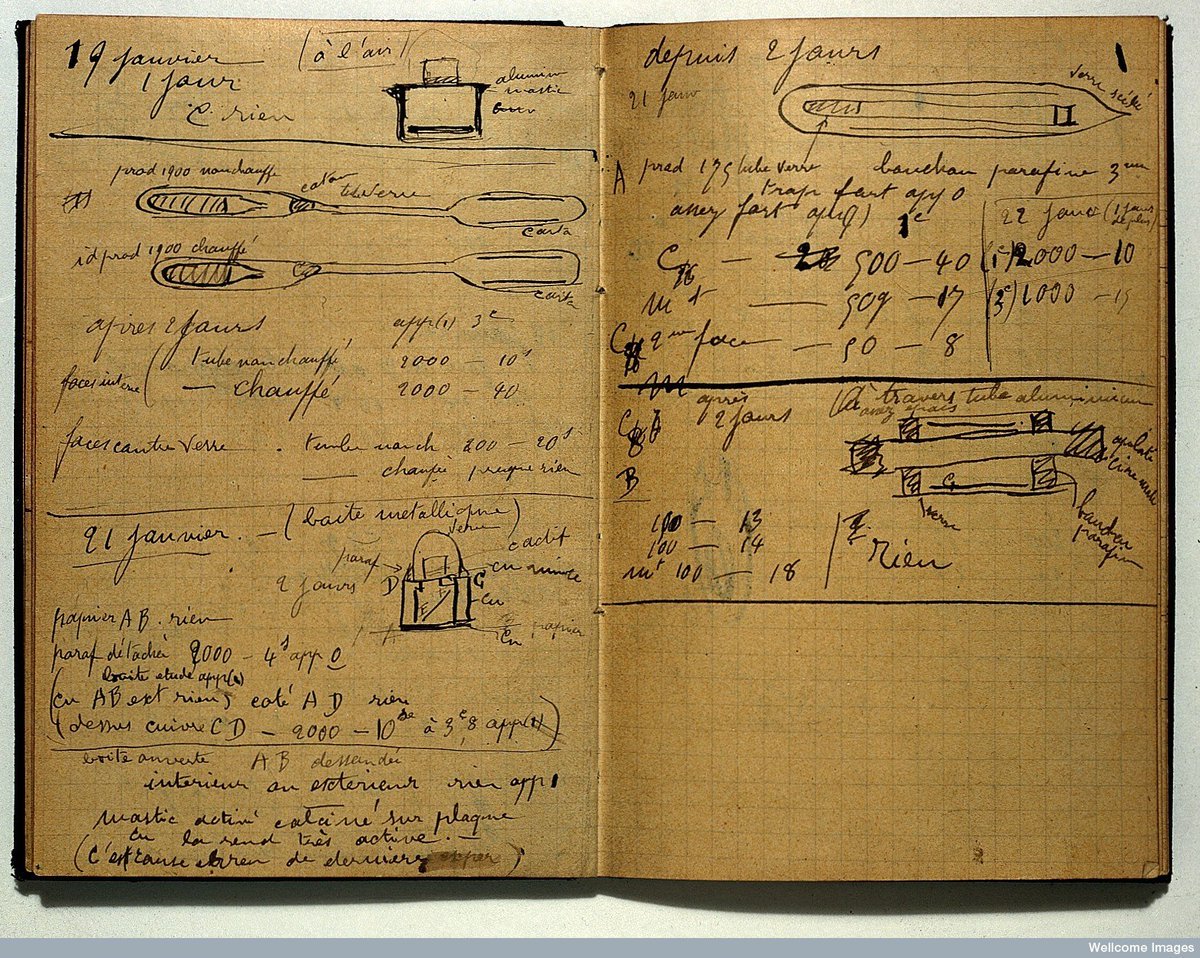
A look inside a notebook, on experiments from 1899-1902, still radioactive today (and will be 1500 years from today). This reminds me that paper notebooks are still the best format for archiving notes, and handwriting adds humanity to everything — including data collection. (via The Nobel Prize and NinjaEconomics)
If you want things to last for hundreds of years, and remain radioactive, you use paper.
It’s taken me a long time to get over the notion that a beautiful notebook should only contain fancy, good looking items but now I relish ruining a good notebook.
You can’t trust distant memories. But you can trust your daily diary. It’s the best indicator to your future self (and maybe descendants) of what was really going on in your life at this time.
Truth. I also love his idea for a Thoughts On journal:
For each subject that you might have ongoing thoughts about, start a separate “Thoughts On” journal. Whenever you have some thoughts on this subject, open up that file, write today’s date, then start writing.
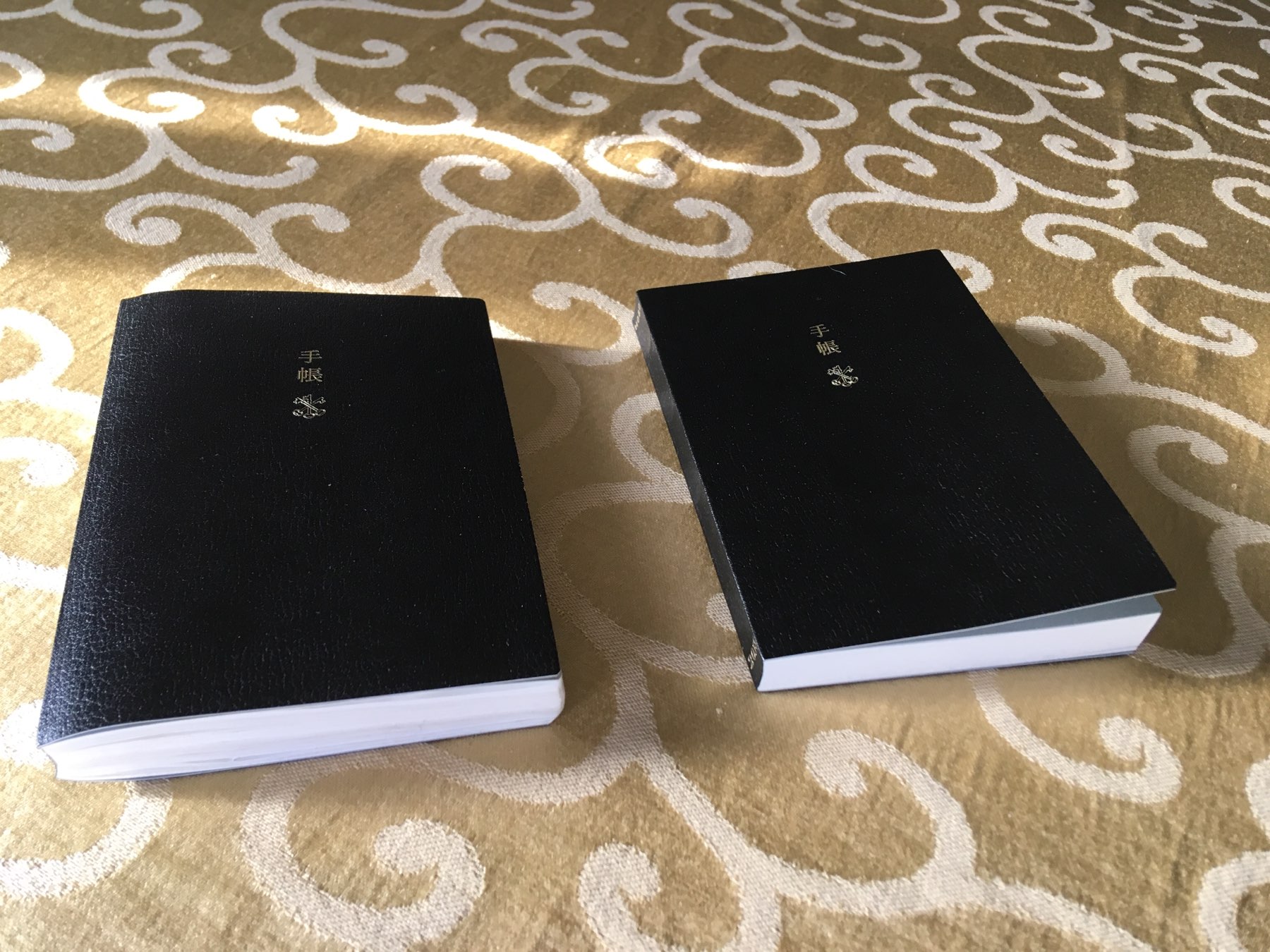
It’s Hobonichi Techo Swap Out Day!

A lovely little interview with Roald Dahl about his writing practice including his use of pencil and paper. (via Garrick Wood)
In some cases, the patients’ drawings looked just like scribbles. But how good – or bad – the drawings were didn’t seem to matter. In fact, in most of the experiments, the researchers assessed their participants’ ability to create vivid images and also their experience at drawing, and neither was correlated with memory performance. Even people who struggle to create a stick figure should, then, get memory benefits from drawing.
Could also be a good case for using Sketchnotes to capture information.
By the way, both this link and the previous one via Austin Kleon’s always excellent newsletter.
In an age of sharply escalating computerization and digitization of everything into an intangible ether, it can be hard to remember that paper, too, is just another medium, something that acts as a transmitter for something written or typed in the past.
I can divide my life into the disorganized forgetful mess I was before I had my first notebook, and the increasingly organizing and effective person I am still becoming since then.

“I was asked what syntax I use in my notebook: 🔲✔️ for tasks #️⃣ for notes/ideas ↪️ for sub-notes That’s it!”
On a recent drizzly Tuesday morning, a small group of ink enthusiasts—already rain-slicked, under umbrellas and ponchos—stood on Gapstow Bridge, in Central Park, admiring a brilliant-pink pokeweed bush. The Park was the first stop on a five-hour foraging trip that would take them up to Hudson Heights, to collect foliage and trash, which they would cook, to make ink.
This is really cool! I had no idea this was even a thing.
On paper, we can reflect, gaze out the window, and return to the same page we left. Instead of it changing, we change. If screens are about going fast, paper is about going slow. If screens are where we connect with others, paper is where we connect with ourselves.
You’re going to have to do edits–probably lots (and lots) of them–and sure, you’ll have to input them into the digital doc, but if you’re analog-minded, I highly recommend making your edits on a hard copy.
Excellent and detailed post about his return to paper journalling.
(via Harvey Morrell)
Information storage today is a perfect example of almost everything in the era of the Entanglement: some old problems have been solved, but vastly more have been created, and we have lost virtually all personal control of the information. We have to negotiate with our technology now for it to yield any value, while constantly dodging the vast and terrible threats created by its rampage across the world.
A lovely and incredibly well written ode to the permanence of paper and a brand of file folder I’ve never heard of before.
Reader Angus Macfarlane reached out to me recently with an anecdote I found fascinating. He agreed to let me share it below:
Patrick,
I’ve been a long time reader of the Cramped. Thanks for taking the time to curate interesting content about analog creativity. I would like to share an anecdote.
I was in the temple* yesterday and it occurred to me that we were still using pencils and paper. To get in, we show a piece of paper; to participate in an ordinance, we use a piece of paper; when the ordinance is complete, we show that with a red checkmark from a pencil. I think there are a few reasons for this. 1) There isn’t anything distracting about a piece of paper and a pencil. This allows focus to be placed elsewhere, while still ensuring accurate record keeping. 2) There are few points of failure in the system. If the paper arrives at the recorders desk with a red check mark, then it is recorded as complete. If not, then it isn’t. Paper also never runs out of batteries. 3) If a failure does happen, it is obvious. If a patron proceeds through the ceremony, it will quickly be apparent if they don’t have the paper, in which case the ceremony can’t be completed for them. There isn’t any ambiguity, it provides a binary situation of success/failure. 4) There is no delay in transmission. It is as fast as reading what is on the paper and verifying the check mark.
There are many digital systems in place as well, including databases, etc. My point here though, is that on the individual level, the experience in the temple is with paper and pencils.
- Context: This was an LDS temple (Church of Jesus Christ of Latter-Day Saints, or Mormon). The LDS church has been very serious about record keeping since the 1800s, part of which is explained by the belief that heavenly and earthly records will be compared in some judgement day, and also that the LDS church does ordinances for the dead. The idea here is that for a person to be saved, they must complete certain ordinances on the earth (such as baptism). For those who died, the LDS church does ordinances for them (only in temples). Everything that is done is witnessed and documented. I don’t want to be blind to issues or concerns that surround this practice, but just wanted to share something interesting about the practice of using pencil and paper.
Thanks,
Angus M.
Paper and pencil make sense for such things – especially for longevity. I’ve long said, if you’d like something to last 100+ years, use paper. Every digital format I used 30 years ago, besides plaintext, is unreadable by computers of today. Yet, I have church ledgers from my great, great, grandfather well over a hundred years old that I can read easily today.


Artist Austin Kleon on when to use analog tools vs digital tools in your creative process and why constraints can super-charge your creativity.
I really enjoyed listening to this. Austin does a good job of explaining why the tools one chooses does matter in the act of creation.
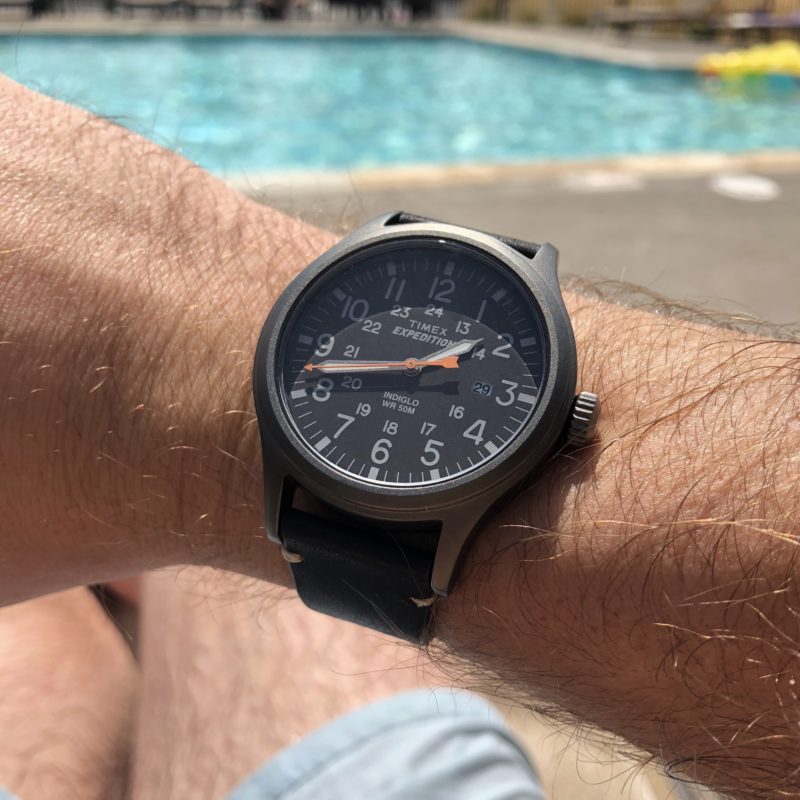
I know, I know—The Cramped is about analogue writing tools, not watches. But this post isn’t about watches, not really. It’s about choosing simple tools that do their job well. And it’s about eliminating necessary distractions. And it’s about refusing to be convinced that you need a certain thing to do other things that you’ve always been able to do without that first thing.
A little over a year and a half ago I bought my wife an Apple Watch for Christmas. She’d been wanting a fitness tracker, insisting she really just needed a Fitbit, but I thought she’d be happier with an Apple Watch instead. Why buy one thing when I could get her this other thing that does exactly what she wanted, but also more, and arguably looks a hell of a lot better? She loved the Apple Watch. It quickly became an indispensable tool for her. She’s a busy lady—at the time she was running a museum.
I, at the time, was spending all day in my home office, writing, mostly fiction. I didn’t need a computer on my wrist. I was intrigued by the idea, but felt little pull to get myself an Apple Watch. Until I did. After five months of observing how much my wife liked hers, I bought one for myself. Then I started managing and editing a popular print magazine, and the value of the Apple Watch for me became obvious.
I’m an active guy—I lift heavy three to four times a week, and I train jiu-jitsu three to five times a week (yes, sometimes I work out more than seven days a week). Even though I’m so active, for a long time I underutilized the fitness-tracking features of my Apple Watch. For me, the value came from things like notifications, the ability to control my music from my wrist, and, interestingly enough, quick access to the time (I’d never been much of a watch guy before).
Besides, the Apple Watch sucks at tracking the kinds of activities I do. It’s woefully inaccurate at tracking heart rate during lifting workouts (this is the fault of physics, not Apple), and wearing jewelry and other accessories during martial arts can be downright dangerous.
But then one day, a few months ago, I decided to go all-in on this tracking idea. I created some Workflows that would allow me to manually track my lifting and grappling workouts, using an algorithmically estimated calories-burned count. I wanted to see how long I could maintain a streak on the watch, filling all three of my rings—standing, calories burned, and amount of time spent exercising—every day. The stand and exercise goals are stagnant, but the calories-burned goal increases each week as you maintain the streak. My streak, for all three rings, lasted 66 days.
But there’s something grating about being tapped on the wrist every hour and being commanded to stop whatever you’re working on and stand for 60 seconds, to come out of a deep work session in order to fulfill an arbitrary goal. And, oh boy, the guilt one feels when they don’t get their caloric goal one day . . . it’s heavy. And if you miss two days, because you’re sick, or because you did spend two hours training but forgot to log it, or because you had a particularly tough sparring session and just knew, because your body told you—and you trust your body—that you needed to rest, to recover—well the Apple Watch finds that shameful, and it lets you know it finds that shameful.
And it turns out notifications for messages on your wrist aren’t much better. Sure, I’d rather hear from a real person than a computer, but I don’t want anybody to be able to come up to me while I’m working, headphones in, and tap me on the arm because they think what they have to say is more important than what I’m creating.
So I decided to stop wearing the Apple Watch for a week. When the week was over, I didn’t put it back on. I still lifted, I still sparred, and I even sprinted a few times. I sold the Apple Watch. I got $150 for it.
Which brings me to the Timex Expedition Scout. I bought it for $60, in a sort of slate-gray brass with a black leather strap. It looks good. I love the bright orange second hand, which is shaped like a hunting arrow, and the hour and minutes hands, which are white and gray and shaped like swords. I don’t have to charge the watch, and the watch does one specific thing really well: it tells me the time, whenever I need it.
It’s a lot like paper: For decades tech enthusiasts have been trying to convince us that there’s something better than paper. I was once convinced, but now I’m not. And in the last few years, they’ve started trying to convince us there’s something better than a traditional watch. I was briefly convinced, but now I’m not.
I was skeptical of this piece at first (I thought it was just going be full of recommendations for various digital writing tools), but I like where they author ends up:
Right now, paper still can’t beat the internet, and the internet still can’t beat paper. So use both.
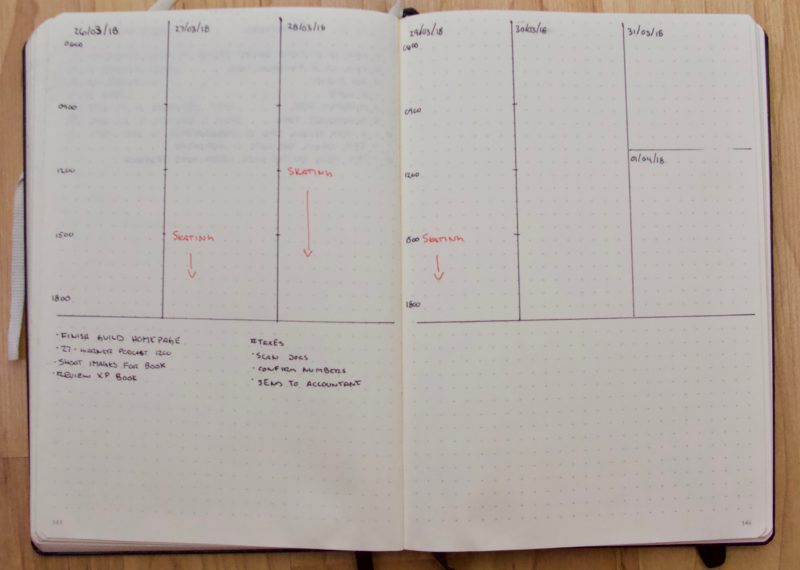
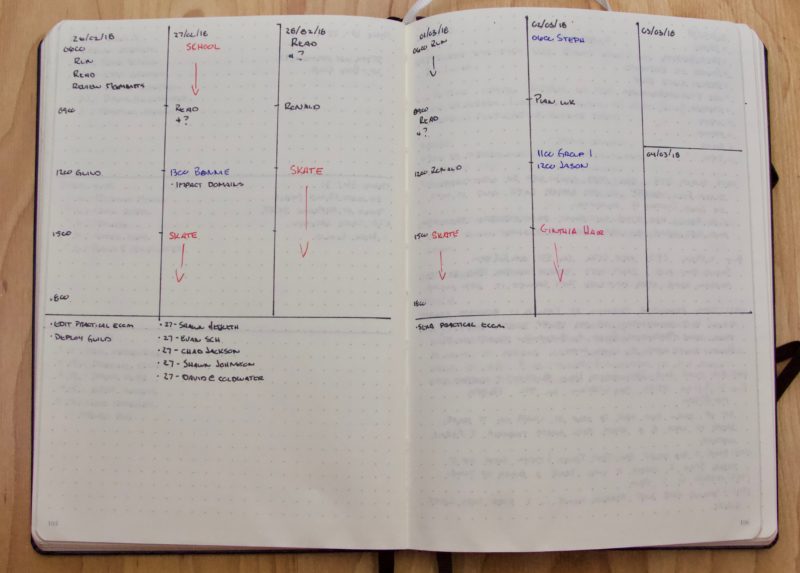
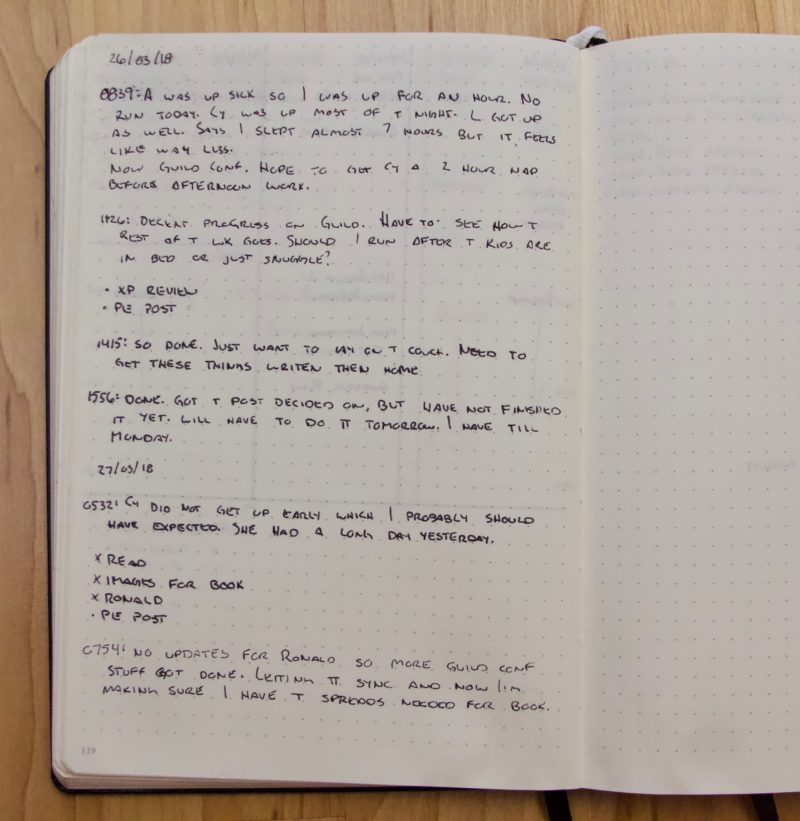
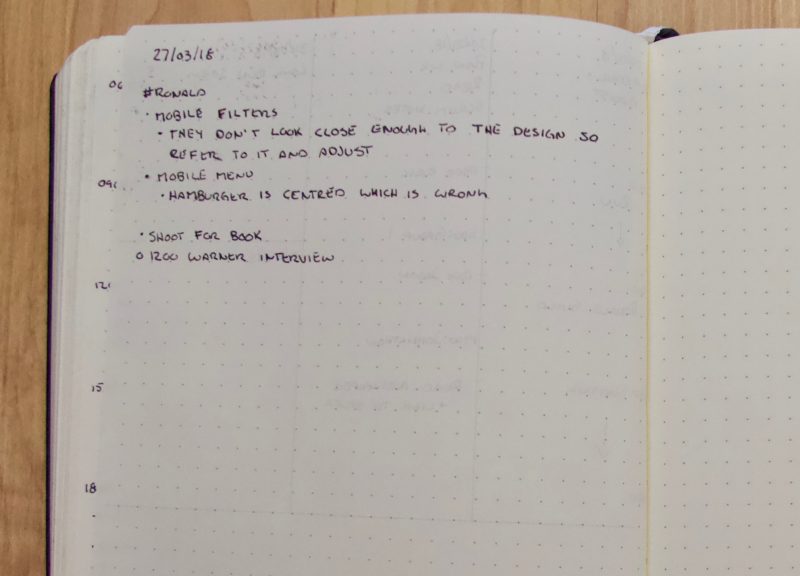
Some of you may know that I had a long running and fairly popular podcast many years ago called enough. It was hosted by myself and Myke Hurley, who now runs the highly successful podcast network Relay.fm. Some of you also may know Brad Dowdy, who is not only the longtime show runner of The Pen Addict blog but also has a very successful podcast on the Relay.fm network of the same name that he hosts with Mr. Hurley.
Well, before the Pen Addict podcast got started, I had Brad on as a guest on my show. He and I got very pen and paper nerdy while Myke largely just listened in. But, if you listen close enough you may detect the beginnings of something special — Myke and Brad’s relationship forming and the spark of an interest in pens in Myke. Some might consider this The Pen Addict Podcast Beta — the show that led to the now very popular podcast and what is a years long friendship and partnership between Brad and Myke.
One of our readers and The Pen Addict Podcast listeners Samantha Kay was curious about this particular episode and reached out to Brad and I to see if we knew where she could find it. Neither of us could help. That’s where Robert Wall came to the rescue. Robert hosted an archive of enough for a while after it ended. He was able to track down that episode and shared it with Samantha who sent a copy to me.
Here it is below:
But wait! There’s more! You may hear the name Aaron Mahnke dropped a couple of times in the episode. If that name sounds familiar, it’s because Aaron is the creator of the also beyond insanely popular podcast and Amazon TV Series and Book Series, Lore. Before that he was an extremely talented designer and made a line of paper products I still love and use today.
So, there you have it. There’s a whole ton of “before they were podcast stars” packed into this little podcast episode. Enjoy!