Econlog Archive - Econlib

Sam’s Links: January Edition
Sam works on innovation policy at Progress Ireland, an independent policy think tank in Dublin, and runs a publication called The Fitzwilliam. Most relevant to us, on his personal blog, he writes a popular link roundup; what follows is an abridged version of his Links for December. Blogs and short links 1. I’ve finished my .. MORE
Cutsinger’s Solution: The Price of Education
Question: Is the following true or false? Explain your reasoning. If the quantity of higher education services supplied does not rise with the price of those services, i.e., if supply is perfectly inelastic, then subsidizing the demand for higher education services will primarily benefit universities and their employees. Solution: I use this question in my .. MORE

The Warmth of Cooperation
New York City Mayor Zohran Mamdani recently caused something of an uproar when he contrasted the “the frigidity of rugged individualism” with the “warmth of collectivism.” This framing echoes the familiar criticism that capitalism forces people to go it alone as “atomistic individuals.” The thought goes like this: markets do real damage to the social .. MORE

The Deportation Labor Shock
Mass deportation is often framed as a pro‑worker policy. Remove unauthorized immigrants, the argument goes, and native wages will rise as labor supply contracts. This logic is intuitive, politically potent, and economically incomplete. Mass deportation is a massive market intervention. When examined through the lens of labor markets, production complementarities, and historical evidence, mass deportation .. MORE

Marginal Returns of Regulation
On this post by Kevin Corcoran, frequent commentator Steve writes: “Is there a health care system in the world that would be regarded as first world quality that does not have health care heavily regulated? Is it just a coincidence that in the countries where health care is not heavily regulated that health care is .. MORE

Everyone Take Copies
I have a new working paper with Bart Wilson titled: “You Wouldn’t Steal a Car: Moral Intuition for Intellectual Property.” The title of this post, “everyone take copies,” comes from a conversation between the human subjects in an experiment in our lab, on which the paper is based. The experiment was studying how and when .. MORE

What is Competition?
Economists extol the importance of competition in markets for driving prices down and quality up. But what is “competition” and how does it actually work? To non-economists, the word conjures the idea of something like a sporting contest, where there can be one winner while everyone else loses. But this comparison fails on at least .. MORE

AI and the Art of Judgment
A New York magazine article titled “Everyone Is Cheating Their Way Through College” made the rounds in mid-2025. I think about it often, and especially when I get targeted ads that are basically variations on “if you use our AI tool, you’ll be able to cheat without getting caught.” Suffice it to say it’s dispiriting. .. MORE

Avoiding the Resource Trap in Post-Maduro Venezuela
The recent removal of Nicolás Maduro from Venezuela’s presidency is a dramatic development after more than two decades of socialist experimentation under Hugo Chávez and Maduro, characterized by expropriation, macroeconomic mismanagement, and political repression. Although there is much uncertainty about the economic and political future of Venezuela, economics can offer some guidance—and warnings. One such .. MORE

EconLog Price Theory: The Price of Education
This is the latest in our series of posts in our series on price theory problems with Professor Bryan Cutsinger. You can see all of Cutsinger’s problems and solutions by subscribing to his EconLog RSS feed. Share your proposed solutions in the comments. Professor Cutsinger will be present in the comments for the next couple .. MORE
Wading into Controversy
It is time to explore the principles on which human nature has been constructed and the social structures that are derived from behaviors embedded in the human genome. —Nicholas Wade, The Origin of Politics (46) Nicholas Wade is concerned that we are attempting to establish cultural norms and political structures that stray too far from .. MORE

Accounting vs. Economic Profit
In any principles of economics class, students learn the difference between accounting profit and economic profit. Accounting profit, which is what one typically understands when discussing “profit,” is total revenue minus your monetary costs. It is what appears on the bottom line of an accounting statement as “profit.” Economic profit is a broader term. Recall .. MORE

Cuba After Communism
On January 1, 1959, Fidel Castro and his bearded revolutionaries marched into Havana. Church bells rang across the island as Batista fled into exile. This January 1st marked the 67th anniversary of that revolution. Sixty-seven years of a system built on deception, imposed through violence, and sustained through repression. But now, for the first time .. MORE

Cutsinger’s Solution: Inflation and Healthcare
Question: Over the past several decades, the inflation-adjusted price of healthcare has increased. Based on this information alone, can you infer the source of the higher price–lower supply or higher demand? If not, what additional data would you need to determine whether higher prices are being driven by changes in supply or demand? Solution: I .. MORE

Peace on Earth, Goodwill Towards Refs
All major American professional sports have a time of year when they capture the eyes of the nation. America’s pastime, baseball, has the ‘Fall Classic’, the NFL dominates Thanksgiving, and the country has an entire weekend dedicated to the Super Bowl. Christmas Day is the NBA’s time to shine with action from noon to midnight .. MORE

Silver and Gold
With the holidays upon us, what could be better than Christmas movies? And Christmas songs? And Christmas movies with great Christmas songs, like “Silver and Gold” as sung by Burl Ives in Rudolph, the Red-Nosed Reindeer? And of course, there’s the profit-seeking entrepreneur-prospector, Yukon Cornelius, obsessed with finding silver and gold. If silver and gold .. MORE

The Fast Fashion Dilemma
Shoppers are filling their carts, both literally and digitally, with last-minute gifts. One tempting purchase, whether for gifting or for showing up in style at a holiday sweater party, is ultra-cheap clothing from Shein. Like many around the world, the French hunt for deals in December. During a recent interview with journalist Thomas Mahler, I .. MORE
Diving into Tariffs at Liberty Fund Today
From the editors: We have an in-depth discussion about tariffs across two Liberty Fund sites today. EconLog contributor David Hebert has a piece on the consequences of America’s new, more protectionist trade policies on our sister site, Law and Liberty, this morning. This piece makes a good complement to today’s EconLog post by Jon Murphy, .. MORE


EconLog Price Theory: Inflation and Healthcare
This is the latest in our series of posts in our series on price theory problems with Professor Bryan Cutsinger. You can see all of Cutsinger’s problems and solutions by subscribing to his EconLog RSS feed.Share your proposed solutions in the comments. Professor Cutsinger will be present in the comments for the next couple of .. MORE

Housing: Supply vs. Quantity
If there’s one thing we can count on in America, it’s that our elected officials will see an affordability crisis and respond to it by stimulating the demand side of the market. Today, we’re seeing this in the case of the housing industry, with Administration officials floating both a new (and improved!) 50-year mortgage and .. MORE

Increasing Housing Supply
Modular housing is gaining prominence as a proposed way to increase the housing supply. This is an approach where the majority of home building is done off-site. Factories will construct entire rooms of a house, including all the wiring and plumbing connections built in. At the final construction site, the actual building process consists of .. MORE

Barriers to Affordable Housing
A recent post argued that housing affordability is not so bad as it might appear when home prices are adjusted for all relevant factors, such as size, quality, and household income growth. While houses have become more expensive in dollars, they are also significantly bigger and nicer, and the average household has significantly more income. .. MORE

Happy Thanksgiving
Tomorrow in the United States is Thanksgiving, the American version of a harvest festival celebrating the bounty of the earth and preparing for the winter ahead. We trace the history of our holiday to a documented 1621 gathering of English Pilgrims and the native Wampanoag tribe in modern-day Plymouth, Massachusetts. The Pilgrims had immigrated from .. MORE
Tariffs vs. Quotas
In case you missed it, the Trump Administration has been using tariffs under the 1977 International Economic Emergency Powers Act since at least April of this year. The legality of doing so has been questioned and we are now at a point where the Supreme Court has heard oral arguments on the matter. One of .. MORE

Separating Some Terms
Political views are often misleadingly discussed as though they span a single left/right spectrum. I want to suggest that a similar mistake gets made when thinking about economic systems and policies. As a corrective, consider that economic systems can be understood along more than one axis or spectrum – and these different axes are often .. MORE

Tit-for-Tat in Politics
Cooperation is both the most fragile and the most necessary condition of political life. It is fragile because individuals and groups often pursue short-term gains at others’ expense, yet it is essential because no political community endures without mutual accommodation and understanding. Politics, as Aristotle taught, is the art of living together—not the sum of .. MORE

Strong Claims Need Strong Evidence
Each semester that I teach Principles of Microeconomics, I have some variation of this question on my exams: “Joe works at the local supermarket. One day, he says to you: ‘On Monday, we were selling oranges for $0.75 each and we sold 200 that day. On Friday, oranges were $1.00 and we sold 400 that .. MORE
Pricing Plumbing: Cutsinger’s Solution
Question: The Texas Minimum Construction Standards require that all plumbing fixtures be WaterSense certified. Examples of requirements under these standards include low-flow faucets, shower heads, and toilets. Suppose, for the sake of argument, that before the requirement for low-flow toilets went into effect, installing a normal-flow toilet cost $250. Suppose also that installing a low-flow .. MORE

Applaud All Market-Made Millions
In the NFL offseason, star running back Saquon Barkley signed a $40 million contract extension with the Philadelphia Eagles. Make no mistake, he earned it after rushing for 2,005 yards in the regular season and helping to bring another Lombardi Trophy to Philadelphia. I’m not alone in thinking this. As one sports writer put the .. MORE

Introducing: Sam’s Links
We’d like to welcome a new voice here at Econlib, Sam Enright. Sam works on innovation policy at Progress Ireland, an independent policy think tank in Dublin, and runs a publication called The Fitzwilliam. Most relevant to us, on his personal blog, he writes a popular link roundup, in which he gives short commentary on .. MORE

Why Liberalism
When I first started teaching, David Henderson gave me some advice: to be open about who I am regarding my economic philosophy. At the beginning of class (and several other times throughout), I mention that I am a classical liberal—a free-market economist who argues that individuals rather than governments are best suited to deal with .. MORE

Trust Government Statistics, Not Government
“Expert failure” is clearly having a moment. Pollsters, Wall Street analysts, tech futurists… all are facing demands to reckon with getting it wrong. Economics, though, seems to be getting special attention. Lately, this has metastasized into Orweillian skepticism of government data itself. It’s one thing to argue that economists have misread numbers. It’s quite another .. MORE

It Should Pay to be Super
I’ve had a difficult time watching superhero movies the past few years. Not because they lack quality (though perhaps true), but because they rely on bad economics. To justify this claim, I propose to answer the question: why wouldn’t there be superheroes? The Gotham Problem Imagine you live in Gotham City, where there is rampant .. MORE

Adam Smith Would Not Approve: The Evidence
Shortly after the “Liberation Day” tariffs were announced back in April, Janet Bufton wrote an excellent post about whether or not Adam Smith would approve of those so-called “reciprocal” tariffs. I also riffed off her post here. In both cases, we argued these tariffs were not compliant with Smith’s argument and thus he would not .. MORE

EconLog Price Theory: Pricing Plumbing
This is the latest in our series of posts in our series on price theory problems with Professor Bryan Cutsinger. You can see all of Cutsinger’s problems and solutions by subscribing to his EconLog RSS feed. Share your proposed solutions in the comments. Professor Cutsinger will be present in the comments for the next couple of .. MORE

Don’t Mistake a Miracle for Its Cause
In times of crisis, we consider what can be done to return to a path of prosperity and wealth. However, there is a tendency to mistake the previous manifestations of economic success—the sectors and products that an economy has, in the past, successfully produced—for the more fundamental source of success. When, in 1947, Ludwig Erhard .. MORE

Profits are Social Authentication
In his 1980 book, Knowledge and Decisions, Thomas Sowell highlights the importance of social authentication and verification processes. Does this work? Is that a good idea? If it works, it survives. If not, it doesn’t. Over time, we accumulate rules, norms, and practices that make it easier for us to get things done. Some of .. MORE

On Fair Prices
Discussions on what constitutes a “fair” (or just) price are quite old. Classical market liberals will typically classify a fair price as any price that is voluntarily agreed upon by the parties in an exchange. That’s all well and good, but I wonder how useful the concept of “fair price” is. First, a bit of .. MORE

Straight Whiskey and Dirty Politics
In the early 20th century, America was buzzing with Progressive Era reforms aimed at taming the excesses of industrialization. One landmark was the Pure Food and Drugs Act of 1906, hailed as a victory for consumer safety. It banned poisonous ingredients in food and drink, required accurate labeling, and cracked down on imitations. But when .. MORE

Let Them Eat Steak: Cutsinger’s Solution
Question: Russ buys 5 sirloins per week. True or false: If the price of sirloin rises by $5 apiece, and if Russ’ preferences and income remain constant, he will have $25 a week less to spend on other things. Solution: One of the first things I emphasize in my micro principles course is that the .. MORE

Free Trade and Dynamic Efficiency
…for the economy to function well, you don’t just need good property rights, you also need what we could call, somewhat vaguely, “economic freedoms.” You need labor mobility; you need to get rid of guilds; you need to get rid of monopolies, both local and global; you need to get rid of all kinds of .. MORE

An Intuition Test
The conclusions we reach about the world are, to a large extent, influenced by our underlying intuitions. Various writers have discussed how our immediate sense of how the world works has a huge influence on how our worldviews develop. Thomas Sowell’s A Conflict of Visions posits that there are fundamentally different “visions” about the world .. MORE

2025 Nobel: Growth Through Technology and Culture
By Jon Murphy | Oct 13, 2025
Today, the Nobel Prize in Economics was awarded to Joel Mokyr (Northwestern University), Philippe Aghion (London School of Economics), and Peter Howitt (Brown University) “for having explained innovation-driven economic growth.”1 This follows a recent trend for the Committee to award to economics focused on economic growth, following Acemoglou, Johnson, and Robinson in 2024 and Kremer, .. MORE

When Godzilla Breaks Windows
It’s morning in Tokyo. You’re sitting on your balcony with a cup of coffee or tea, enjoying the rising sun over the bay. Birds chirp. All is peaceful—until that peace is shattered by a giant radioactive kaiju named Godzilla. You watch in horror as the massive, irradiated monster makes landfall and begins his rampage through .. MORE

Is The Housing Affordability Crisis an Illusion?
Average home prices remain very close to the all-time highs reached at the beginning of the year. Accordingly, public opinion surveys show rising concern about the issue of housing affordability, and politicians are taking notice. The Trump administration has waded in with a potentially forthcoming national housing emergency declaration so the President can do… something. We .. MORE

Understanding Theory: Labor Market Edition
By Jon Murphy | Oct 8, 2025
Recently, the Trump Administration announced that H-1B applications would face a new $100,000 fee (in addition to the already existing fees, not to mention legal fees). The H-1B visa allows firms to hire foreign individuals with a college degree for their positions. Firms enter a lottery, and if they win the lottery, they can hire .. MORE

Digital ID in the Cradle of Liberty (My Last EconLog Post)
On September 26, the British prime minister’s office announced that “A new digital ID scheme will help combat illegal working while making it easier for the vast majority of people to use vital government services. Digital ID will be mandatory for Right to Work checks.” I was getting ready to offer an argument against government .. MORE

The Missing Rules
On my (endlessly expanding) “to-read” list is Nicholas Wade’s book The Origin of Politics: How Evolution and Ideology Shape the Fate of Nations. The book seems like it can offer insight into a question I’ve been curious about for a while: What separates rules or systems that run “against human nature” in a way that is .. MORE

Letting Markets Work: Urban Planning
For some reason, urban planning has become a hot topic on social media. Even more strangely, it has become ideologized. In the name of the community, left-wingers are generally for state-run public transportation and government housing. In the name of families or individuals, many right-wingers want more suburbs and, particularly, taxpayer-funded highways to accommodate cars. .. MORE

Good News on Income
The Bureau of Labor Statistics released updated figures on household and individual income. The news is quite positive: Real median household income in 2024 was a record $83,730, reversing a downward trend that began in 2020 with the pandemic. Real median individual income also reached a new high at $45,140 in 2024.[1] Both of these .. MORE

Evaluating We Have Never Been Woke, Part 3: Economics
In his book We Have Never Been Woke, Musa al-Gharbi examines the worldview of symbolic capitalists in great detail. Much of what he describes looks very familiar to me (although the fact that I see the behavior al-Gharbi describes so regularly is itself something I consider as having very little weight as evidence — I’ll .. MORE

Ideas Have Consequences: Law & Economics Edition
By Jon Murphy | Sep 26, 2025
A new paper by Elliot Ash (ETH Zurich), Daniel L Chen (Toulouse School of Economics), and Suresh Naidu (Columbia University) in the Quarterly Journal of Economics discusses the impact of the Manne Economics Institute for Federal Judges on judicial rulings (“Ideas Have Consequences: The Impact of Law and Economics on American Justice“). From their abstract: .. MORE
EconLog Price Theory: Let Them Eat Steak
We’re bringing back price theory with our series on Price Theory problems with Professor Bryan Cutsinger. You can see all of Cutsinger’s problems and solutions by subscribing to his EconLog RSS feed. Share your proposed solutions in the Comments. Professor Cutsinger will be present in the comments for the next couple of weeks, and we’ll post his .. MORE

In (Sort of) Defense of (Something Like) Property Taxes
A revolt is building across the United States against property taxes. From Florida to North Dakota, states have attempted or are attempting to abolish them. The anger driving this movement comes from two sources. One is the belief that you are being taxed for living in your house. “Is the property yours or are you .. MORE



Evaluating We Have Never Been Woke Part 2: Bootleggers and Baptists
After spending ten posts (beginning here) outlining Musa al-Gharbi’s arguments in his book We Have Never Been Woke, it’s time to move on to my evaluation of those arguments. In my first post discussing this, I covered al-Gharbi’s claim that elite overproduction is an important cause of “Awokenings.” Today I want to explore how thinking .. MORE

The Virtue of Dissent and Conversation
I have written a lot on dissent and how it serves in the truth-finding process (for selections, see my blog posts here and here, and some of my academic articles like the award-winning “Cascading Expert Failure” and “Expert Failure and Pandemics: On Adapting to Life with Pandemics,” coauthored with Abigail Devereaux of Wichita State University, .. MORE


The Problem with Government-Run Grocery Stores
In 1989, Russian President Boris Yeltsin took a famous trip to a grocery store in Texas. The event lives on in popular history because of this famous photograph. Yeltsin was amazed by the food availability in the US, in contrast with the breadlines of the Soviet Union. Markets successfully catered to customers, whereas government central .. MORE

Preference Falsification, Marginal Cost, and Cancel Culture
In my earlier post on preference falsification, I argued that a culture of free speech and open debate is a necessary factor for the benefits of free speech to be fully realized. This post expands on that, examining a common fable involving preference falsification, how the dynamics of preference falsification are different in reality than .. MORE

The Measurement is Not the Thing
Measure what is measurable, and make measurable what is not so. -Galileo Galilei Any science contends with a difficult problem: there are things we want to understand, but we cannot easily measure those things. Any tool for measurement will inherently have technical limitations (that is, limited by the technology of the time) and be subject .. MORE

The Anthropic Settlement: A $1.5 Billion Precedent for AI and Copyright
Last week, Anthropic, the AI company behind the Claude chatbot, settled a landmark class-action lawsuit for $1.5 billion. The amount is very large in the context of copyright legal cases, yet it represents just a fraction of Anthropic’s estimated $183 billion valuation. Authors and publishers, led by figures like Andrea Bartz and Charles Graeber, accused .. MORE

Bicycles Before Business
El Camino Real (ECR), State Highway 82, the main thoroughfare connecting San Jose with San Francisco, is sandwiched between Federal Highways 280 and 101. Maintenance and Rehabilitation is largely paid by the state with modest local government participation. Indeed, Caltrans can repave and redesign ECR even without city approval. In 2024, Caltrans decided to repave .. MORE
Evaluating We Have Never Been Woke, Part 1: Elite Overproduction
After spending ten posts (beginning here) outlining Musa al-Gharbi’s arguments in his book We Have Never Been Woke, it’s time to move on to my evaluation of those arguments. In this post, I’ll begin to cover some of my thoughts on al-Gharbi’s more big-picture ideas — the cause of “Awokenings,” and the motivation for “woke” .. MORE

Good Foundations
In the Christian Bible, there is a parable of two builders. One built his house on stone and the other on sand: “Everyone then who hears these words of mine and acts on them will be like the wise man who built his house on rock. The rain fell, the floods came, and the winds .. MORE

Incentives Matter, Math History Edition
Economists are fond of talking about how people respond to incentives — and stress how social arrangements can produce suboptimal results when they give people counterproductive incentives. I recently saw a fun video on the history of how mathematicians developed the imaginary number system (hey, I think it’s fun anyway!) that shows an example of this .. MORE

Rethinking Triffin: The Fiscal Dimension of the Dollar Dilemma
The debate over Robert Triffin’s famous “dilemma” continues to animate policymakers and commentators. Stephen Miran, a leading economic advisor to Mr. Trump, in a November article revived the theme by arguing that the inelastic global demand for dollar-denominated assets imposes structural costs on the U.S. economy. Joseph Sternberg, in a recent column, by contrast, dismisses Triffin as a .. MORE

The State Power to Discriminate
John Locke’s idea that tyranny is defined as arbitrary power as opposed to the rule of law seems to underlie the whole classical liberal tradition (see Locke’s Second Treatise of Government [1690, Chapter 18]). Arbitrary power allows the state or any other central political authority to discriminate among its subjects by bribing its supporters and .. MORE

The Costs and Choices of Kiki’s Delivery Service
Despite facing little explicit costs, Kiki’s delivery service is a costly endeavor. Fortunately, for viewers, it’s a charming lesson on the nature of costs and an introduction to James Buchanan’s work on cost and choice. Kiki’s Delivery Service, Studio Ghibli’s 1989 masterpiece, captures genuine moments of a young witch trying to make it on her .. MORE
A Substantive Reply on Tariffs
Soon after the Wall Street Journal published Phil Gramm’s and my warning of the destructiveness of President Trump’s steel and aluminum tariffs, a thoughtful CEO of a steel-producing firm in Pennsylvania emailed me to cordially express his concern that, if Sen. Gramm’s and my warning is heeded, failure to protect American producers of steel and .. MORE


Lower Trade Deficits and More Foreign Investment?
There is something worse than everybody wanting to come to your country: that’s if everybody tried to avoid it. America is not at this point, but there is a play about that in a theater of the absurd near you. Official figures show a significant drop in foreign tourists coming to America this year compared .. MORE
We Have Never Been Woke, Part 10: Should We Be Woke?
Based on the discussion over numerous posts in this series (beginning here) unpacking the arguments of Musa al-Gharbi’s We Have Never Been Woke: The Cultural Contradictions of a New Elite, one might assume that al-Gharbi is hostile to woke ideas or woke values. But that would be a mistake, and would show that one has .. MORE

The Prevalence of Preference Falsification
The title of this post is a nod to Timur Kuran’s book Private Truths, Public Lies: The Social Consequences of Preference Falsification. This book examines the disconnect between what people say they believe publicly and what they believe privately. As Kuran puts it, The preference that our individual ends up conveying to others is what I .. MORE
Unfairly Traded Steel
Cleveland-Cliffs Chief Executive Lourenco Goncalves’s invocation of “unfairly traded steel” shows, a contrario, many reasons why free trade is an essential feature of a free society. Mr. Goncalves said that adding tariffs on steel products to tariffs on primary (semi-finished) steel provides (“Trump Leans on National Security to Justify Next Wave of Tariffs,” Wall Street .. MORE

The Central Planning Arms Race
By Jon Murphy | Sep 4, 2025
Regular readers here know that myself and my co-bloggers (both present and former) spend a lot of time talking about the problems of central planning.[1] There are many, many problems with central planning: the Hayek-Lavoie knowledge problem, issues revealed by public choice analysis, and so on. In this post, I want to highlight a big one: .. MORE
End the Fed?
Some 500 economists work for the Federal Reserve System. This is probably more than the entire dismal science faculty at all eight Ivy League Universities, perhaps with Chicago and Berkeley thrown in for good measure. If the Fed were disbanded, they would all have to seek other work, perhaps leading to prosperity. Under the present .. MORE

Economics Problems of Grocery Delivery
Occasionally, I use a grocery delivery service—not always, and not for every item. In a vacuum, one might think that having someone else take the time to gather grocery items for me and bring those items to my house seems clearly advantageous. So why don’t I always use this service? A few ideas from economics .. MORE

The Political Economy of Cruelty: Some Elements
Why are some people cruel? Why are some governments cruel? Do cruel governments require cruel citizens? I take cruelty to refer to Merriam-Webster’s definition of cruel as “disposed to inflict pain or suffering: devoid of humane feeling.” An individual is cruel who has a taste for cruelty, i.e. cruelty is an argument of his utility .. MORE
We Have Never Been Woke, Part 9: Why Have Elites Never Been Woke?
(This post is part of a series that began with this post.) The overarching theme of Musa al-Gharbi’s book is examining the gap between the ideas most supported by those who are woke and the actions of those same people. While al-Gharbi isn’t overtly hostile to woke ideas as such, he is troubled by how .. MORE

What Would Success Look Like?
President Trump fired the Bureau of Labor Statistics commissioner, Erika McEntarfer, after July’s jobs report showed very little job growth over the past quarter. Initially, the President accused her of “rigging” the numbers to make him look bad. More recently, members of his administration have tried to reduce the criticism to just that of substantial .. MORE

Fiscal Dominance Brings Financial Repression
“Fiscal dominance” refers to the state’s expenditures (fiscal policy) dominating monetary policy. Instead of the legislature (Congress in the US) controlling government expenditures while the central bank (the Fed) tries to control inflation, the latter helps finance expenditures and Congress obtains more leeway to run deficits. Fiscal dominance is the opposite of central bank independence. .. MORE

Milei’s Message for Economists
Soon before the election that made Javier Milei president, 108 economists around the world (including prominent names like Thomas Piketty, Gabriel Zucman, and Jose Ocampo) signed an open letter warning about the dangers of “non-traditional” economic thinking. Even at the time, the letter was cluttered with flawed thinking. The letter then bemoans that “the laissez-faire .. MORE
We Have Never Been Woke Part 8: Totemic Capital and Consecrated Elites
My last post in this series on We Have Never Been Woke by Musa al-Gharbi ended by mentioning another form of symbolic capital very valuable to symbolic capitalists, particularly with the advent of victimhood culture – what al-Gharbi calls totemic capital. As he describes the concept, In sociological terms, a totem is a sacred symbol that represents .. MORE

A Collectivist Judge Is a Contradiction in Terms
It is a bit of a mystery why people who claim to be American-style conservatives do not embrace Friedrich Hayek, the economist and legal theorist who was awarded a Nobel Prize in economics in 1974. The mystery dissipates when one realizes that most self-identified conservatives are in fact as collectivist as the self-defined progressives (“liberals” .. MORE
Will the Fed Lowering Rates Reduce Government Borrowing Costs?
Short version: no. In my recent post on central banks and independence, I cited Harvard economist Jason Furman in discussing how lower central bank rates won’t necessarily translate into lower private borrowing costs: The Federal Reserve only sets a handful of interest rates, and those are limited to rates between banks—the discount rate (the rate .. MORE

My Final EconLog Post
I began my blogging career at TheMoneyIllusion in early 2009 and ended that blog last year. In January 2014, I started blogging here at EconLog and have greatly enjoyed the opportunity. This will be my final post. I wish to thank everyone who works at EconLog, and I wish the best to all of my .. MORE

When the Big Apple Went Bust: Bankruptcy and Austerity in New York, 1975
In 1975, New York City’s government ran out of money. “On the simplest level” journalist Martin Mayer wrote, “the story of New York’s financial collapse is the tale of a Ponzi game in municipal paper – the regular and inevitably increasing issuance of notes to be paid off not by the future taxes of revenue .. MORE

“They” not “It”: Understanding Group Behavior Through Methodological Individualism
By Jon Murphy | Aug 22, 2025
In his 1992 article “Congress is a ‘They,’ not an ‘It’: Legislative Intent as Oxymoron” (International Review of Law and Economics 12 (2)), Harvard University political scientist Kenneth Shepsle opens: An oxymoron is a two-word contradiction. The claim of this brief paper is that legislative intent, along with military intelligence, jumbo shrimp, and student athlete, .. MORE

Make Drug Approval Easier
A few days ago, I listened to Russ Roberts’s EconTalk interview of cardiologist Eric Topol on the health issues involved with aging. For some reason, I’m getting increasingly interested in that issue. An interesting issue comes up at about 36:00 point. Topol states: We should be using better nanoparticles and keeping that mRNA from .. MORE

Meanwhile, in Mexico
A report in the Financial Times indicates that Mexico is in the process of eliminating the checks and balances in its political system: But the bills passed in the past two weeks ultimately implement key elements of the former president’s agenda, including eliminating autonomous regulators and replacing them with ones under greater central government control. .. MORE
We Have Never Been Woke Part 7: Victimhood Culture
(This post is part 7 of a series of posts on We Have Never Been Woke by Musa al-Gharbi. The previous entry is here.) One of the questions that animated Musa al-Gharbi’s investigation into the causes and consequences of wokeness was why highly successful elites seem so eager to portray themselves as otherwise. As he .. MORE

Useful Counterfactuals on Trade
Counterfactuals are a necessary part of any scientific analysis: If X didn’t happen, then Y would have. But counterfactuals, by definition, can never be known. They never occurred, so we can never truly know if the counterfactual would have happened. For example, there was much debate in the Truman Administration and the US military during World .. MORE



Fentanyl Elasticity: Cutsinger’s Solution
Question: Suppose the demand for fentanyl is perfectly inelastic, and that the users of fentanyl steal from others to acquire the money to pay for it. In an effort to crack down on fentanyl use, the government imposes harsher penalties on suppliers of fentanyl, reducing its supply. How will this policy affect the amount of .. MORE
My Weekly Reading and Viewing for August 17, 2025
By David Henderson | Aug 17, 2025
Government Should Experiment with Eliminating Patient Barriers, Not with Covering Ozempic by Akiva Malamet, Bautista Vivanco, and Michael F. Cannon, Cato at Liberty, August 11, 2025. Excerpts: While Ozempic and other GLP‑1 drugs are great at helping patients lose weight(among many other promising uses), these impressive medications come with an impressive price tag. For those paying out of .. MORE

Not in my back pocket (NIMBP)
By Scott Sumner | Aug 16, 2025
Most advanced countries are democracies. In most cases, these countries impose heavy taxes, with total revenues often falling between 30% and 50% of GDP. And yet, most people don’t like paying taxes. How can we explain this seeming contradiction? The mainstream view of both the economics profession and the general public seems to be that .. MORE

Fascinating Interview of Anne Krueger
I have for many years argued that Anne Krueger and Jagdish Bhagwati should be awarded the Nobel Prize in economics for their work on trade, protectionism, and economic development. Indeed, they should have shared the 2008 Nobel with Bhagwati’s student Paul Krugman. The extensive interview of Krueger in the latest issue of the Journal of .. MORE
We Have Never Been Woke Part 6: Consequences of Awokenings
In the last post in this series, we looked at Musa al-Gharbi’s description in We Have Never Been Woke of what causes Awokenings to rise and eventually fall, what are the long term consequences of these movements? Given that Awokenings consist of wealthy and elite members of the symbolic capitalist class rising in support of .. MORE

Evaluating the US-Japan Trade Deal on Mercantilist Terms
By Jon Murphy | Aug 14, 2025
Short Version: it’s bad, even by the preferred metrics of protectionists. On July 23, US and Japanese trade negotiators reached a deal on tariffs, investments, and other international transactions. Much has been written about how bad the deal is from a standard economic perspective (see, for example, here). But President Trump and his administration, who .. MORE
Two Economic Ideas That are True and Nontrivial
Timothy Taylor, at Conversable Economist, had a post on August 13 titled “What Economic Ideas are True and Nontrivial?” He starts with a famous story that Paul Samuelson told and I’ll quote it here: [O]ur subject puts its best foot forward when it speaks out on international trade. This was brought home to me years .. MORE

Today’s Convergence of Political Systems
In the 1960s and 1970s, a fashionable idea, at least among the Western intelligentsia, was the convergence between socialism (read: communism) and capitalism. Even less obvious than today was the true distinction between, on one side, a regime of individual and private choice and, on the other side, a system of collective and political choice. .. MORE
We Have Never Been Woke Part 5: The Cause of Awokenings
As I mentioned in my last post, Musa al-Gharbi argues in We Have Never Been Woke that the post-2011 Awokening – that is, the rise of social justice activism and the escalating adoption of social justice ideology among the symbolic capitalist class – was not an unprecedented event. He argues that Awokenings have occurred before and have .. MORE

Stable/Genius: Stablecoins and Free Banking
President Trump signed the Guiding and Establishing National Innovation for U.S. Stablecoins Act (GENIUS Act) into law on July 18th, promising to “cement American dominance of global finance and crypto technology.” In his post-signing speech, the president explained, “the GENIUS Act provides banks, businesses and financial institutions, a framework for issuing crypto assets backed one .. MORE

Federalism and Housing Policy
The Economist has an interesting article speculating that the red state advantage in housing affordability may be about to shrink: But what if red states’ cheap-housing advantage were to start shrinking? That may already be happening in places: a study by Edward Glaeser of Harvard University and Joseph Gyourko of the University of Pennsylvania published .. MORE


My Weekly Reading for August 10, 2025
Child Protective Services Investigated Her 4 Times Because She Let Her Kids Play Outside by Lenore Skenazy, Reason, August 9, 2025. Excerpt: During this visit, the social services worker acknowledged that our home was clean, that the children were happy, well-fed, polite, and well-spoken, but said the children had to be supervised 100 percent .. MORE

Interesting Facts About the Cocoa Market
I read the Financial Times not mainly for its collectivist ideology (the preference for collective choices), but for its frequently sound reporting on economically significant phenomena and trivial-looking but important facts. I do read this newspaper partly for its collectivist editorializing, for one must not read only what confirms one’s biases; but I would still read it if it .. MORE

Constitutional Tradeoffs
By Jon Murphy | Aug 8, 2025
Co-blogger Pierre Lemieux’s recent post “Can a Constitution Limit the State?” (July 21, 2025) poses an important question, one political theorists have wrestled with for millennia. In the comments section of that post, I linked to a recent paper in the Journal of Institutional Economics by Jacek Lewkowicz, Jan Falkowski, Zimin Lou, and Olga Marut (henceforth .. MORE

We Have Never Been Woke Part 4: Why Are Symbolic Capitalists Woke?
This is the fourth part of my exploration of Musa al-Gharbi’s We Have Never Been Woke. (Part 1, Part 2, Part 3). As we’ve seen, al-Gharbi spends a good deal of time establishing the demographic of people who are most likely to end up being “woke” as he described the term. And that group is overwhelmingly .. MORE

Equality Before the Law, Equality of Permission, and the Language of Libertarianism
When we communicate with one another, how we say things can sometimes be as important as what we actually say. Words matter, which is even more true when we exchange ideas and try to convince others to embrace our viewpoints. Ideological rhetoric, then, merits some thought on the part of libertarians. Of course, libertarians uphold .. MORE
Who Got the Biggest Percentage Tax Cuts?
The answer may surprise you. In so much of the discussion of tax cuts, whether of the recent one or previous tax cuts, we hear that the highest-income people got the biggest tax cuts. Of course, they did. They pay a disproportionately high percent of overall federal taxes. So it shouldn’t be surprising that they .. MORE

Accounting Identities and Economic Theories
The relationship between accounting identities and economic models is frequently misunderstood. An accounting identity is an equality that must be true, by definition. It is tautology. It is meant to categorize and organize relationships between variables. For example Assets = Liabilities is an identity. Regardless what “assets” equals, “liabilities” must be the same amount. We .. MORE

We Have Never Been Woke Part 3: Symbolic Capital and Symbolic Capitalists
The previous post in this series touched on Musa al-Gharbi’s identification in We Have Never Been Woke of a class of people as “symbolic capitalists,” his contention that wokeness is the dominant ideology of this group, and that members of this group tend to be most predisposed to amplifying woke ideas. There are multiple “alternative names .. MORE

Sorts of Deals
A deal is an agreement to exchange something for some consideration, but different sorts of deals exist. A deal is not necessarily a free exchange and a free exchange is not necessarily a free-market exchange. The gold standard of all deals is a free-market exchange: a voluntary exchange where alternative demanders and suppliers exist. The .. MORE

We Have Never Been Woke Part 2: Of “We” and “Wokeness”
At the end of my last post, I said I’d be following up by describing both some of Musa al-Gharbi’s modes of analysis and assumptions in his book We Have Never Been Woke, and outline who is the “we” he describes, and what he means by “woke.” First, the ground rules. Musa al-Gharbi sets out .. MORE

Joshua Rauh on Federal Spending, Tax Revenue, Economic Growth, and Deficits
On July 26, Joshua Rauh, a senior fellow at the Hoover Institution, testified at the Reagan Library before the House Ways and Means Committee. I learned a lot from his testimony and want to share it. Here are some highlights. A growing economy is essential for expanding economic opportunity for all Americans. It is deeply .. MORE

Eminent Domain and the Problem of Government
In our forthcoming paper at the Review of Law & Economics, “The Long-Term Impact of Kelo v. City of New London: Comparing State Legislative and Judicial Responses”, my former Western Carolina University colleagues Ed Lopez and H. Justin Pace and I discuss justifications for eminent domain.[1] Primarily, we discuss the holdout problem. The holdout problem .. MORE

We Must Stop Saying “Must”
In my first year of grad school, one of my professors had a long list of “forbidden words”. These were terms that do more to confuse than enlighten when used in economic analysis. Terms like “need”, “afford”, “exploits”, “vicious circle”, etc. Today, I’ll argue that we might wish to add the term “must” to that .. MORE
EconLog Price Theory: Fentanyl
We’re bringing back price theory with our series on Price Theory problems with Professor Bryan Cutsinger. You can see all of Cutsinger’s problems and solutions by subscribing to his EconLog RSS feed. Share your proposed solutions in the Comments. Professor Cutsinger will be present in the comments for the next couple of weeks, and we’ll post his .. MORE
Introducing We Have Never Been Woke
Time again for another one of my multi-post deep dives into a book I found interesting. This time, the book is We Have Never Been Woke: The Cultural Contradictions of a New Elite by Musa al-Gharbi. As always, my next several posts will be my attempts to reflect al-Gharbi’s views rather than my own, and .. MORE

A Nonexistent Quote About Free Trade
I fear we have to admit it: there is not a single truly free country among the 200 or so that occupy this planet. If there were one, we would have expected a representative of its state to declare publicly, about the current trade war, something like the following—let me put it in blockquote even .. MORE

My Weekly Reading for July 27, 2025
Meet the Medicaid Double-Dippers by the Editorial Board, Wall Street Journal, July 21, 2025. Excerpt: The Centers for Medicare and Medicaid Services (CMS) reported late last week that 1.2 million Americans last year were enrolled in Medicaid or the Children’s Health Insurance Program in two or more states. The agency worked with software engineers .. MORE



Untenable Tenant Anger
Today, I continue on the previously explored theme on how economics can create reactions others might find as odd. In my earlier take on this, I described how I am very often glad rather than resentful that a particular good or service requires payment – even (especially?) when its something I really need. For this .. MORE

It Can’t Be A Coincidence!
Recently, co-bloggers Scott Sumner and Kevin Corcoran had a series of excellent posts on causation, coincidence, and identities (Scott’s post is here and Kevin’s are here, here, and here). I want to add my two cents to the conversation with some readings and thoughts for interested readers. A theme that runs through both their posts .. MORE

Does the public favor rent control?
Consider the following tweet: When I moved to Massachusetts in 1982, major cities such as Boston, Cambridge, and Brookline had rent control. Massachusetts is also one of the most Democratic states in the country. Today, Massachusetts doesn’t have rent control. So how did that happen? In 1994, Massachusetts had a referendum on rent control, and voters .. MORE

The REAL Land of Cockaigne
Grocery stores are true marvels of markets. Roast chickens don’t fly into your mouth, but they are roasting on a rotating spit in the deli section. Typical grocery stores carry thousands of items that make the land of Cockaigne look meagre. The centuries old myth and poem about Cockaigne depicts a mythical place that far .. MORE

The Effect of Price Controls on Oranges on the Price of Orange Juice
A problem in Price Theory. Here’s a question that I gave a number of my students in economics courses at the Naval Postgraduate School. If I recall correctly, a large percent of the students answered it correctly. And this was well before AI. (Of course, since it was on a problem set, they did have .. MORE

Can a Constitution Limit the State?
A major disagreement between James Buchanan and Anthony de Jasay is whether it is possible to devise a constitution that effectively constrains the state, limits its power and danger. Many other classical liberals and libertarians have struggled with the same question (including Friedrich Hayek), but the opposition between Buchanan and de Jasay is paradigmatic as .. MORE

My Weekly Reading for July 20, 2025
Fiscal Fallout: Washington state government spending surges 116% since 2015 by T J Martinelli, The Center Square, July 14, 2025. Excerpt: Washington state faces deficit spending by 2028 as lawmakers just hit taxpayers with the state’s largest combined tax increase – all driven by massive state spending increases over the past decade, an investigation of state .. MORE


It’s Time to Think About the Big Picture Again
Although Paris still gets fed, our economy is facing turbulence. There’s presumably more than one reason for this. One reason I want to highlight here is the failure of many economists to recognise the importance of systems thinking—and act accordingly. So, what do I mean by systems thinking? Essentially, it means analysing a complete system, .. MORE

Selective Coincidences
I really enjoyed Scott Sumner’s recent post about how people are bad at understanding coincidences. There are many reasons why we can be bad at this, but one I want to talk about here is that we only selectively recognize certain coincidences, making them appear far more striking than they really are. Here’s an example .. MORE

GDP and Living Standards
By Scott Sumner | Jul 17, 2025
According to the IMF, America’s GDP per capita (in PPP terms) is 35.6% higher than in Canada. In a recent post, I pointed out that to the casual observer, Canadian living standards seem fairly close to those in the US, albeit slightly lower. In this post I’ll try to address the question of why the .. MORE
Interest Rate Cuts and Federal Reserve Independence
Lately, President Trump has been pressuring Federal Reserve chairman Jerome Powell to cut interest rates. This has set off concerns about Federal Reserve independence. And reasonably so. Generally speaking, the more independent the central bank is from political pressure, the better the country’s economy performs on monetary measures like inflation (interested readers can find a .. MORE

Dixie Cups, CAFE Standards, and Numeracy
The second use is more resource-saving than the third. At my cottage in Canada, I have running water from a pump in the lake but not safe water. So in what we call the “bath hut” I have a bottle of clean water from which I pour a little into a Dixie cup when I .. MORE


“Trade War” as a Contradiction in Terms
If a free country is defined as a place where an individual or private organization is free to engage in voluntary cooperation—including trade—with whoever is willing or able to and on terms accepted by both parties, it follows that “trade war” is a contradiction in terms. Free trade is peaceful trade. Why is this definition .. MORE

Tariffs Foreshadow a VAT?
A year ago, I had this to say: The progressive left will never be able to achieve their dream of a Euro-style welfare state by taxing the rich. If you read the smarter progressives, they all know this. They understand that the US would have to add a large tax on consumption in order to .. MORE

Discrepancy Does Not Imply Discrimination
In almost any discussion of political and social issues, someone will use the argument that a discrepancy between two groups is per se evidence of discrimination against one group. However, statistical analysis reveals that the latter is not necessarily true. For example, it is true that women make less than men, but women also tend .. MORE

My Weekly Reading for July 13, 2025
I’ve been setting up my cottage in Canada and relaxing, which is why I haven’t posted this week. I’ll pick up the pace this coming week. The Young Rothbard: an Uncomfortable Neoclassical Economist by Joseph T. Salerno, Mises.org, July 3. 2025. Excerpts: Rothbard took courses with all these eminent economists but was especially influenced by .. MORE

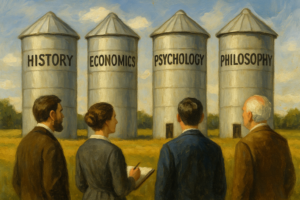
The Law and Economics: Against Siloing
From June 1 through June 13, I was in Park City, Utah participating in the Law Institute for Economics Professors run by the Law & Economics Center at Scalia Law School. It was a two-week crash course in American law and I will be sharing some insights over future posts (as an aside, if you .. MORE



British Industrial Policy: This Time Is Different
In the Summer issue of Regulation, I suggest that the growing popularity of industrial policy (also called “industrial strategy”) all over the world is a return to Jean-Baptiste Colbert, the Finance Minister of Louis XIV in the 17th century. Industrial policy is not just an assemblage of political meddling acts—otherwise it would be everywhere in .. MORE

An Econ 101 Error
On June 17, Treasury Secretary Scott Bessent tweeted: Recent reporting projects that stablecoins could grow into a $3.7 trillion market by the end of the decade. That scenario becomes more likely with passage of the GENIUS Act. A thriving stablecoin ecosystem will drive demand from the private sector for US Treasuries, which back stablecoins. This .. MORE
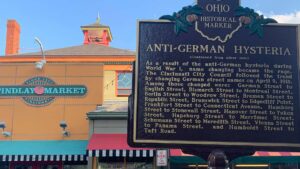
My Weekly Reading and Viewing for July 6, 2025
I will be traveling for the next 19 days and so will be posting less frequently. Cincinnati’s Beer-Loving Germans Endured Anti-Immigrant and Anti-Alcohol Resistance by Elizabeth Nolan Brown, Reason, August/September, 2025. Excerpts: Cincinnati’s population ballooned throughout the 19th century, from 2,540 residents in 1810 to 115,435 in 1850, when it ranked as the sixth-largest .. MORE

DOGE Was Always Doomed
I’m sure DOGE will have a long history as the textbook definition of overpromising and underdelivering. There were a lot of reasons to be skeptical of their chances to meet their goals. But I just want to focus on simple realities DOGE didn’t – and couldn’t – alter. In 2024, federal spending was $6.8 trillion. .. MORE

Jeff Hummel on the American Revolution
Every few years, I post on an excellent article on the American revolution by economic historian Jeff Hummel. It’s on Econlib. I asked Jeff to write it in 2018 and it has been a perennial hit. Indeed, in a newsletter a few years ago, Liberty Fund stated: Our most popular Article ever is from Jeffrey .. MORE

Transaction Costs and the Law
Despite Ronald Coase’s many contributions to economics, he is most famous for the co-called Coase Theorem, which is just one small part of his paper The Problem of Social Cost. Simply put, in a world of sufficiently low transaction costs, property rights, institutions, and the law don’t matter. If rights are assigned randomly, the result .. MORE

Cash Transfers: Cutsinger’s Solution
Question: One common argument against public assistance taking the form of direct cash handouts is that the recipients will use the money to buy things that taxpayers find objectionable, e.g., illicit drugs, gambling, etc. To avoid this outcome, the argument goes, public assistance should take the form of in-kind transfers, e.g., food, housing, medical care, .. MORE

The Marriage of Jeff Bezos in Venice
The vocal opposition of some locals to Jeff Bezos’s marriage in Venice, in line with the reaction against tourism, illustrates a few important points in economics and political philosophy. The Financial Times reports (“Jeff Bezos’s Wedding Draws Storm of Protest in Venice,” June 24, 2025): “What is happening here is blatant arrogance,” said Marta Sottoriva, .. MORE

Defying the Data: Standard of Living Edition
In 2007, Eliezer Yudkowsky wrote an interesting article advocating for what he called “defying the data.” The idea was fairly simple – say you have some theory explaining how the world works. A new study is published with data that can’t be accounted for with your theoretical framework. How should you respond? One response is .. MORE

Which Class Are You In?
I’m not a fan of left wing views on “class”. Progressives often define class in terms of income or wealth, which makes no sense to me. I’ve spent time in all 5 income quintiles, from the bottom 20% to the top 20%, and yet I have never identified my “class” with my income. The following .. MORE

Fascism, the Right, and the Left
What is fascism, and what place does it occupy in political philosophy? There is more to that question than the standard identification with the extreme right, as echoed by the Encyclopedia Britannica: Although fascist parties and movements differed significantly from one another, they had many characteristics in common, including extreme militaristic nationalism, contempt for electoral .. MORE

My Weekly Reading for June 29, 2025
ADAM SMITH AND THE NAVIGATION ACTS: A NEW INTERPRETATION by Caleb Petitt, Libertarianism.org, June 25, 2025. Excerpt: Smith’s discussion of the Navigation Acts has been a boon for protectionists and a thorn in the side of those who love Smith and support free trade and liberty. A deeper examination reveals that Smith was not the wholehearted supporter of the .. MORE

Two Housing Crashes
China recently experienced a housing crash comparable in size to what the US experienced during 2006–10. Before considering the impact of that housing crash, let’s review what happened in the US. Between January 2006 and April 2008, housing construction in the US plunged by more than 50%. Despite that crash, the economy continued to do .. MORE

Missing the Mark: When Punishment Reinforces the Wrong Behavior
Secretary of Transportation Sean Duffy seems intent to repeat the mistakes of the past. While responding to an NBC Nightline interview question regarding the recent spate of aviation accidents and incidents (most recently to the interview, a private jet inadvertently entering an active runway in Chicago Midway Airport causing a Southwest flight to execute a .. MORE


Voice, Exit, and Cheerleaders
The newest season of the Netflix documentary America’s Sweethearts, which traces the 2024 audition, training, and performance season of the Dallas Cowboys Cheerleaders, is a lot more than just a pretty face. The philosopher Loren Lomasky has argued persuasively in Persons, Rights, and the Moral Community that one of the things that makes humans human .. MORE


Highlights of Don Boudreaux Talk: Championing Free Trade in an Age of Economic Nationalism
George Mason University economics professor Don Boudreaux gave an excellent Zoom talk last week to a group I’m part of: the Stanford Classical Liberals. One of the things I most enjoy about Don’s talks is his nailing each point with loads of relevant data. The other thing, which is rare nowadays, is the perspective .. MORE

Kelo at 20 Years: How to Regulate the Regulators?
By Edward J. Lopez | Jun 26, 2025
This month marks 20 years since the U.S. Supreme Court ruling in Kelo v. City of New London. This 5-4 ruling upheld the Court’s rational basis deference to legislatures in determining whether economic development (jobs, tax revenue, etc.) satisfies “public use”, even when the government conveys the seized property to other private parties. Although Kelo .. MORE
Law and Policy
By Jon Murphy | Jun 25, 2025
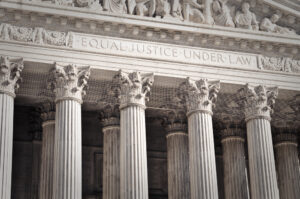
Whenever a legal challenge to a given policy is decided, a discussion tends to arise as if the court is making a statement on the desirability of the policy itself. For example, after the US Court of International Trade struck down Trump’s tariffs enacted under the International Economic Policy Act (IEEPA) of 1977 (VOS Selections, .. MORE

Are Immigrants Self-Deporting?
A recent paper from the Center for Immigration Studies suggests that the answer is yes: We preliminarily estimate that the number of illegal immigrants has fallen by one million since the start of the year, perhaps due to their leaving in response to President Trump’s election and stepped-up enforcement efforts. But it is important to .. MORE

Companies Don’t Need Regulation to Cut Back on “Excessive Packaging”
Former Obama staffer Rahm Emanuel famously said, “You never want a serious crisis to go to waste. And what I mean by that is an opportunity to do things that you think you could not before.” There is a corollary here: never overlook an opportunity to invent a crisis. Perhaps it would be better said, .. MORE

Military Action and Linguistic Shortcuts
Humans have a tendency to obey political authorities even when it may not seem in each individual’s self-interest to do so. Nationalism is a modern manifestation of this phenomenon. After the US government’s strike on nuclear facilities of the Iranian government, there is little doubt that nationalism or tribalism will lead a large number of .. MORE

Small Government in Somalia
I’ve seen progressives derisively refer to a “libertarian paradise” in Somalia, where the government is largely absent. While it’s true that Somalia is a good example of the importance of having enough “state capacity” to protect property rights, even Somali anarchy has some unexpected benefits. Here is The Economist: Thirty years ago, making a phone .. MORE

You Cannot Have it Both Ways
You can be a realist or an idealist, but you cannot have it both ways. A few weeks back, I heard Kevin Hassett being interviewed on NPR. At one point, he claimed that economics textbooks explain that tariffs do not raise prices. I’m pretty sure that Hassett knows that this is not the case, that .. MORE
The Resilient American Dream
We often hear that the American dream is no longer achievable for a large fraction of Americans. Some of the people who make that claim go on to advocate more government regulation and spending to help restore the dream. But what if the American dream is alive and well, and what if current government .. MORE
Adam Smith, George Orwell, and Rules for Writing
In The Theory of Moral Sentiments, Adam Smith used rules about writing as a metaphor for rules of conduct. He examines conduct by two different measures. In one measure, he considers what rules one would need to follow to, in my inelegant paraphrase, avoid being an actively scummy person. On the other hand, he also considers .. MORE

Getting “Screwed” on Trade?
Back in February, Donald Trump claimed that the European Union was formed to “screw the US” on trade. With the reimposition and then the repausing of tariffs on the European Union, the Trump Administration has repeated that claim, sometimes including that a value-added tax (VAT) also exists to screw Americans. Of course, these are silly .. MORE

June is Liberty Month
Celebrate the liberty trifecta on a site funded by, appropriately enough, the Liberty Fund. Five years ago, I didn’t even know why Apple put Juneteenth on my Mac calendar. I just assumed that it was a play on words. And then I checked. Juneteenth really is rightly celebrated as the end of slavery in America. .. MORE

Political Violence in Minnesota and Elsewhere
Political violence is violence for political reasons. More precisely and to avoid circularity, the difference between political violence and ordinary violence is that the former is motivated by resistance to, or promotion of, the imposition of some collective choices on others. For example, “the left” wants to impose redistribution (of money and other advantages of .. MORE

Basic Public-Choice Analysis of Attacking Iran
Public choice theory and its methodological-individualist foundations can be illustrated with a currently hot question: Will President Trump order an attack on Iranian military assets? It is, of course, not “the American people” who will decide; nobody has had lunch with him or her. (On this point, see my Independent Review article “The Impossibility of .. MORE

Teaching College Students About Money & Cryptocurrency
Introduction: This teaching note provides college instructors with guidance on teaching students about money, including what it is, what it is not, and distinctions between different forms like fiat money and cryptocurrency. Teaching college students about money is one of the easiest tasks. They arrive in class with a strong interest in money, motivated by .. MORE

Lessons from Chinese History
The Economist has an interesting review of a new book entitled Peak Human, by Johan Norberg. This caught my eye: Song emperors were much keener on the rule of law than their predecessors, who tended to rule by whim. To enforce predictable rules, they hired lots of officials via meritocratic exams. The first Song emperor .. MORE

Gates, Giving, and Government
Bill Gates has for many years been focusing on philanthropic projects through the Gates Foundation. He recently announced an end date for this endeavor. As Bill Gates put it in his recent announcement: I will give away virtually all my wealth through the Gates Foundation over the next 20 years to the cause of saving .. MORE
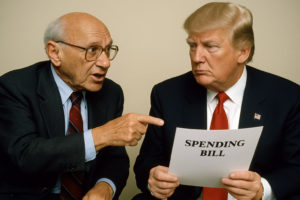
The “Big Beautiful Bill” and the Wisdom of Friedman
President Trump has fended off Republican criticisms of his “big, beautiful [budget] bill” by declaring that a vote against it is a vote for “the biggest tax increase” in American history, an estimated $4 trillion over a decade. The hidden irony is that, as the late Milton Friedman warned a half century ago, even if .. MORE

A Pointless Vaccine Purge
By David Henderson | Jun 16, 2025
The Wall Street Journal ran a letter co-authored by Charley Hooper and me today (print version tomorrow). I have hesitated to quote more than 2 paragraphs, but I think my contract that allows full quotation only after 30 days applies to my paid work, not my free work. So I’ll take the chance and quote .. MORE

Mission Accomplished?
A recent Bloomberg article suggested that the Fed should declare victory over inflation: Granted, it may feel premature, if not foolhardy, to declare “mission accomplished” on inflation. It’s not just the rise in tariffs and the fall in immigration; there are a lot of structural factors in the economy pointing to more inflation: more debt, .. MORE

My Weekly Reading for June 15, 2025
By David Henderson | Jun 15, 2025
First, to all the fathers out there, Happy Father’s Day. Walmart and Amazon Are Exploring Issuing Their Own Stablecoins by Gina Heeb, AnnaMaria Andriotis, and Josh Dawsey, Wall Street Journal, June 13, 2025 (electronic edition) Excerpt: A move to launch crypto-based payments by Walmart or Amazon that bypasses the traditional payments system would send shivers .. MORE

Back to the Seventeenth Century
The conflict between the American and Chinese governments about the restriction of exports—rare earths in one direction and other goods in the other direction—has been branded a new “supply chain” trade war. The Wall Street Journal wrote (“Supply Chains Become New Battleground in the Global Trade War,” June 11, 2025): A key lesson from the .. MORE


The Marvels of a Flight
As I write this piece, I’m about to board an airplane. I’m in Buenos Aires, Argentina, but in just over 13 hours I’ll be in Zurich, Switzerland. In the 19th century, not even the wealthiest imaginable person would have been able to travel this quickly. Indeed, the entire wealth of the world could not have .. MORE


The Math Ain’t Mathing: Why High Tariff Schemes Will Always Lower GDP
A great deal of blame for declining GDP has been placed on the impact of imports by the national conservative and protectionist crowds. Pierre Lemieux does an excellent job explaining why imports have no direct impact on GDP here, so there’s really no reason to cover that ground again. It is sufficient to revisit the .. MORE


Borrow Billions for Babies?
[Given the recent American trend of political alliteration, I was thinking of entitling this Build Back Better By Borrowing Billions for Big Beautiful Baby Bonds.] The administration has proposed giving newborn babies (whose parents have Social Security numbers) a savings account containing $1,000, which must be saved at least until the child reached the age .. MORE
EconLog Price Theory: Cash Transfers
We’re bringing back price theory with our series on Price Theory problems with Professor Bryan Cutsinger. You can see all of Cutsinger’s problems and solutions by subscribing to his EconLog RSS feed. Share your proposed solutions in the Comments. Professor Cutsinger will be present in the comments for the next couple of weeks, and we’ll post his .. MORE
Prime Mammals and the Limit of Limits
Recently, co-blogger David Henderson offered some ponderings about the limits of self-ownership. He argued that the government shouldn’t put limits on the self-ownership of adults of sound mind, but such limits could appropriately be placed on children and adults of unsound mind. That raised the issue of how we set about determining when a child .. MORE
Thoughts for Your Penny
I’m glad that co-blogger Scott Sumner took on one of the fears about ending the production of pennies. His post made me realize that I had neglected to post on my article on the demise of the penny that I published at Hoover in March. The article is “Thoughts for Your Penny?“, Defining Ideas, March .. MORE

Contradictions in “Our National Resources”
Assume for the sake of the argument that the run-of-the-mill nationalist’s expression “our national resources” is meaningful. These resources—physical resources, capital, talents, expertise, etc.—constitute a sort of “public good” belonging to, and to be consumed collectively by, the nation’s members, if not by “the Nation” herself. Consider a first contradiction. Nationalists are usually mercantilists: they .. MORE

A Terrible Track Record on Trade Negotiations
One of the myriad of justifications given for Trump’s love of tariffs is that they are actually a negotiating tool to get the rest of the world to be more fair to American firms. American firms supposedly face high trade and non-trade barriers and these tariffs are to show that “we mean business” and force .. MORE

The Demise of the Penny?
A recent article in the OC Register discussed a proposal to stop producing pennies: Consumers could get shortchanged by a new U.S. policy to stop making pennies by early next year. While the U.S. Treasury would save tens of millions of dollars by eliminating the 233-year-old 1-cent coin, an unintended consequence would be higher prices .. MORE

Housing Restrictions Hit Harder Than Tariffs
When I started to write this article, I was ready to blame Paul Krugman for not discussing this far more important economic restriction. Then I did some research. Research is most useful when it changes your mind, and my research did change my mind. It turns out that Krugman has been very good at laying .. MORE
My Weekly Reading for June 8, 2025
Is the Supreme Court Really That Divided? The Facts Say No. by Billy Binion, Reason, June 5, 2025. Excerpt: The gist is simple. That issue focused “on what appears to many to be an existential threat to democracy,” the magazine wrote, which is “the far-right shift of the Supreme Court, and the conservative movement’s plans .. MORE

Speak Now or Forever Hold Your Peace
For 35 years, I taught economics at the college level. When teaching the theory of supply and demand, I would explain how a temporary shortage of goods would lead to higher prices in the short run. The resulting excess profits would draw new firms into the industry, eventually bringing prices back down to their long .. MORE

Poor Elon Musk!
I don’t want to sound too paternalistic, but one thing should be said: poor Elon Musk played a game he does not understand. “This is what victory feels like,” he shouted with overexcitement at Mr. Trump’s inauguration event (it is worth watching the one-minute video). He had contributed more than $250 million to the Trump .. MORE

Immortality: The Meaning of Buchanan’s Life
An Econlib article by Peter Boettke on “Virginia Political Economy: James Buchanan’s Journey” shows how political philosophy and economics were enmeshed in Buchanan’s work. It also reminded me of an interesting two-part video of an interview of Buchanan by Geoffrey Brennan. The two economists often worked together and were notably co-authors of The Reason of .. MORE

On Models
Models are indispensable. Reality is insanely complex. Mapping every possible interaction would be computationally impossible and utterly useless for understanding the world. Instead, we flatten things down to key causal variables and use them to help us make predictions and decisions. But models come in different shapes and sizes. Which model is useful depends on .. MORE
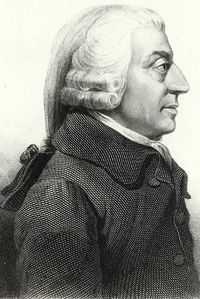
Adam Smith’s Economic Case Against Imperialism
Don Boudreaux reminds us that this is Adam Smith’s birthday or, at least, the birthday announced on his tombstone. For that reason, I’m sharing one of the first articles I wrote for antiwar.com. A version will appear in a book on foreign policy that I’m working on. Here it is. Adam Smith’s Economic Case Against .. MORE

Your Seat Room Exceeds Your Allowable Freedom
Fittingly enough after writing an extended review about a book about the pitfalls of rules that don’t allow for exceptions, I came across a recent news story about a recall issued for the recent ID.Buzz electric van from Volkswagen. Vehicles can be recalled for all kinds of reasons, of course. A vehicle I bought a .. MORE

How a Lawsuit Against Realtors Went Sideways
On March 15th, 2024, the Chicago-based National Association of Realtors (NAR) came forward with a stunning announcement: in response to two 2019 class-action lawsuits, it finally agreed to a settlement sum of $626 million and promised dramatic changes in the real estate business. The lawsuit charged that the NAR had excessive market power that allowed .. MORE

TACO vs. the Game-Theoretic Art of the Deal
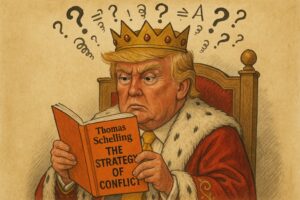
By Pierre Lemieux | Jun 3, 2025
It is certain that President Trump’s reply to the TACO (“Trump Always Chickens Out”) accusation will not win him a Nobel prize in economics. The Wall Street Journal reports (“The ‘TACO Trade’ That Has Trump Fuming,” May 28, 2025): The president rejected claims that he is backing down on tariffs, saying his strategy involves setting .. MORE