如何制造好运——博学投资者 --- How To Manufacture Luck - Polymath Investor
“The amount of serendipity that will occur in your life, your Luck Surface Area, is directly proportional to the degree to which you do something you’re passionate about combined with the total number of people to whom this is effectively communicated.” —Jason Roberts
People talk about luck in two ways: either success is all skill, or it’s all pure chance. I typically hear arguments on those two sides: the meritocratic ideal (success is the result of talent and effort) or the fatalistic view (outcomes are just chance).
I find that both perspectives miss something important. They miss the real story: what you do matters, and so does the environment you’re operating in.
I like to think there’s a little bit more to luck than pure randomness. More often, luck shows up because your habits and choices put you in its path. Many years ago, I came across this concept of “luck surface area”1 by Jason Roberts. The larger that surface, the more likely a lucky break has somewhere to land and stick.
This piece is a playbook of rules for increasing your Luck Surface Area. Just as a physical surface area determines the volume of rain a vessel can capture, the more you build, learn, and connect, the more chances you give good surprises to find you.
Each rule is designed, as I often say, to gently tilt the odds in your favour.
I’ll be referring to concepts from Jason Roberts, Dr. James Austin, Nassim Nicholas Taleb, Mark Granovetter, and Naval Ravikant, among many others.
I’ve grouped the rules by theme, and each comes with a simple explanation and a real-world example to show what it looks like in practice. While some examples come from investing, most of the ideas apply broadly across professions.
As you read, you’ll notice some overlap between them. That’s okay. Many of these rules are different executions of a few core principles like increasing exposure, improving discoverability, expanding network reach, preserving optionality and avoiding ruin.
My hope is that, if you apply these consistently you’ll start to notice more coincidences, more unexpected doors opening, and more opportunities finding their way to you. Let’s dive in and start engineering a little more serendipity in both your personal and professional life.
[Full Version printable PDF available at the end.]
To engineer serendipity, we first need to be precise about what we mean by luck. Luck isn’t a single force. It’s a compound outcome, emerging from the interaction of preparation, motion, and chance.
The core idea for this article, as I mentioned above, comes from Jason Roberts, who boiled it down to a simple model: the concept of “Luck Surface Area”.
The proposed model explains why certain individuals appear to be “lightning rods” for serendipitous opportunity while others, possessing equal or greater talent, stay in obscurity. The equation to formalize this observation is:
In this formulation, L represents Luck (or more accurately, the probability of a serendipitous encounter), D represents “Doing” (the magnitude of passion, action, and expertise development), and T represents “Telling” (the effectiveness and reach of communication).
The bigger D and T are, the bigger the Luck Surface Area becomes:
Source: Jason C. Roberts, “How to Increase Your Luck Surface Area” (2010). Used here for explanatory purposes. https://www.codusoperandi.com/posts/increasing-your-luck-surface-area
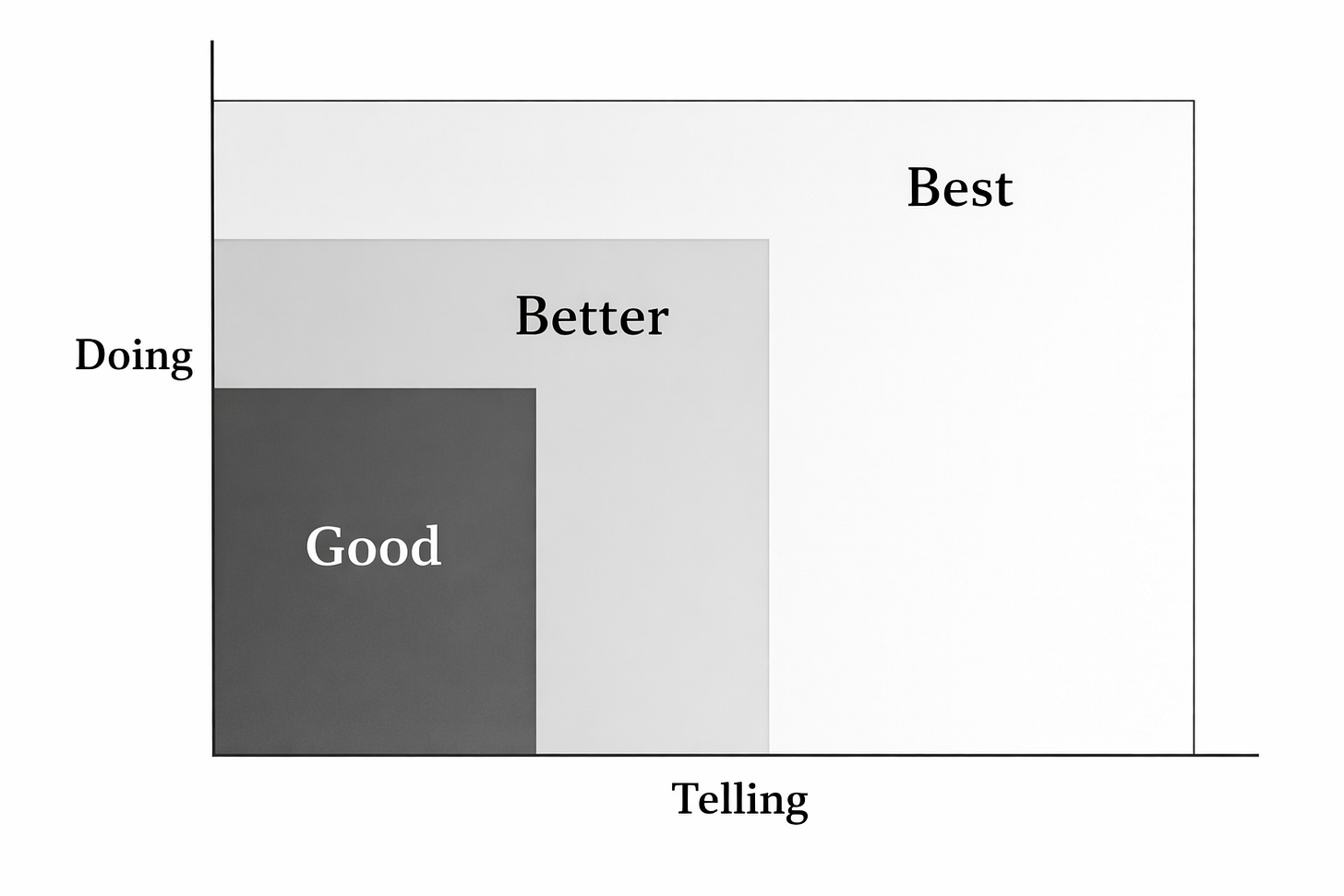
What this equation fundamentally does is shift the locus of control. Most people treat luck as random. Roberts’ point is that a big part of it is influenced by what you do and how well people know about it.
Let’s say the “Doing” variable (D) acts as the potential energy of the system. It encompasses the acquisition of skills, the execution of projects, the development of “Specific Knowledge,” in short, the creation of value. Without a non-zero value for D, there is no substance to be discovered; the equation collapses to zero regardless of the magnitude of T.
The “Telling” variable (T) acts as the multiplier that converts this potential energy into opportunity.
An individual who cultivates world-class expertise in a vacuum has a LSA of near zero. But: by effectively communicating that passion, through writing, speaking, building in public, or networking, you expand your catchment area.
This model, then, implies that “luck” is a capture function. The world is full with opportunities: investment deals, job offers, collaborative projects, etc. The size of your LSA determines what percentage of those opportunities you capture.
As Roberts notes, you cannot control the frequency of lightning strikes (the stochastic environment), but you can directly control the height and conductivity of the lightning rod (your LSA).
Let’s now distinguish between different “types” of luck, as different capture mechanisms work for each. James Austin2 originally categorized these types, a framework later popularized in the technology and startup community by Marc Andreessen3 and Naval Ravikant4. This framework shows more or less a progression from passive reception to active engineering.
Type I: Blind Luck (Stochasticity)
Type I luck is the luck of pure chance: winning the lottery, being born in a stable economy, or inheriting a favourable genetic constitution. It’s completely accidental and occurs without any effort or intention. In the context of LSA, Type I luck represents the “baseline environment” or the initial conditions of the simulation.
You cannot fundamentally increase Type I luck through agency; it’s the noise in the system. However, you can mitigate the risks associated with bad Type I luck through defensive positioning and antifragile architecture, a concept I’ll explore in later sections.
Type II: Luck from Motion (Entropy/Agitation)
Type II luck comes from physical and intellectual motion. It’s the luck of the hustler. By generating a high volume of actions (attending events, cold emailing, shipping code, testing prototypes) you increase the collision rate with random opportunities.
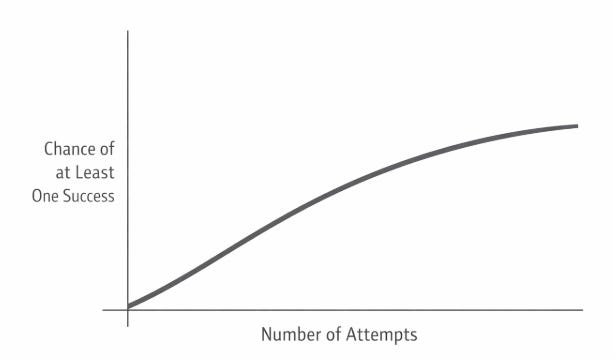
The mechanism relies on the Law of Large Numbers. If the probability of a favourable outcome is non-zero, increasing the number of trials (n) increases the probability of achieving at least one success":
P = 1 - (1-p)^n.
The heuristic here is “action over inaction.” This correlates with the “Doing” variable in Roberts’ equation, but emphasizes volume and variance over precision.
Type III: Luck from Awareness (The Prepared Mind)
Type III luck favours the prepared mind. It involves spotting opportunities that are invisible to others because they lack the specific knowledge or experience to recognize them. The opportunity exists objectively in the environment (it’s not created by the individual), but its capture depends on your unique vantage point.
This is a function of pattern recognition and domain expertise.
This requires deep study and the cultivation of ‘specific knowledge’: skills that are highly technical or creative and cannot be easily outsourced or automated. You transform background noise into actionable signal.
Type IV: Luck from Uniqueness (Magnetic Luck)
Type IV is the most potent and difficult form of luck to cultivate. It occurs when your unique character, brand, or reputation attracts opportunity to you. In this state, the flow of luck becomes deterministic. You don’t seek the opportunity; the opportunity seeks you.
This relies on extreme differentiation. If you establish yourself as the world’s leading expert in a specific, narrow niche (say, deep-sea treasure recovery using autonomous drones), you don’t need to search for sunken ships. The person who finds the ship will seek out the expert because they’re the only person capable of unlocking the value. Your unique attributes act as a magnet.
This requires the construction of a “Personal Monopoly” or a distinct brand. It relies heavily on the “Telling” variable, broadcasting your unique combination of skills so effectively that the network routes all relevant opportunities to that node.
Let’s now review the rules of thumb that operationalize these different types of luck.
Taking More Shots
1. Make Volume Your Ally
The more attempts you make, the greater your chances of a win. Instead of pinning all hopes on one big effort, take lots of shots in your career or creative endeavours: each project, idea, or application is another ticket in the lottery of luck. You can’t always predict which attempt will succeed, but you can control how many you try.
For example, a painter who creates 100 pieces has a higher chance of producing a masterpiece than someone who paints only 5. Prolific creators like Picasso made thousands of works, which gave him more chances for a few to become timeless masterpieces.5
As Naval Ravikant put it, “luck comes through persistence, hard work, hustle, motion… when you’re running around creating lots of opportunities… luck will find you.”6
Or take legendary investor Peter Lynch who used to say “If you look at 100 companies, you’ll find 10 great ones… The person that turns over the most rocks wins the game.”7 His success at Fidelity’s Magellan Fund came from really tirelessly researching hundreds of stocks to uncover a handful of big winners, a volume strategy, I’d say.
So, if you want to put the odds in your favour while investing in stocks: pursue multiple ideas, meet more people, review more write-ups, even if many go nowhere, you’ve raised the probability of a ‘lucky’ strike. Expanding the number of trials directly increases the odds of a fat-tail success emerging.
You can’t know which attempt will produce the outsized payoff, but with enough attempts, you’re statistically likely to get one. To be clear, I’m not suggesting you invest in dozens of stocks. What I’m advocating is the classic advice of turning over as many rocks as you can.
2. Bias Toward Action
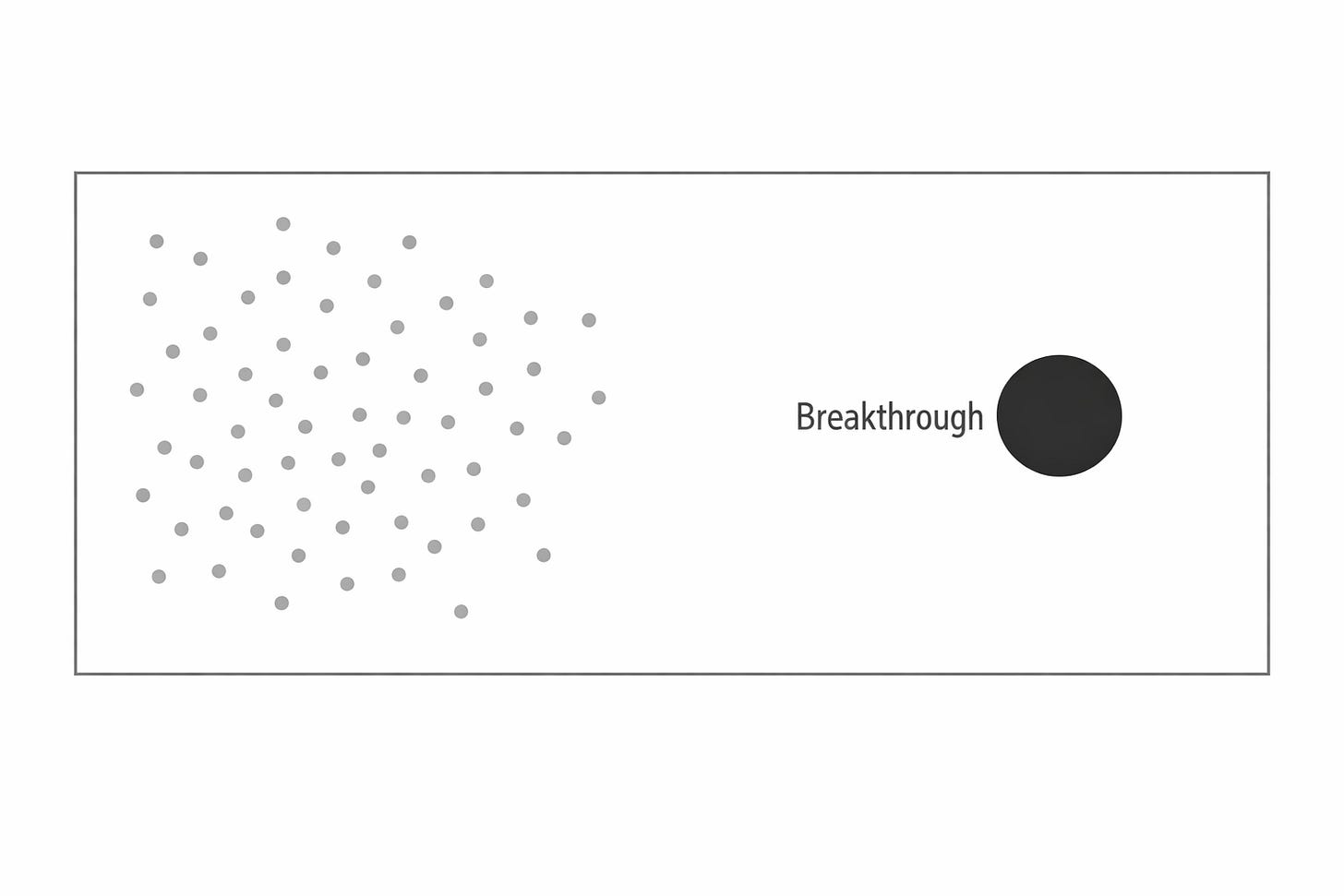
When in doubt, do something. It’s better to start imperfectly than to not start at all. Each action you take (even small steps) opens up new possibilities: you get feedback, meet people, learn lessons, or stumble on opportunities you’d never find by overthinking.
In contrast, doing nothing yields nothing. For instance, if you’re considering launching a small online business, jumping in and selling a first product will teach you more (and create more openings) than months of debating and planning.Fortune tends to favour the ones who do rather than those who endlessly deliberate.
In investing, go to the conference, meet management, talk to clients, meet suppliers, and track down former employees. A bias toward action when researching a company can often provide the edge you’re looking for.
3. Experiment and Pivot Fast
Treat every project or idea as an experiment. Try things quickly, see what works, and change course if it isn’t working. This is the classic situation where you want fast feedback loops. Don’t get stuck stubbornly on a failing path.
By staying light on your feet, you can quickly redirect your time and energy toward more promising opportunities. A classic example is a startup that launches a product prototype to test the market. If they discover customers aren’t interested, a “fast pivot” to a new idea next month keeps them in the game (from the classic book The Lean Startup (2011)).
Being willing to experiment and pivot early means you’re more likely to eventually hit on something that succeeds, seemingly by “chance.”
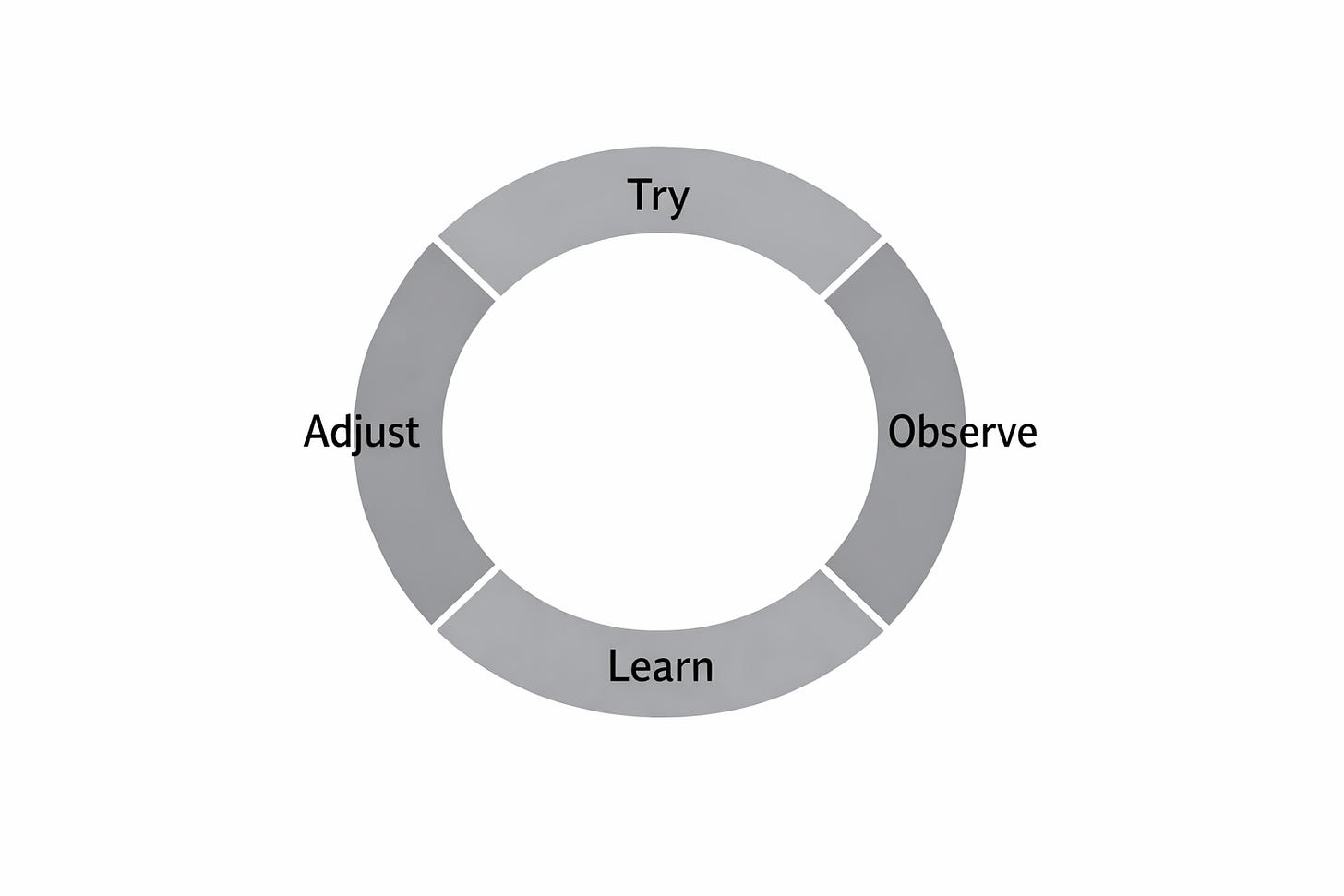
In investing, this heuristic can take many forms, from trying multiple investment styles until you find the one that fits you best, to testing many hypotheses within a single investment thesis.
4. Take a Step Back to Leap Forward
Sometimes you have to go down the ladder a bit to climb a taller ladder and take the shot you would otherwise discard. In other words, don’t be afraid of temporary setbacks if they open up a path to greater gains. Leaving your comfort zone or giving up a small success can be necessary to achieve a much bigger success.
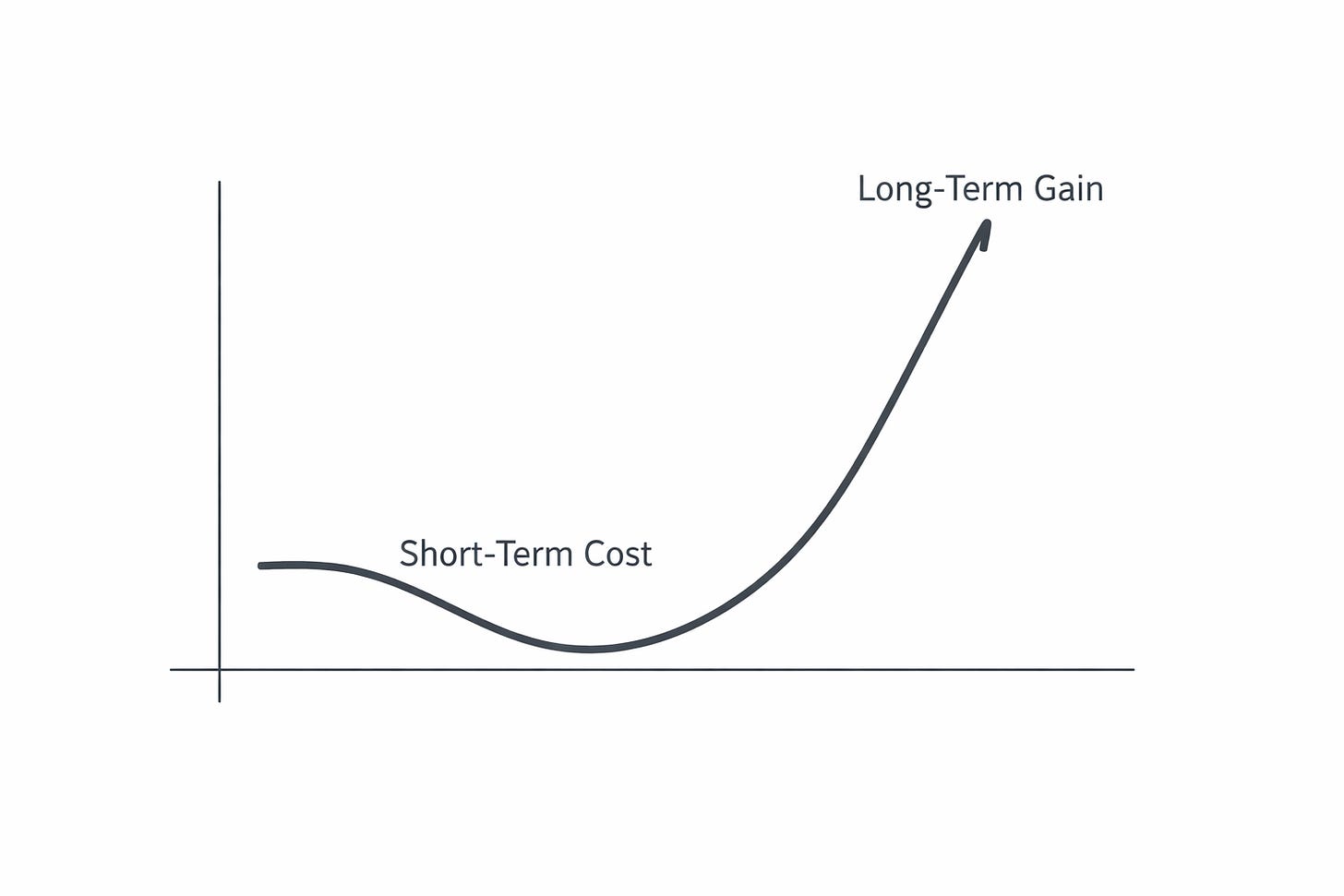
For example, an engineer might take a pay cut to learn a new cutting-edge skill or join a more innovative team, or a recent graduate may choose lower paying position in a specific investment firm to absorb its investment style.
In the short term it feels like a “step down,” but in doing so they position themselves for a giant leap when that expertise becomes highly sought after.
Lucky breaks often can come to those willing to trade a little now for a lot later.
5. Decide Fast on Reversible Things
Not every decision is final, so don’t treat it like it is. If a choice is easily reversible, act quickly and keep moving; you can always change course. Save your cautious deliberation for the choices that you can’t undo. This way, you get more done and create more opportunities in the same amount of time.
This is closely related to Jeff Bezos’s idea of one-way and two-way doors8. Many of the actions that expand your luck surface in investing, such as exploring new styles, testing hypotheses, or talking to new people, are two-way doors: cheap, reversible decisions that can be undone with little cost. Treating them as such allows you to move faster, run more experiments, and learn more quickly.
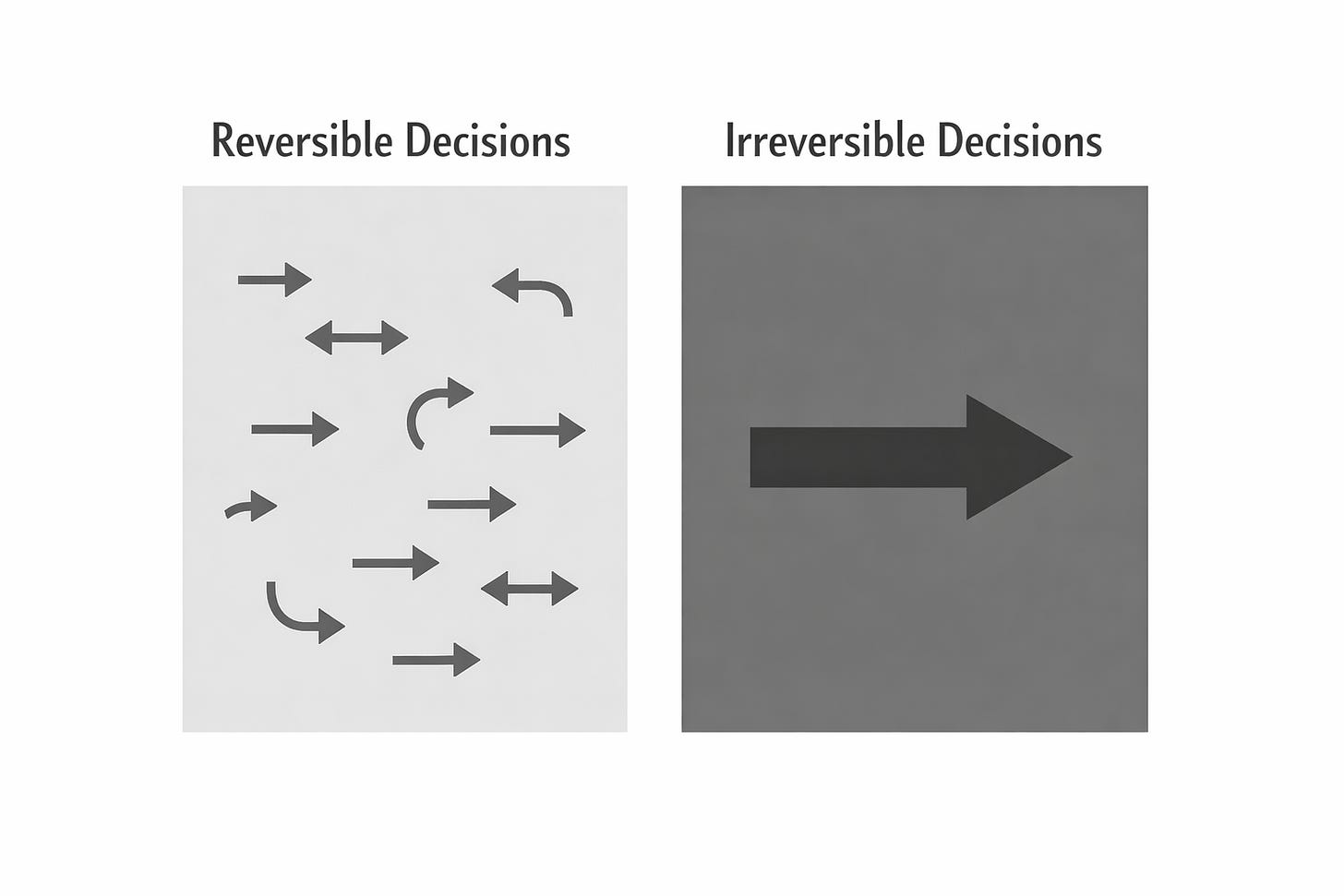
The rare one-way doors deserve caution, but most progress comes from acting decisively on the many small, reversible choices that quietly increase the odds of a fat-tail outcome.
6. Persist Longer Than Others
Perseverance pays off.
Often, the “luckiest” people are the ones who just didn’t quit when others did. By persisting through difficulties and putting in sustained effort, you give yourself more chances for success to compound over time. You know, many overnight successes are years in the making.
In the long run, sticking with your goals (while others give up) dramatically increases the odds that you’ll get a “lucky” break.
Being Visible
7. Do Things and Tell People
Don’t keep your passions and projects secret, share your work so others know what you’re up to. The more meaningful things you do and the more people you tell about them, the larger your “luck surface” becomes.
By pouring energy into something you care about, you’ll build skill and expertise; by communicating it widely, you invite unexpected opportunities to find you.
As I discussed while introducing the topic above, luck is a capture problem: you can’t predict when lightning will strike, but you can raise a taller antenna.
This one is the actual “rule” that Jason Roberts was referring to in his original article “How to Increase Your Luck Surface Area”9.
The simple formula is: do great work, and make sure people know about it; many lucky breaks come from this combination.
Remember, out of sight, out of mind, so be in sight!.