Paul Graham's Quotes | Glasp
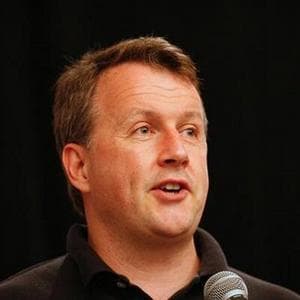
Paul Graham is an English computer scientist, venture capitalist, and essayist. He is known for his work on Lisp, for co-founding Viaweb (which eventually became Yahoo! Store), and for co-founding the Y Combinator seed capital firm. Graham is the author of several programming books, such as: On Lisp (1993), ANSI Common Lisp (1995), and Hackers & Painters (2004). Technology journalist Steven Levy has described Graham as a "hacker philosopher".
"The most dangerous way to lose time is not to spend it having fun, but to spend it doing fake work. When you spend time having fun, you know you're being self-indulgent."
"Those in authority tend to be annoyed by hackers' general attitude of disobedience. But that disobedience is a byproduct of the qualities that make them good programmers."
"There is all the more reason for startups to write Web-based software now, because writing desktop software has become a lot less fun. If you want to write desktop software now you do it on Microsoft's terms, calling their APIs and working around their buggy OS. And if you manage to write something that takes off, you may find that you were merely doing market research for Microsoft."
"Paying attention is more important to reliability than moving slowly. Because he pays close attention, a Navy pilot can land a 40,000 lb. aircraft at 140 miles per hour on a pitching carrier deck, at night, more safely than the average teenager can cut a bagel."
"Why Europe grew so powerful. Was it something about the geography of Europe? Was it that Europeans are somehow racially superior? Was it their religion? The answer (or at least the proximate cause) may be that the Europeans rode on the crest of a powerful new idea: allowing those who made a lot of money to keep it."
"If you're in a job that feels safe, you are not going to get exceptional, because if there is no danger there is almost certainly no leverage."
"To become more popular, you need to be constantly doing things that bring you close to other popular people, and nothing brings people closer than a common enemy."
"You can't trust the opinions of the others, because of the Blub paradox: they're satisfied with whatever language they happen to use, because it dictates the way they think about programs."
"A startup is like a mosquito. A bear can absorb a hit and a crab is armored against one, but a mosquito is designed for one thing : to score. No energy is wasted on defense. The defense of mosquitos, as a species, is that there are a lot of them, but this is little consolation to the individual mosquito."
"Empathy doesn't necessarily mean being self-sacrificing. Far from it. Understanding how someone else sees things doesn't imply that you'll act in his interest; in some situations - in war, for example - you want to do exactly the opposite."
"Being strong-willed is not enough, however. You also have to be hard on yourself. Someone who was strong-willed but self-indulgent would not be called determined. Determination implies your willfulness is balanced by discipline."
"If you could replace high-school yearbooks, that could be a lot of money. It's so clearly waiting for someone to come along."
"If you leave a bunch of eleven-year-olds to their own devices, what you get is Lord of the Flies. Like a lot of American kids, I read this book in school. Presumably it was not a coincidence. Presumably someone wanted to point out to us that we were savages, and that we had made ourselves a cruel and stupid world. This was too subtle for me. While the book seemed entirely believable, I didn't get the additional message. I wish they had just told us outright that we were savages and our world was stupid."
"You need three things to create a successful startup: to start with good people, to make something customers actually want, and to spend as little money as possible."
"If you imagine someone with 100 percent determination and 100 percent intelligence, you can discard a lot of intelligence before they stop succeeding. But if you start discarding determination, you very quickly get an ineffectual and perpetual grad student."
"It's hard to say exactly what it is about face-to-face contact that makes deals happen, but whatever it is, it hasn't yet been duplicated by technology."
"Venture capitalists have a list of danger signs to watch out for. Near the top is the company run by techno-weenies who are obsessed with solving interesting technical problems, instead of making users happy."
"It's important for nerds to realize, too, that school is not life. School is a strange, artificial thing, half sterile and half feral. It's all-encompassing, like life, but it isn't the real thing. It's only temporary, and if you look, you can see beyond it even while you're still in it."
"The inhabitants of all those worlds are trapped in little bubbles where nothing they do can have more than a local effect. Naturally these societies degenerate into savagery."
— Paul Graham
"I suspect few housing projects in the US were designed by architects who expected to live in them. You see the same thing in programming languages. C, Lisp, and Smalltalk were created for their own designers to use. Cobol, Ada, and Javawere created for other people to use. If you think you're designing something for idiots, odds are you're not designing something good, even for idiots."
"Users are a double-edged sword. They can help you improve your language, but they can also deter you from improving. So choose your users carefully, and be slow to grow their number. Having users is like optimization: the wise course is to delay it."
"A restaurant can afford to serve the occasional burnt dinner. But in technology, you cook one thing and that's what everyone eats. So any difference between what people want and what you deliver is multiplied. You please or annoy customers wholesale. The closer you can get to what they want, the more wealth you generate."
"The most important thing is not to let fundraising get you down. Startups live or die on morale. If you let the difficulty of raising money destroy your morale, it will become a self-fulfilling prophecy."
"Likewise, in any social hierarchy, people unsure of their own position will try to emphasize it by maltreating those they think rank below. I've read that this is why poor whites in the United States are the group most hostile to blacks."
"Across industries and countries, there's a strong inverse correlation between performance and job security. Actors and directors are fired at the end of each film, so they have to deliver every time. Junior professors are fired by default after a few years unless the university chooses to grant them tenure. Professional athletes know they'll be pulled if they play badly for just a couple games. At the other end of the scale (at least in the US) are auto workers, New York City schoolteachers, and civil servants, who are all nearly impossible to fire. The trend is so clear that you'd have to be willfully blind not to see it."
"People are bad at looking at seeds and guessing what size tree will grow out of them. The way you'll get big ideas in, say, health care is by starting out with small ideas. If you try to do some big thing, you don't just need it to be big; you need it to be good. And it's really hard to do big and good simultaneously. So, what that means is you can either do something small and good and then gradually make it bigger, or do something big and bad and gradually make it better. And you know what? Empirically, starting big just does not work. That's the way the government does things. They do something really big that's really bad, and they think, Well, we'll make it better, and then it never gets better."
"In England, at least, corruption only became unfashionable (and in fact only started to be called corruption) when there started to be other, faster ways to get rich."
"So if you can figure out a way to get in a design war with a company big enough that its software is designed by product managers, they'll never be able to keep up with you. These opportunities are not easy to find, though. It's hard to engage a big company in a design war, just as it's hard to engage an opponent inside a castle in hand-to-hand combat."
"Sometimes the current even starts to flow in the other direction: sometimes, particularly in university math and science departments, nerds deliberately exaggerate their awkwardness in order to seem smarter."
"And for the same reason, as a bunch of guys who get together to go hunting. They don't actually hate you. They just need something to chase."
— Paul Graham
"Who thinks they're not open-minded? Our hypothetical prim miss from the suburbs thinks she's open-minded. Hasn't she been taught to be? Ask anyone, and they'll say the same thing: they're pretty open-minded, though they draw the line at things that are really wrong. (Some tribes may avoid wrong as judgemental, and may instead use a more neutral sounding euphemism like negative or destructive.)"
"When Facebook first started, and it was just a social directory for undergrads at Harvard, it would have seemed like such a bad startup idea, like some student side project."
"When people are bad at math, they know it, because they get the wrong answers on tests. But when people are bad at open-mindedness they don't know it. In fact they tend to think the opposite."
"We need a language that lets us scribble and smudge and smear, not a language where you have to sit with a teacup of types balanced on your knee and make polite conversation with a strict old aunt of a compiler."
"What I tell founders is not to sweat the business model too much at first. The most important task at first is to build something people want. If you don't do that, it won't matter how clever your business model is."
— Paul Graham
"I don't predict the demise of object-oriented programming, by the way. Though I don't think it has much to offer good programmers, except in certain specialized domains, it is irresistible to large organizations. Object-oriented programming offers a sustainable way to write spaghetti code. It lets you accrete programs as a series of patches. Large organizations always tend to develop software this way, and I expect this to be as true in a hundred years as it is today."
"If you disagree with something, it's easier to say 'you suck' than to figure out and explain exactly what you disagree with. You're also safe that way from refutation. In this respect trolling is a lot like graffiti. Graffiti happens at the intersection of ambition and incompetence: people want to make their mark on the world, but have no other way to do it than literally making a mark on the world."
"When Bauhaus designers adopted Sullivan's form follows function, what they meant was, form should follow function. And if function is hard enough, form is forced to follow it, because there is no effort to spare for error. Wild animals are beautiful because they have hard lives."
— Paul Graham
"If you want to make money at some point, remember this, because this is one of the reasons startups win. Big companies want to decrease the standard deviation of design outcomes because they want to avoid disasters. But when you damp oscillations, you lose the high points as well as the low. This is not a problem for big companies, because they don't win by making great products. Big companies win by sucking less than other big companies."
"Someone trying to live well would seem eccentrically abstemious in most of the US. That phenomenon is only going to become more pronounced. You can probably take it as a rule of thumb from now on that if people don't think you're weird, you're living badly."
"I get a lot of criticism for telling founders to focus first on making something great, instead of worrying about how to make money. And yet that is exactly what Google did. And Apple, for that matter. You'd think examples like that would be enough to convince people."
"The first step is to decide what to work on. The work you choose needs to have three qualities: it has to be something you have a natural aptitude for, that you have a deep interest in, and that offers scope to do great work."
"Boldly chase outlier ideas, even if other people aren't interested in them — in fact, especially if they aren't. If you're excited about some possibility that everyone else ignores, and you have enough expertise to say precisely what they're all overlooking, that's as good a bet as you'll find."
"The three most powerful motives are curiosity, delight, and the desire to do something impressive. Sometimes they converge, and that combination is the most powerful of all."
"Ambition comes in two forms, one that precedes interest in the subject and one that grows out of it. Most people who do great work have a mix, and the more you have of the former, the harder it will be to decide what to do."
"you need to make yourself a big target for luck, and the way to do that is to be curious. Try lots of things, meet lots of people, read lots of books, ask lots of questions."
"If you're making something for people, make sure it's something they actually want. The best way to do this is to make something you yourself want. Write the story you want to read; build the tool you want to use. Since your friends probably have similar interests, this will also get you your initial audience."
"I think for most people who want to do great work, the right strategy is not to plan too much. At each stage do whatever seems most interesting and gives you the best options for the future. I call this approach ""staying upwind."" This is how most people who've done great work seem to have done it."
"When I'm reluctant to start work in the morning, I often trick myself by saying ""I'll just read over what I've got so far."" Five minutes later I've found something that seems mistaken or incomplete, and I'm off."
"Try to finish what you start, though, even if it turns out to be more work than you expected. Finishing things is not just an exercise in tidiness or self-discipline. In many projects a lot of the best work happens in what was meant to be the final stage."
"There may be some jobs where you have to work diligently for years at things you hate before you get to the good part, but this is not how great work happens. Great work happens by focusing consistently on something you're genuinely interested in."
"Work doesn't just happen when you're trying to. There's a kind of undirected thinking you do when walking or taking a shower or lying in bed that can be very powerful. By letting your mind wander a little, you'll often solve problems you were unable to solve by frontal attack."
"One way to aim high is to try to make something that people will care about in a hundred years. Not because their opinions matter more than your contemporaries', but because something that still seems good in a hundred years is more likely to be genuinely good."
"Great work is consistent not only with who did it, but with itself. It's usually all of a piece. So if you face a decision in the middle of working on something, ask which choice is more consistent."
"Great work will often be tool-like in the sense of being something others build on. So it's a good sign if you're creating ideas that others could use, or exposing questions that others could answer. The best ideas have implications in many different areas."
"Originality isn't a process, but a habit of mind. Original thinkers throw off new ideas about whatever they focus on, like an angle grinder throwing off sparks. They can't help it."
"Talking or writing about the things you're interested in is a good way to generate new ideas. When you try to put ideas into words, a missing idea creates a sort of vacuum that draws it out of you. Indeed, there's a kind of thinking that can only be done by writing."
"a good new idea has to seem bad to most people, or someone would have already explored it. So what you're looking for is ideas that seem crazy, but the right kind of crazy. How do you recognize these? You can't with certainty. Often ideas that seem bad are bad. But ideas that are the right kind of crazy tend to be exciting; they're rich in implications; whereas ideas that are merely bad tend to be depressing."
"An overlooked idea often doesn't lose till the semifinals. You do see it, subconsciously, but then another part of your subconscious shoots it down because it would be too weird, too risky, too much work, too controversial. This suggests an exciting possibility: if you could turn off such filters, you could see more new ideas."
"One of the most interesting kinds of unfashionable problem is the problem that people think has been fully explored, but hasn't. Great work often takes something that already exists and shows its latent potential. Durer and Watt both did this. So if you're interested in a field that others think is tapped out, don't let their skepticism deter you. People are often wrong about this."
"if there's an important but overlooked problem in your neighborhood, it's probably already on your subconscious radar screen. So try asking yourself: if you were going to take a break from ""serious"" work to work on something just because it would be really interesting, what would you do? The answer is probably more important than it seems."
"Sometimes you carry a question for a long time. Great work often comes from returning to a question you first noticed years before — in your childhood, even — and couldn't stop thinking about. People talk a lot about the importance of keeping your youthful dreams alive, but it's just as important to keep your youthful questions alive."
"Being prolific is underrated. The more different things you try, the greater the chance of discovering something new. Understand, though, that trying lots of things will mean trying lots of things that don't work. You can't have a lot of good ideas without also having a lot of bad ones."
"perhaps the worst thing schools do to you is train you to win by hacking the test. You can't do great work by doing that. You can't trick God. So stop looking for that kind of shortcut. The way to beat the system is to focus on problems and solutions that others have overlooked, not to skimp on the work itself"
"One of the most powerful kinds of copying is to copy something from one field into another. History is so full of chance discoveries of this type that it's probably worth giving chance a hand by deliberately learning about other kinds of work."
"sufficiently good colleagues offer surprising insights. They can see and do things that you can't. So if you have a handful of colleagues good enough to keep you on your toes in this sense, you're probably over the threshold."
"Morale starts with your view of life. You're more likely to do great work if you're an optimist, and more likely to if you think of yourself as lucky than if you think of yourself as a victim."
"Doing great work is a depth-first search whose root node is the desire to. So ""If at first you don't succeed, try, try again"" isn't quite right. It should be: If at first you don't succeed, either try again, or backtrack and then try again."
"Don't marry someone who doesn't understand that you need to work, or sees your work as competition for your attention. If you're ambitious, you need to work; it's almost like a medical condition; so someone who won't let you work either doesn't understand you, or does and doesn't care."
"Curiosity is the key to all four steps in doing great work: it will choose the field for you, get you to the frontier, cause you to notice the gaps in it, and drive you to explore them. The whole process is a kind of dance with curiosity."
"The factors in doing great work are factors in the literal, mathematical sense, and they are: ability, interest, effort, and luck. Luck by definition you can't do anything about, so we can ignore that. And we can assume effort, if you do in fact want to do great work. So the problem boils down to ability and interest. Can you find a kind of work where your ability and interest will combine to yield an explosion of new ideas?"
"The reason Yahoo didn't care about a technique that extracted the full value of traffic was that advertisers were already overpaying for it. If Yahoo merely extracted the actual value, they'd have made less."
"By 1998, Yahoo was the beneficiary of a de facto Ponzi scheme. Investors were excited about the Internet. One reason they were excited was Yahoo's revenue growth. So they invested in new Internet startups. The startups then used the money to buy ads on Yahoo to get traffic. Which caused yet more revenue growth for Yahoo, and further convinced investors the Internet was worth investing in."
"Both the Internet startups and the Procter & Gambles were doing brand advertising. They didn't care about targeting. They just wanted lots of people to see their ads. So traffic became the thing to get at Yahoo. It didn't matter what type."
"the way they made money: by selling ads. In 1995 it was hard to imagine a technology company making money that way. Technology companies made money by selling their software to users. Media companies sold ads. So they must be a media company."
"what Yahoo really needed to be was a technology company, and by trying to be something else, they ended up being something that was neither here nor there. That's why Yahoo as a company has never had a sharply defined identity."
"Yahoo treated programming as a commodity. At Yahoo, user-facing software was controlled by product managers and designers. The job of programmers was just to take the work of the product managers and designers the final step, by translating it into code."
"In technology, once you have bad programmers, you're doomed. I can't think of an instance where a company has sunk into technical mediocrity and recovered. Good programmers want to work with other good programmers. So once the quality of programmers at your company starts to drop, you enter a death spiral from which there is no recovery."
"The first time I visited Google, they had about 500 people, the same number Yahoo had when I went to work there. But boy did things seem different. It was still very much a hacker-centric culture."
"Why would great programmers want to work for a company that didn't have a hacker-centric culture, as long as there were others that did? I can imagine two reasons: if they were paid a huge amount, or if the domain was interesting and none of the companies in it were hacker-centric."
"Such a high proportion of successful startups raise money that it might seem fundraising is one of the defining qualities of a startup. Actually it isn't. Rapid growth is what makes a company a startup."
"Most companies in a position to grow rapidly find that (a) taking outside money helps them grow faster, and (b) their growth potential makes it easy to attract such money."
"The other time not to raise money is when you won't be able to. If you try to raise money before you can convince investors, you'll not only waste your time, but also burn your reputation with those investors."
"When you start fundraising, everything else grinds to a halt. The problem is not the time fundraising consumes but that it becomes the top idea in your mind. A startup can't endure that level of distraction for long. An early stage startup grows mostly because the founders make it grow, and if the founders look away, growth usually drops sharply."
"If an investor says they're ready to invest, but they need you to come in for one meeting to meet some of the partners, tell them no, if you're not in fundraising mode, because that's fundraising."
"If you get cold-emailed by an associate at a VC firm, you shouldn't meet even if you are in fundraising mode. Deals don't happen that way."
"even if you get an email from a partner you should try to delay meeting till you're in fundraising mode. They may say they just want to meet and chat, but investors never just want to meet and chat."
"Unless you're experienced enough at fundraising to have a casual conversation with investors that stays casual, it's safer to tell them that you'd be happy to later, when you're fundraising, but that right now you need to focus on the company."
"The best type of intro is from a well-known investor who has just invested in you. So when you get an investor to commit, ask them to introduce you to other investors they respect. [7] The next best type of intro is from a founder of a company they've funded. You can also get intros from other people in the startup community, like lawyers and reporters."
"You should always talk to investors in parallel rather than serially. You can't afford the time it takes to talk to investors serially, plus if you only talk to one investor at a time, they don't have the pressure of other investors to make them act."
"an eminent investor who would invest a lot, but will be hard to convince, might have the same expected value as an obscure angel who won't invest much, but will be easy to convince. Whereas an obscure angel who will only invest a small amount, and yet needs to meet multiple times before making up his mind, has very low expected value. Meet such investors last, if at all."
"Never leave a meeting with an investor without asking what happens next. What more do they need in order to decide? Do they need another meeting with you? To talk about what? And how soon? Do they need to do something internally, like talk to their partners, or investigate some issue? How long do they expect it to take? Don't be too pushy, but know where you stand."
"You have to estimate not just the probability that an investor will say yes, but the probability that they'd be the first to say yes, and the latter is not simply a constant fraction of the former. Some investors are known for deciding quickly, and those are extra valuable early on."
"if you'd like to raise $500k, it's better to say initially that you're trying to raise $250k. Then when you reach $150k you're more than half done. That sends two useful signals to investors: that you're doing well, and that they have to decide quickly because you're running out of room."
"You will be in a much stronger position if your collection of plans includes one for raising zero dollars — i.e. if you can make it to profitability without raising any additional money. Ideally you want to be able to say to investors ""We'll succeed no matter what, but raising money will help us do it faster."""
"Founders are often competitive people, and since valuation is usually the only visible number attached to a startup, they end up competing to raise money at the highest valuation. This is stupid, because fundraising is not the test that matters. The real test is revenue. Fundraising is just a means to that end. Being proud of how well you did at fundraising is like being proud of your college grades"
"Dropbox and Airbnb are the most successful companies we've funded so far, and they raised money after Y Combinator at premoney valuations of $4 million and $2.6 million respectively."
"What you can do if you have eager first investors is raise money from them on an uncapped convertible note with an MFN clause. This is essentially a way of saying that the valuation cap of the note will be determined by the next investors you raise money from."
"If your valuation has already been set by a prior investment at a specific valuation or cap, you can tell them that number. But if it isn't set because you haven't closed anyone yet, and they try to push you to name a price, resist doing so. If this would be the first investor you've closed, then this could be the tipping point of fundraising."
"Tell them that valuation is not the most important thing to you and that you haven't thought much about it, that you are looking for investors you want to partner with and who want to partner with you, and that you should talk first about whether they want to invest at all. Then if they decide they do want to invest, you can figure out a price. But first things first."
"A greedy algorithm takes the best of the options in front of it right now. And that is how startups should approach fundraising in phases 2 and later. Don't try to look into the future because (a) the future is unpredictable, and indeed in this business you're often being deliberately misled about it and (b) your first priority in fundraising should be to get it finished and get back to work anyway."
"If someone makes you an acceptable offer, take it. If you have multiple incompatible offers, take the best. Don't reject an acceptable offer in the hope of getting a better one in the future."
"The best investors are also the most selective, because they get their pick of all the startups. They reject nearly everyone they talk to, which means in the average case it's a bad trade to exchange a definite offer from an acceptable investor for a potential offer from a better one."
"If you have multiple founders, pick one to handle fundraising so the other(s) can keep working on the company. And since the danger of fundraising is not the time taken up by the actual meetings but that it becomes the top idea in your mind, the founder who handles fundraising should make a conscious effort to insulate the other founder(s) from the details of the process."
"The founder who handles fundraising should be the CEO, who should in turn be the most formidable of the founders. Even if the CEO is a programmer and another founder is a salesperson? Yes. If you happen to be that type of founding team, you're effectively a single founder when it comes to fundraising."
"It's ok to bring all the founders to meet an investor who will invest a lot, and who needs this meeting as the final step before deciding. But wait till that point. Introducing an investor to your cofounder(s) should be like introducing a girl/boyfriend to your parents"
"A lot of the most successful startups we fund never make decks in phase 2. They just talk to investors and explain what they plan to do. Fundraising usually takes off fast for the startups that are most successful at it, and they're thus able to excuse themselves by saying that they haven't had time to make a deck."
"You'll also want an executive summary, which should be no more than a page long and describe in the most matter of fact language what you plan to do, why it's a good idea, and what progress you've made so far. The point of the summary is to remind the investor (who may have met many startups that day) what you talked about."
"Sometimes an investor will ask you to send them your deck and/or executive summary before they decide whether to meet with you. I wouldn't do that. It's a sign they're not really interested."
"When your fundraising options run out, they usually run out in the same way. Don't keep sucking on the straw if you're just getting air. It's not going to get better."
"Fundraising is not what will make your company successful. Listening to users complain about bugs in your software is what will make you successful. And the big danger of getting addicted to fundraising is not merely that you'll spend too long on it or raise too much money. It's that you'll start to think of yourself as being already successful, and lose your taste for the schleps you need to undertake to actually be successful. Startups can be destroyed by this."
"The dangers of raising too much are subtle but insidious. One is that it will set impossibly high expectations. If you raise an excessive amount of money, it will be at a high valuation, and the danger of raising money at too high a valuation is that you won't be able to increase it sufficiently the next time you raise money."
"the money itself may be more dangerous than the valuation. The more you raise, the more you spend, and spending a lot of money can be disastrous for an early stage startup. Spending a lot makes it harder to become profitable, and perhaps even worse, it makes you more rigid, because the main way to spend money is people, and the more people you have, the harder it is to change directions. So if you do raise a huge amount of money, don't spend it."
"Be nice when investors reject you as well. The best investors are not wedded to their initial opinion of you. If they reject you in phase 2 and you end up doing well, they'll often invest in phase 3. In fact investors who reject you are some of your warmest leads for future fundraising. Any investor who spent significant time deciding probably came close to saying yes. Often you have some internal champion who only needs a little more evidence to convince the skeptics. So it's wise not merely to be nice to investors who reject you, but (unless they behaved badly) to treat it as the beginning of a relationship."
"Some are just too slow to become profitable. They raise enough money to last for two years. There doesn't seem any particular urgency to be profitable. So they don't make any effort to make money for a year. But by that time, not making money has become habitual. When they finally decide to try, they find they can't."
"A lot of VCs will encourage you to hire aggressively. VCs generally tell you to spend too much, partly because as money people they err on the side of solving problems by spending money, and partly because they want you to sell them more of your company in subsequent rounds. Don't listen to them."
"Avoid investors till you decide to raise money, and then when you do, talk to them all in parallel, prioritized by expected value, and accept offers greedily. That's fundraising in one sentence."
"Fundraising is not what will make you successful. It's just a means to an end. Your primary goal should be to get it over with and get back to what will make you successful — making things and talking to users — and the path I've described will for most startups be the surest way to that destination."
"That tests a lot of things: whether you're paying attention to users, how well you understand them, and even how much they need what you're making."
"The first thing that came to mind was that most startups have the same problems. No two have exactly the same problems, but it's surprising how much the problems remain the same, regardless of what they're making."
"Another related surprise is how bad founders can be at realizing what their problems are. Founders will sometimes come in to talk about some problem, and we'll discover another much bigger one in the course of the conversation."
"another and probably more important reason is that so much about startups is counterintuitive. And when you tell someone something counterintuitive, what it sounds to them is wrong. So the reason founders don't listen to us is that they don't believe us. At least not till experience teaches them otherwise."
"the essence of what happens at YC is to figure out which problems matter most, then cook up ideas for solving them — ideally at a resolution of a week or less — and then try those ideas and measure how well they worked. The focus is on action, with measurable, near-term results."
"YC is not simply more experienced founders passing on their knowledge. It's more like specialization than apprenticeship. The knowledge of the YC partners and the founders have different shapes"
"I often tell founders to make something they themselves want, and YC is certainly that: it was designed to be exactly what we wanted when we were starting a startup."
"To grow rapidly, you need to make something you can sell to a big market. That's the difference between Google and a barbershop. A barbershop doesn't scale."
"What's different about successful founders is that they can see different problems. It's a particularly good combination both to be good at technology and to face problems that can be solved by it, because technology changes so rapidly that formerly bad ideas often become good without anyone noticing."
"What matters is not the absolute number of new customers, but the ratio of new customers to existing ones. If you're really getting a constant number of new customers every month, you're in trouble, because that means your growth rate is decreasing."
"Having to hit a growth number every week forces founders to act, and acting versus not acting is the high bit of succeeding. Nine times out of ten, sitting around strategizing is just a form of procrastination. Whereas founders' intuitions about which hill to climb are usually better than they realize."
"When Richard Feynman said that the imagination of nature was greater than the imagination of man, he meant that if you just keep following the truth you'll discover cooler things than you could ever have made up. For startups, growth is a constraint much like truth. Every successful startup is at least partly a product of the imagination of growth."
"acquirers have an additional reason to want startups. A rapidly growing company is not merely valuable, but dangerous. If it keeps expanding, it might expand into the acquirer's own territory. Most product acquisitions have some component of fear."
"If you want to understand startups, understand growth. Growth drives everything in this world. Growth is why startups usually work on technology — because ideas for fast growing companies are so rare that the best way to find new ones is to discover those recently made viable by change, and technology is the best source of rapid change."
"What you're really doing (and to the dismay of some observers, all you're really doing) when you start a startup is committing to solve a harder type of problem than ordinary businesses do. You're committing to search for one of the rare ideas that generates rapid growth."
"If the company is default alive, we can talk about ambitious new things they could do. If it's default dead, we probably need to talk about how to save it."
"The reason is a phenomenon I wrote about earlier: the fatal pinch. The fatal pinch is default dead + slow growth + not enough time to fix it."
"There is another reason founders don't ask themselves whether they're default alive or default dead: they assume it will be easy to raise more money. But that assumption is often false, and worse still, the more you depend on it, the falser it becomes."
"no matter how good your growth is, you can never safely treat fundraising as more than a plan A. You should always have a plan B as well: you should know (as in write down) precisely what you'll need to do to survive if you can't raise more money, and precisely when you'll have to switch to plan B if plan A isn't working."
"When a startup grows fast, it's usually because the product hits a nerve, in the sense of hitting some big need straight on. When a startup spends a lot, it's usually because the product is expensive to develop or sell, or simply because they're wasteful."
"Naive founders think that if they can just hire enough people, it will all get done. Partly because successful startups have lots of employees, so it seems like that's what one does in order to be successful. In fact the large staffs of successful startups are probably more the effect of growth than the cause. And partly because when founders have slow growth they don't want to face what is usually the real reason: the product is not appealing enough."
"Here's a common way startups die. They make something moderately appealing and have decent initial growth. They raise their first round fairly easily, because the founders seem smart and the idea sounds plausible. But because the product is only moderately appealing, growth is ok but not great. The founders convince themselves that hiring a bunch of people is the way to boost growth. Their investors agree. But (because the product is only moderately appealing) the growth never comes. Now they're rapidly running out of runway."
"What the company should have done is address the fundamental problem: that the product is only moderately appealing. Hiring people is rarely the way to fix that. More often than not it makes it harder. At this early stage, the product needs to evolve more than to be ""built out,"" and that's usually easier with fewer people."
"Most startups fail before they make something people want, and the most common form of failure is running out of money. So being cheap is (almost) interchangeable with iterating rapidly."
"Though the immediate cause of death in a startup tends to be running out of money, the underlying cause is usually lack of focus. Either the company is run by stupid people (which can't be fixed with advice) or the people are smart but got demoralized."
"Understand your users. That's the key. The essential task in a startup is to create wealth; the dimension of wealth you have most control over is how much you improve users' lives; and the hardest part of that is knowing what to make for them. Once you know what to make, it's mere effort to make it, and most decent hackers are capable of that."
"that wasn't what was special about Einstein. What was special about him was that he had important new ideas. Being very smart was a necessary precondition for having those ideas, but the two are not identical."
"When startups die, the official cause of death is always either running out of money or a critical founder bailing. Often the two occur simultaneously. But I think the underlying cause is usually that they've become demoralized."
"Startups almost never get it right the first time. Much more commonly you launch something, and no one cares. Don't assume when this happens that you've failed. That's normal for startups. But don't sit around doing nothing. Iterate."
"also it will tell you what to focus on. What is it about you that they love? Can you do more of that? Where can you find more people who love that sort of thing? As long as you have some core of users who love you, all you have to do is expand it. It may take a while, but as long as you keep plugging away, you'll win in the end."
"The number one thing not to do is other things. If you find yourself saying a sentence that ends with ""but we're going to keep working on the startup,"" you are in big trouble."
"All of you guys already have the first two. You're all smart and working on promising ideas. Whether you end up among the living or the dead comes down to the third ingredient, not giving up."
"The experience of the SFP suggests that if you let motivated people do real work, they work hard, whatever their age. As one of the founders said ""I'd read that starting a startup consumed your life, but I had no idea what that meant until I did it."""
"what makes them work is not us but their competitors. Like good athletes, they don't work hard because the coach yells at them, but because they want to win."
"As well as working hard, the groups all turned out to be extraordinarily responsible. I can't think of a time when one failed to do something they'd promised to, even by being late for an appointment."
"competitors are rarely as dangerous as they seem. Most will self-destruct before you can destroy them. And it certainly doesn't matter how many of them there are, any more than it matters to the winner of a marathon how many runners are behind him."
"if you put people in a position of independence, they develop the qualities they need. Throw them off a cliff, and most will find on the way down that they have wings."
"You should give up n% of your company if what you trade it for improves your average outcome enough that the (100 - n)% you have left is worth more than the whole company was before."
"You can use the same formula when giving stock to employees, but it works in the other direction. If i is the average outcome for the company with the addition of some new person, then they're worth n such that i = 1/(1 - n). Which means n = (i - 1)/i."
"I learned that I don't exist. I am (and you are) a collection of cells that lurches around driven by various forces, and calls itself I. But there's no central, indivisible thing that your identity goes with. You could conceivably lose half your brain and live. Which means your brain could conceivably be split into two halves and each transplanted into different bodies. Imagine waking up after such an operation. You have to imagine being two people."
"People talk so much about abstractions now that we don't realize what a leap it must have been when they first started to. It was presumably many thousands of years between when people first started describing things as hot or cold and when someone asked ""what is heat?"""
"There's a market for writing that sounds impressive and can't be disproven. There will always be both supply and demand. So if one group abandons this territory, there will always be others ready to occupy it."
"Anyone can do this. Getting to general plus useful by starting with useful and cranking up the generality may be unsuitable for junior professors trying to get tenure, but it's better for everyone else, including professors who already have it. This side of the mountain is a nice gradual slope."
"One is that being mean makes you stupid. That's why I hate fights. You never do your best work in a fight, because fights are not sufficiently general. Winning is always a function of the situation and the people involved."
"When you think of successful people from history who weren't ruthless, you get mathematicians and writers and artists. The exciting thing is that their m.o. seems to be spreading."
"as long as you're over a certain threshold of intelligence, what matters most is determination. You're going to hit a lot of obstacles. You can't be the sort of person who gets demoralized easily."
"It seems like the type that matters most is imagination. It's not so important to be able to solve predefined problems quickly as to be able to come up with surprising new ideas. In the startup world, most good ideas seem bad initially."
"Though the most successful founders are usually good people, they tend to have a piratical gleam in their eye. They're not Goody Two-Shoes type good."
"Empirically it seems to be hard to start a startup with just one founder. Most of the big successes have two or three. And the relationship between the founders has to be strong. They must genuinely like one another, and work well together."
"The wise response to such an idea is not to make statements, but to ask questions, because there's a real mystery here. Why has this smart and reasonable person proposed an idea that seems so wrong? Are they mistaken, or are you?"
"The lowest form of dismissal is mere factionalism: to automatically dismiss any idea associated with the opposing faction. The lowest form of all is to dismiss an idea because of who proposed it."
"Having new ideas is a lonely business. Only those who've tried it know how lonely. These people need your help. And if you help them, you'll probably learn something in the process."
"If you want to know whether you're the right sort of person to start a startup, ask yourself whether you're relentlessly resourceful. And if you want to know whether to recruit someone as a cofounder, ask if they are."
"For someone on the maker's schedule, having a meeting is like throwing an exception. It doesn't merely cause you to switch from one task to another; it changes the mode in which you work."
"Most powerful people are on the manager's schedule. It's the schedule of command. But there's another way of using time that's common among people who make things, like programmers and writers. They generally prefer to use time in units of half a day at least. You can't write or program well in units of an hour. That's barely enough time to get started."
"How do we manage to advise so many startups on the maker's schedule? By using the classic device for simulating the manager's schedule within the maker's: office hours."
"now that I've realized what's going on, perhaps there's a third option: to write something explaining the two types of schedule. Maybe eventually, if the conflict between the manager's schedule and the maker's schedule starts to be more widely understood, it will become less of a problem."
"But the most important thing I learned, and which I used in both Viaweb and Y Combinator, is that the low end eats the high end: that it's good to be the ""entry level"" option, even though that will be less prestigious, because if you're not, someone else will be, and will squash you against the ceiling. Which in turn means that prestige is a danger sign."
"(If you're curious why my site looks so old-fashioned, it's because it's still made with this software. It may look clunky today, but in 1996 it was the last word in slick.)"
"If we'd been a startup I was advising at Y Combinator, I would have said: Stop being so stressed out, because you're doing fine. You're growing 7x a year. Just don't hire too many more people and you'll soon be profitable, and then you'll control your own destiny."
"Now when I talk to founders who are leaving after selling their companies, my advice is always the same: take a vacation. That's what I should have done, just gone off somewhere and done nothing for a month or two, but the idea never occurred to me."
"One of the most conspicuous patterns I've noticed in my life is how well it has worked, for me at least, to work on things that weren't prestigious. Still life has always been the least prestigious form of painting. Viaweb and Y Combinator both seemed lame when we started them."
"It's not that unprestigious types of work are good per se. But when you find yourself drawn to some kind of work despite its current lack of prestige, it's a sign both that there's something real to be discovered there, and that you have the right kind of motives. Impure motives are a big danger for the ambitious. If anything is going to lead you astray, it will be the desire to impress people. So while working on things that aren't prestigious doesn't guarantee you're on the right track, it at least guarantees you're not on the most common type of wrong one."
"One of my tricks for writing essays had always been to give talks. The prospect of having to stand up in front of a group of people and tell them something that wouldn't waste their time was a great spur to the imagination. When the Harvard Computer Society, the undergrad computer club, asked me to give a talk, I decided I would tell them how to start a startup. Maybe they'd be able to avoid the worst of the mistakes we'd made."
"We'd use the building I owned in Cambridge as our headquarters. We'd all have dinner there once a week — on tuesdays, since I was already cooking for the thursday diners on thursdays — and after dinner we'd bring in experts on startups to give talks."
"being part of a batch was better for the startups too. It solved one of the biggest problems faced by founders: the isolation. Now you not only had colleagues, but colleagues who understood the problems you were facing and could tell you how they were solving them."
"To test this new Arc, I wrote Hacker News in it. It was originally meant to be a news aggregator for startup founders and was called Startup News, but after a few months I got tired of reading about nothing but startups. Plus it wasn't startup founders we wanted to reach. It was future startup founders. So I changed the name to Hacker News and the topic to whatever engaged one's intellectual curiosity."
"YC was different from other kinds of work I've done. Instead of deciding for myself what to work on, the problems came to me. Every 6 months there was a new batch of startups, and their problems, whatever they were, became our problems. It was very engaging work, because their problems were quite varied, and the good founders were very effective. If you were trying to learn the most you could about startups in the shortest possible time, you couldn't have picked a better way to do it."
"Kevin Hale once said about companies: ""No one works harder than the boss."" He meant it both descriptively and prescriptively, and it was the second part that scared me. I wanted YC to be good, so if how hard I worked set the upper bound on how hard everyone else worked, I'd better work very hard."
"we wanted YC to last for a long time, and to do that it couldn't be controlled by the founders. So if Sam said yes, we'd let him reorganize YC. Robert and I would retire, and Jessica and Trevor would become ordinary partners"
"attention is a zero sum game. If you can choose what to work on, and you choose a project that's not the best one (or at least a good one) for you, then it's getting in the way of another project that is. And at 50 there was some opportunity cost to screwing around"
"The most common unscalable thing founders have to do at the start is to recruit users manually. Nearly all startups have to. You can't wait for users to come to you. You have to go out and get them."
"Almost all startups are fragile initially. And that's one of the biggest things inexperienced founders and investors (and reporters and know-it-alls on forums) get wrong about them."
"It's even ok if investors dismiss your startup; they'll change their minds when they see growth. The big danger is that you'll dismiss your startup yourself."
"It's not the product that should be insanely great, but the experience of being your user. The product is just one component of that. For a big company it's necessarily the dominant one. But you can and should give users an insanely great experience with an early, incomplete, buggy product, if you make up the difference with attentiveness."
"The biggest danger of not being consciously aware of this pattern is for those who naively discard part of it. E.g. if you don't build something for yourself and your friends, or even if you do, but you come from the corporate world and your friends are not early adopters, you'll no longer have a perfect initial market handed to you on a platter."
"As long as you can find just one user who really needs something and can act on that need, you've got a toehold in making something people want, and that's as much as any startup needs initially"
"When you only have a small number of users, you can sometimes get away with doing by hand things that you plan to automate later. This lets you launch faster, and when you do finally automate yourself out of the loop, you'll know exactly what to build because you'll have muscle memory from doing it yourself."
"why do founders think launches matter? A combination of solipsism and laziness. They think what they're building is so great that everyone who hears about it will immediately sign up. Plus it would be so much less work if you could get users merely by broadcasting your existence, rather than recruiting them one at a time."
"It's not enough just to do something extraordinary initially. You have to make an extraordinary effort initially. Any strategy that omits the effort — whether it's expecting a big launch to get you users, or a big partner — is ipso facto suspect"
"What YC looks for, above all, is founders who understand some group of users and can make what they want. This is so important that it's YC's motto: ""Make something people want."""
"If other people both knew about this need and were able to satisfy it, they already would be, and there would be no room for your startup."
"the YC partners have to guess both whether you've discovered a real need, and whether you'll be able to satisfy it. That's what they are, at least in this part of their job: professional guessers."
"As long as you have some users, there are straightforward ways to get more: build new features they want, seek out more people like them, get them to refer you to their friends, and so on. But these techniques all require some initial seed group of users."
"The most convincing answer is ""Because we and our friends want it."" It's even better when this is followed by the news that you've already built a prototype, and even though it's very crude, your friends are using it, and it's spreading by word of mouth."
"if the YC partners can convince themselves that the founders both (a) know what they're talking about and (b) aren't lying, they don't need outside domain experts. They can use the founders themselves as domain experts when evaluating their own idea."
"if you don't know the answer to a question, don't try to bullshit your way out of it. The partners, like most experienced investors, are professional bullshit detectors, and you are (hopefully) an amateur bullshitter."
"If the partners are sufficiently convinced that there's a path to a big market, the next question is whether you'll be able to find it. That in turn depends on three things: the general qualities of the founders, their specific expertise in this domain, and the relationship between them."
"Mundane as it sounds, that's the most powerful motivator of all, not just in startups, but in most ambitious undertakings: to be genuinely interested in what you're building."
"The ones who become really rich are the ones who keep working. And what makes them keep working is not just money. What keeps them working is the same thing that keeps anyone else working when they could stop if they wanted to: that there's nothing else they'd rather do."
"The founders who are doing it for the money will take the first sufficiently large acquisition offer, and the ones who are doing it to seem cool will rapidly discover that there are much less painful ways of seeming cool."
"This exploitative type of founder is not going to succeed on a large scale, and in fact probably won't even succeed on a small one, because they're always going to be taking shortcuts. They see YC itself as a shortcut."
"The founders and early employees are almost always independent-minded; otherwise the startup wouldn't be successful. But conventional-minded people greatly outnumber independent-minded ones, so as the company grows, the original spirit of independent-mindedness is inevitably diluted."
"When I read history I do it not just to learn what happened, but to try to get inside the heads of people who lived in the past. How did things look to them? This is hard to do, but worth the effort for the same reason it's worth travelling far to triangulate a point."
"at the individual muscles we need to exercise, as it were. It seems to me that it has three components: fastidiousness about truth, resistance to being told what to think, and curiosity"
"In the most independent-minded people, the desire not to be told what to think is a positive force. It's not mere skepticism, but an active delight in ideas that subvert the conventional wisdom, the more counterintuitive the better."
"An example that will be familiar to a lot of people is arguing online. When someone contradicts you, they're in a sense attacking you. Sometimes pretty overtly. Your instinct when attacked is to defend yourself. But like a lot of instincts, this one wasn't designed for the world we now live in. Counterintuitive as it feels, it's better most of the time not to defend yourself. Otherwise these people are literally taking your life."
"You take things for granted, and then they're gone. You think you can always write that book, or climb that mountain, or whatever, and then you realize the window has closed."
"Don't wait before climbing that mountain or writing that book or visiting your mother. You don't need to be constantly reminding yourself why you shouldn't wait. Just don't wait."
"There's a kind of excited curiosity that's both the engine and the rudder of great work. It will not only drive you, but if you let it have its way, will also show you what to work on."
"They don't tell you, but I will: when it comes to figuring out what to work on, you're on your own. Some people get lucky and do guess correctly, but the rest will find themselves scrambling diagonally across tracks laid down on the assumption that everyone does."
"When you read biographies of people who've done great work, it's remarkable how much luck is involved. They discover what to work on as a result of a chance meeting, or by reading a book they happen to pick up. So you need to make yourself a big target for luck, and the way to do that is to be curious. Try lots of things, meet lots of people, read lots of books, ask lots of questions."
"Don't worry if you find you're interested in different things than other people. The stranger your tastes in interestingness, the better. Strange tastes are often strong ones, and a strong taste for work means you'll be productive. And you're more likely to find new things if you're looking where few have looked before."
"Another permissible lie is to exaggerate the importance of what you're working on, at least in your own mind. If that helps you discover something new, it may turn out not to have been a lie after all."
"Everyone knows to avoid distractions at work, but it's also important to avoid them in the other half of the cycle. When you let your mind wander, it wanders to whatever you care about most at that moment."
"The temptation to be someone else is greatest for the young. They often feel like nobodies. But you never need to worry about that problem, because it's self-solving if you work on sufficiently ambitious projects."
"Nerds have a kind of innocent boldness that's exactly what you need in doing great work. It's not learned; it's preserved from childhood. So hold onto it. Be the one who puts things out there rather than the one who sits back and offers sophisticated-sounding criticisms of them."
"Originality isn't a process, but a habit of mind. Original thinkers throw off new ideas about whatever they focus on, like an angle grinder throwing off sparks."
"The other thing you need is a willingness to break rules. Paradoxical as it sounds, if you want to fix your model of the world, it helps to be the sort of person who's comfortable breaking rules."
"Indeed, if you think about it, a good new idea has to seem bad to most people, or someone would have already explored it. So what you're looking for is ideas that seem crazy, but the right kind of crazy."
"There are two ways to be comfortable breaking rules: to enjoy breaking them, and to be indifferent to them. I call these two cases being aggressively and passively independent-minded."
"The aggressively independent-minded are the naughty ones. Rules don't merely fail to stop them; breaking rules gives them additional energy. For this sort of person, delight at the sheer audacity of a project sometimes supplies enough activation energy to get it started."
"The other way to break rules is not to care about them, or perhaps even to know they exist. This is why novices and outsiders often make new discoveries; their ignorance of a field's assumptions acts as a source of temporary passive independent-mindedness."
"Religions are collections of cherished but mistaken principles. So anything that can be described either literally or metaphorically as a religion will have valuable unexplored ideas in its shadow."
"You do need to work on important problems, but almost everyone is too conservative about what counts as one. And if there's an important but overlooked problem in your neighborhood, it's probably already on your subconscious radar screen."
"Unanswered questions can be uncomfortable things to carry around with you. But the more you're carrying, the greater the chance of noticing a solution — or perhaps even more excitingly, noticing that two unanswered questions are the same."
"An early version of a new project will sometimes be dismissed as a toy. It's a good sign when people do this. That means it has everything a new idea needs except scale, and that tends to follow."
"Take as much risk as you can afford. In an efficient market, risk is proportionate to reward, so don't look for certainty, but for a bet with high expected value. If you're not failing occasionally, you're probably being too conservative."
"One of the most valuable kinds of knowledge you get from experience is to know what you don't have to worry about. The young know all the things that could matter, but not their relative importance."
"Much of the nonsense left in your head is left there by schools. We're so used to schools that we unconsciously treat going to school as identical with learning, but in fact schools have all sorts of strange qualities that warp our ideas about learning and thinking."
"Schools also give you a misleading impression of what work is like. In school they tell you what the problems are, and they're almost always soluble using no more than you've been taught so far."
"But perhaps the worst thing schools do to you is train you to win by hacking the test. You can't do great work by doing that. You can't trick God. So stop looking for that kind of shortcut. The way to beat the system is to focus on problems and solutions that others have overlooked, not to skimp on the work itself."
"There's a good way to copy and a bad way. If you're going to copy something, do it openly instead of furtively, or worse still, unconsciously. This is what's meant by the famously misattributed phrase ""Great artists steal."""
"Here's an attempt: sufficiently good colleagues offer surprising insights. They can see and do things that you can't. So if you have a handful of colleagues good enough to keep you on your toes in this sense, you're probably over the threshold."
"It's ok to want to impress other people, but choose the right people. The opinion of people you respect is signal. Fame, which is the opinion of a much larger group you might or might not respect, just adds noise."
"Notice how often that word has come up. If you asked an oracle the secret to doing great work and the oracle replied with a single word, my bet would be on ""curiosity."""
"Yes, you'll have to work hard. But again, lots of people have to work hard. And if you're working on something you find very interesting, which you necessarily will if you're on the right path, the work will probably feel less burdensome than a lot of your peers'."
"That initial fragility was not a unique feature of Airbnb. Almost all startups are fragile initially. And that's one of the biggest things inexperienced founders and investors (and reporters and know-it-alls on forums) get wrong about them."
"And incidentally, when it does, you'll find that delighting customers scales better than you expected. Partly because you can usually find ways to make anything scale more than you would have predicted, and partly because delighting customers will by then have permeated your culture."
"Most startups that use the contained fire strategy do it unconsciously. They build something for themselves and their friends, who happen to be the early adopters, and only realize later that they could offer it to a broader market."
"Sometimes we advise founders of B2B startups to take over-engagement to an extreme, and to pick a single user and act as if they were consultants building something just for that one user."
"It's not enough just to do something extraordinary initially. You have to make an extraordinary effort initially. Any strategy that omits the effort — whether it's expecting a big launch to get you users, or a big partner — is ipso facto suspect."
"The reason Cambridge is the intellectual capital is not just that there's a concentration of smart people there, but that there's nothing else people there care about more."
"Only those that are centers for some type of ambition do. And it can be hard to tell exactly what message a city sends without living there."
"The big thing in LA seems to be fame. There's an A List of people who are most in demand right now, and what's most admired is to be on it, or friends with those who are."
"So far the complete list of messages I've picked up from cities is: wealth, style, hipness, physical attractiveness, fame, political power, economic power, intelligence, social class, and quality of life."
"Economic power, wealth, and social class are just names for the same thing at different stages in its life: economic power converts to wealth, and wealth to social class. So the focus of admiration is simply shifting upstream."
"Does anyone who wants to do great work have to live in a great city? No; all great cities inspire some sort of ambition, but they aren't the only places that do. For some kinds of work, all you need is a handful of talented colleagues."
"What cities provide is an audience, and a funnel for peers. These aren't so critical in something like math or physics, where no audience matters except your peers, and judging ability is sufficiently straightforward that hiring and admissions committees can do it reliably."
"It's when you move on to the next and much harder step that it helps most to be in a place where you can find peers and encouragement. You seem to be able to leave, if you want, once you've found both."
"If you walk into a fancy restaurant in San Francisco wearing a jeans and a t-shirt, they're nice to you; who knows who you might be? Not in New York."
"Ideas are one step upstream from economic power, so it's conceivable that intellectual centers like Cambridge will one day have an edge over Silicon Valley like the one the Valley has over New York."
"Gradually it dawned on us that instead of trying to make Web sites for people who didn't want them, we could make sites for people who did. In fact, software that would let people who wanted sites make their own. So we ditched Artix and started a new company, Viaweb, to make software for building online stores. That one succeeded."
"So the biggest cause of bad ideas is the still life effect: you come up with a random idea, plunge into it, and then at each point (a day, a week, a month) feel you've put so much time into it that this must be the idea."
"In fact there is no such thing as ""business."" There's selling, promotion, figuring out what people want, deciding how much to charge, customer support, paying your bills, getting customers to pay you, getting incorporated, raising money, and so on."
"They've spent 15-20 years solving problems other people have set for them. And how much time deciding what problems would be good to solve? Two or three course projects? They're good at solving problems, but bad at choosing them."
"The good news is, choosing problems is something that can be learned. I know that from experience. Hackers can learn to make things customers want."
"What a recipe for alienation. By the time they reach an age to think about what they'd like to do, most kids have been thoroughly misled about the idea of loving one's work."
"Most people are doomed in childhood by accepting the axiom that work = pain. Those who escape this are nearly all lured onto the rocks by prestige or money. How many even discover something they love to work on? A few hundred thousand, perhaps, out of billions."
"Although doing great work takes less discipline than people think—because the way to do great work is to find something you like so much that you don't have to force yourself to do it—finding work you love does usually require discipline."
"Another test you can use is: always produce. For example, if you have a day job you don't take seriously because you plan to be a novelist, are you producing?"
"So while there may be some things someone has to do, there's a good chance anyone saying that about any particular job is mistaken. Most unpleasant jobs would either get automated or go undone if no one were willing to do them."
"For us the main indication of impending doom is when we don't hear from you. When we haven't heard from, or about, a startup for a couple months, that's a bad sign."
"Knowing that should help. If you know it's going to feel terrible sometimes, then when it feels terrible you won't think ""ouch, this feels terrible, I give up."""
"I like Paul Buchheit's suggestion of trying to make something that at least someone really loves. As long as you've made something that a few users are ecstatic about, you're on the right track."
"There are three variants of procrastination, depending on what you do instead of working on something: you could work on (a) nothing, (b) something less important, or (c) something more important. That last type, I'd argue, is good procrastination."
"I've wondered a lot about why startups are most productive at the very beginning, when they're just a couple guys in an apartment. The main reason may be that there's no one to interrupt them yet."
"You can't look a big problem too directly in the eye. You have to approach it somewhat obliquely. But you have to adjust the angle just right: you have to be facing the big problem directly enough that you catch some of the excitement radiating from it, but not so much that it paralyzes you."
"If you want to work on big things, you seem to have to trick yourself into doing it. You have to work on small things that could grow into big things, or work on successively larger things, or split the moral load with collaborators. It's not a sign of weakness to depend on such tricks. The very best work has been done this way."
"essentially the ideas now underlying Y Combinator: investors should be making more, smaller investments, they should be funding hackers instead of suits, they should be willing to fund younger founders, etc."
"Initially we didn't have what turned out to be the most important idea: funding startups synchronously, instead of asynchronously as it had always been done before. Or rather we had the idea, but we didn't realize its significance."
"The reason we began by funding a bunch of startups at once was not that we thought it would be a better way to fund startups, but simply because we wanted to learn how to be angel investors, and a summer program for undergrads seemed the fastest way to do it."
"I wanted YC to be the Y Combinator of Silicon Valley. So doing the winter batch in California seemed like one of those rare cases where the self-indulgent choice and the ambitious one were the same."
"Noora is so effective that even if you measure their costs in the most conservative way, by dividing their entire budget by the number of lives saved, the cost of saving a life is the lowest I've seen. $1,235."
"NFTs are a new territory, and this way of using them is especially new, but I'm excited about its potential. And I'm excited to see what happens with this particular auction, because unlike an NFT representing something that has already happened, this NFT gets better as the price gets higher."
"The two most important things to understand about startup investing, as a business, are (1) that effectively all the returns are concentrated in a few big winners, and (2) that the best ideas look initially like bad ideas."
"In startups, the big winners are big to a degree that violates our expectations about variation. I don't know whether these expectations are innate or learned, but whatever the cause, we are just not prepared for the 1000x variation in outcomes that one finds in startup investing."
"That yields all sorts of strange consequences. For example, in purely financial terms, there is probably at most one company in each YC batch that will have a significant effect on our returns, and the rest are just a cost of doing business."
"I haven't really assimilated that fact, partly because it's so counterintuitive, and partly because we're not doing this just for financial reasons; YC would be a pretty lonely place if we only had one company per batch. And yet it's true."
"The first time Peter Thiel spoke at YC he drew a Venn diagram that illustrates the situation perfectly. He drew two intersecting circles, one labelled ""seems like a bad idea"" and the other ""is a good idea."" The intersection is the sweet spot for startups."
"History tends to get rewritten by big successes, so that in retrospect it seems obvious they were going to make it big. For that reason one of my most valuable memories is how lame Facebook sounded to me when I first heard about it. A site for college students to waste time? It seemed the perfect bad idea: a site (1) for a niche market (2) with no money (3) to do something that didn't matter."
"You not only have to solve this hard problem, but you have to do it with no indication of whether you're succeeding. When you pick a big winner, you won't know it for two years."
"How about that for counterintuitive? I can lay out what I know to be the right thing to do, and still not do it. I can make up all sorts of plausible justifications. It would hurt YC's brand (at least among the innumerate) if we invested in huge numbers of risky startups that flamed out."
"The best we can hope for is that when we interview a group and find ourselves thinking ""they seem like good founders, but what are investors going to think of this crazy idea?"" we'll continue to be able to say ""who cares what investors think?"""
"Clearly there was something new here: for hosts, a new way to make money that had literally been right under their noses, and for guests, a new way to travel that was in many ways better than hotels."
"Airbnb's goal during YC was to reach what we call ramen profitability, which means making enough money that the company can pay the founders' living expenses, if they live on ramen noodles"
"Whereas if you want to start a startup, you're probably going to have to think of something fairly novel. A startup has to make something it can deliver to a large market, and ideas of that type are so valuable that all the obvious ones are already taken."
"Starting one is at first no more than a declaration of one's ambitions. You're committing not just to starting a company, but to starting a fast growing one, and you're thus committing to search for one of the rare ideas of that type."
"Eventually a successful startup will grow into a big company. Growth will slow, partly due to internal limits and partly because the company is starting to bump up against the limits of the markets it serves."
"It can be harder to discover your interests than your talents. There are fewer types of talent than interest, and they start to be judged early in childhood, whereas interest in a topic is a subtle thing that may not mature till your twenties, or even later."
"What I've learned since I was a kid is how to work toward goals that are neither clearly defined nor externally imposed. You'll probably have to learn both if you want to do really great things."
"The most basic level of which is simply to feel you should be working without anyone telling you to. Now, when I'm not working hard, alarm bells go off. I can't be sure I'm getting anywhere when I'm working hard, but I can be sure I'm getting nowhere when I'm not, and it feels awful."
"Strangely enough, the biggest obstacle to getting serious about work was probably school, which made work (what they called work) seem boring and pointless."
"You have to understand the shape of real work, see clearly what kind you're best suited for, aim as close to the true core of it as you can, accurately judge at each moment both what you're capable of and how you're doing, and put in as many hours each day as you can without harming the quality of the result."
"The perfect example of a larval market might be Apple's market when they were founded in 1976. In 1976, not many people wanted their own computer. But more and more started to want one, till now every 10 year old on the planet wants a computer"






Glasp is a social web highlighter that people can highlight and organize quotes and thoughts from the web, and access other like-minded people’s learning.